The cost of a wrong parts decision goes far deeper than the invoice. A failed idler wheel on a 40-ton excavator in a Brazilian iron ore mine doesn’t just cost you the part replacement. It cascades into a 14-hour unscheduled stoppage, a crane rental to lift the track frame, and a crew standing idle—often exceeding $12,000 in total downtime before the new part even arrives. As global equipment fleets age (the average excavator in operation is now 9.7 years), the dependence on aftermarket parts supply has never been heavier.
Yet the procurement process remains surprisingly unscientific. Many buyers still navigate by price alone, guided by a blurry photo from a WhatsApp catalogue. In 2026, separating a capable supplier from a trading company with a keyboard and a dream requires specific technical scrutiny. Here is a deeper, engineering-informed approach to evaluating your next parts partner.
1. Physical Inventory Integrity: Beyond the Shelf Shot
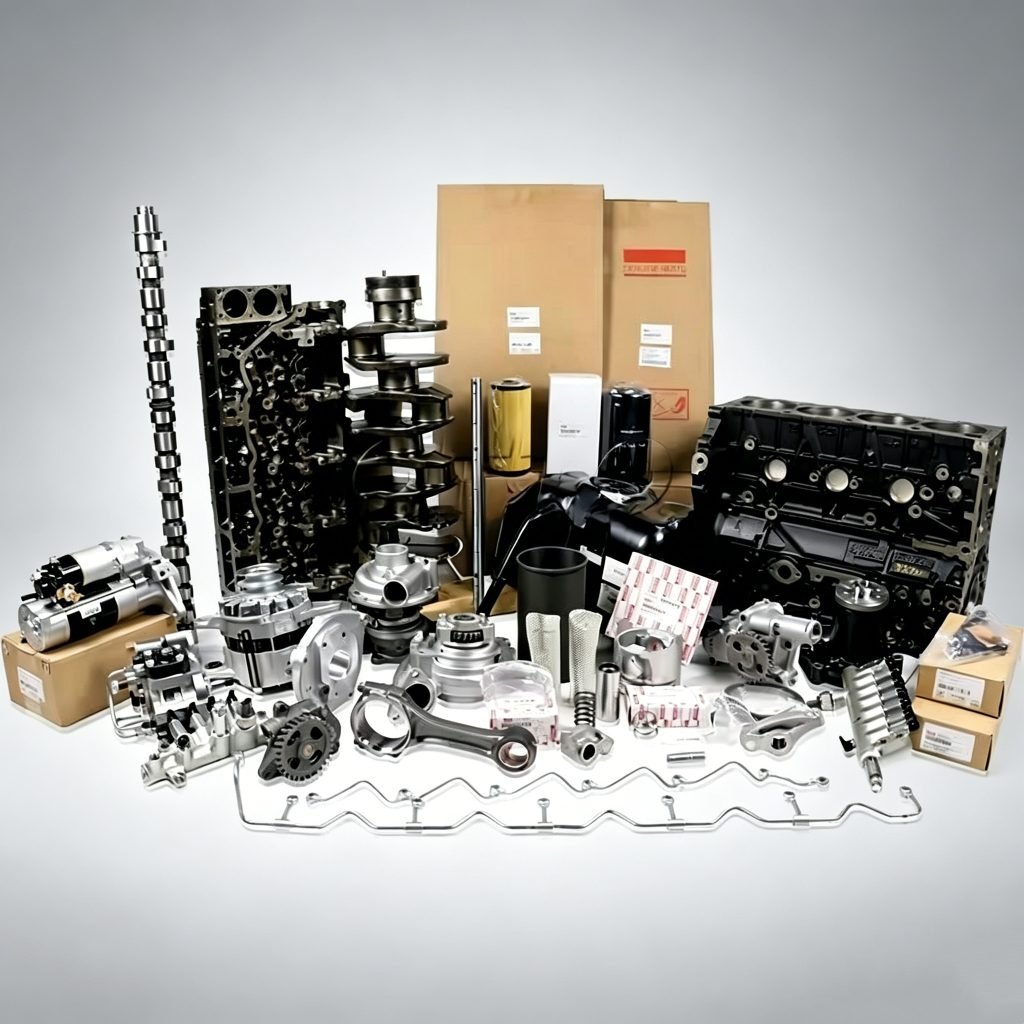
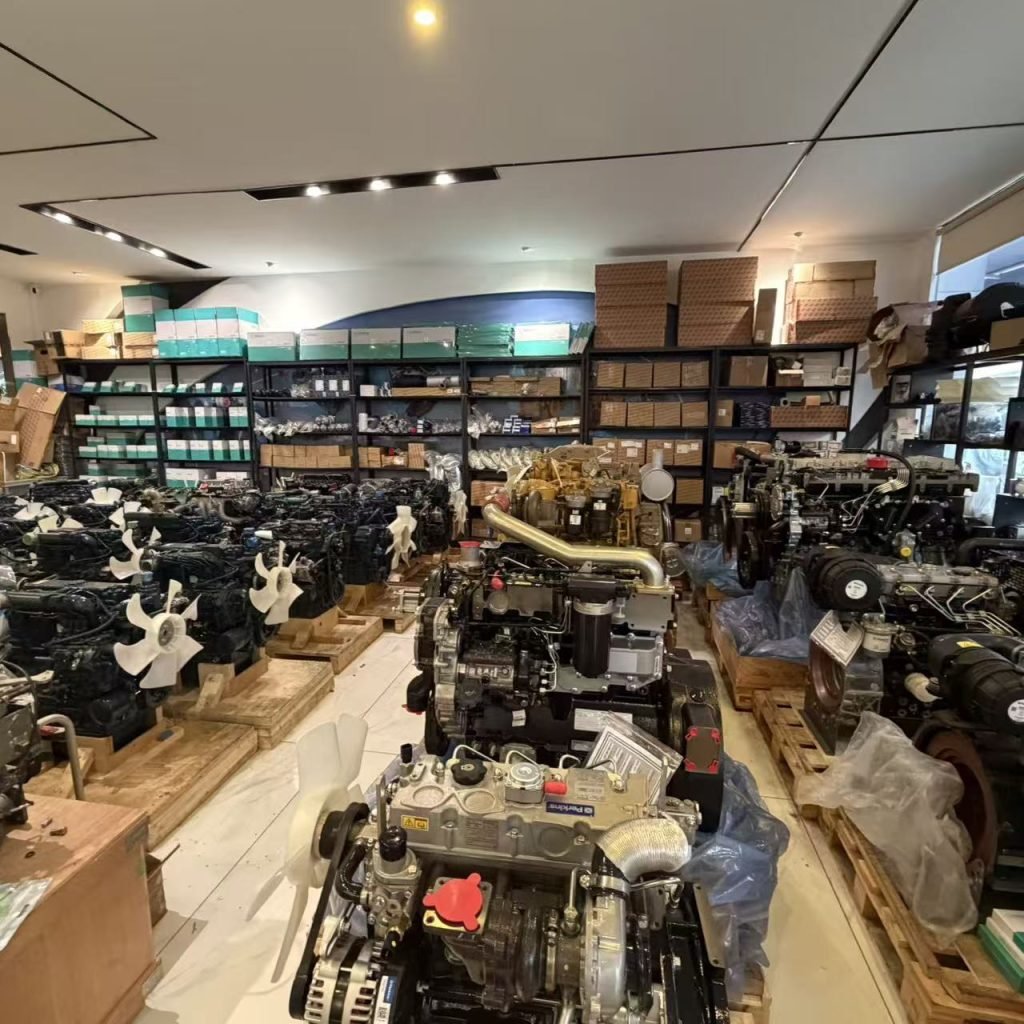
The most common deception in the aftermarket is the “virtual inventory”—a parts catalogue scraped from OEM manuals by someone who has never been in a warehouse. A genuine stock position can be tested with three precise asks.
First, request a dated inventory photograph with the specific component, not a library image. Insist on seeing the part number stamped on the casting or laser-etched on the packaging in the same frame as a handwritten note showing today’s date and your company name. This seems trivial, but it immediately filters out drop-shippers who never touch the product.
Second, ask for batch/lot traceability. A factory-direct or master distributor will have heat codes on structural castings, serial numbers on assembled hydraulic units, and date codes on rubber compounds. These allow tracking back through the manufacturing process if a failure occurs later. If the supplier cannot link what they sell to a production batch, you are buying anonymously—and will own any defect alone.
Third, evaluate inventory depth by part movement class. A top-tier supplier should be able to tell you: what percentage of their listed SKUs are physically present today (80%+ is strong), what their stock turn rate is for A-movers (top 20% of SKUs that generate 80% of revenue), and how they manage B/C-class slow movers. A partner who consigns ageing inventory or shares obsolescence risk through transparent planning is far more valuable than one who just fills containers.
A useful litmus test for 2026: ask if they offer a live stock feed via API or an online dashboard for repeat buyers. Suppliers who invest in inventory visibility tend to have the operational backbone to match.
2. Metallurgy and Manufacturing Source: What “OEM Quality” Must Actually Mean
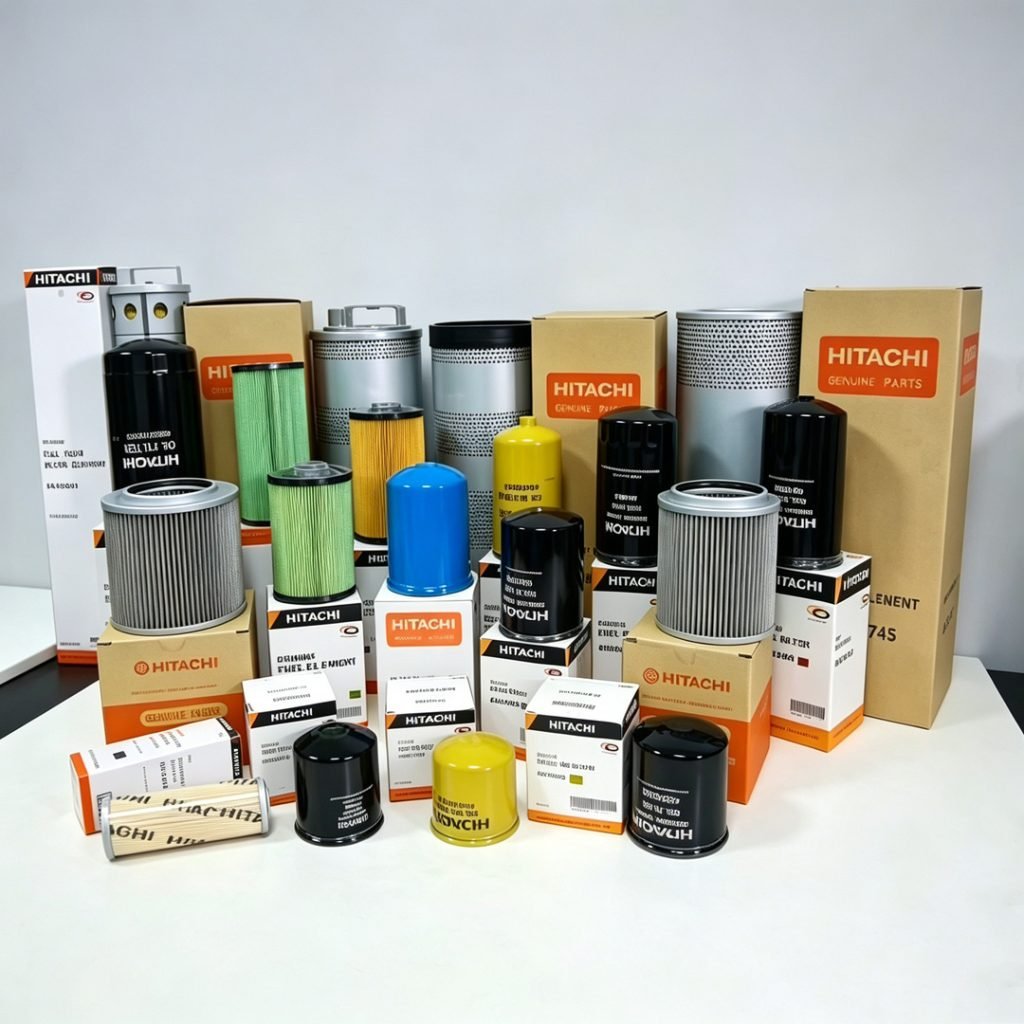
The phrase “OEM quality” has been hollowed out by overuse. Without reference to material standards and dimensional tolerances, it is advertising noise. When evaluating a component, particularly for undercarriage and hydraulic systems, push for specifics.
For undercarriage components (rollers, idlers, sprockets), the conversation should turn to:
- Shell material: is it 40Mn2 or higher-grade alloy steel? What is the surface hardness after quenching—HRC 52–58 is typical for track roller treads, while the flange may be HRC 45–52 to avoid brittleness.
- Case depth: for induction-hardened rollers, the effective case depth to HRC 50 should be at least 6–8 mm on the tread surface. Shallow hardening leads to pitting and spalling within 1,000 hours.
- Sealing system: does the roller use a conical duo-cone float seal (the standard for lifetime lubrication) or a simple O-ring lip seal? The latter might last only 30% of the service life in abrasive conditions. Ask for the seal material: NBR is adequate for temperate climates; FKM (Viton) is required for high-temperature mud applications like slag handling or tropical mining.
For hydraulic cylinders and seal kits, don’t accept just “made of polyurethane.” Competent suppliers will reference:
- The specific compound—such as a high-modulus polyester-urethane (like AU) for wear resistance, or low-temp ether-urethane (EU) for cold storage applications.
- Backup ring material: POM (acetal) or nylon 6/6 with glass-fiber reinforcement to prevent extrusion gaps over 3,500 PSI.
- Rod wiper design: a double-lip wiper with a metal reinforcing shell extends service life dramatically over a single-lip snap-in design in mining environments.
A supplier who can discuss these parameters without hesitation signals that their sourcing is disciplined—the factory is not just copying dimensions but understanding function. Request the measuring report (often a 2-3 page PDF) for the batch your parts come from. Even if you don’t have a CMM machine yourself, seeing that they keep such records on file is a strong differentiator.
3. Packaging Engineering for Heavy-Goods Export
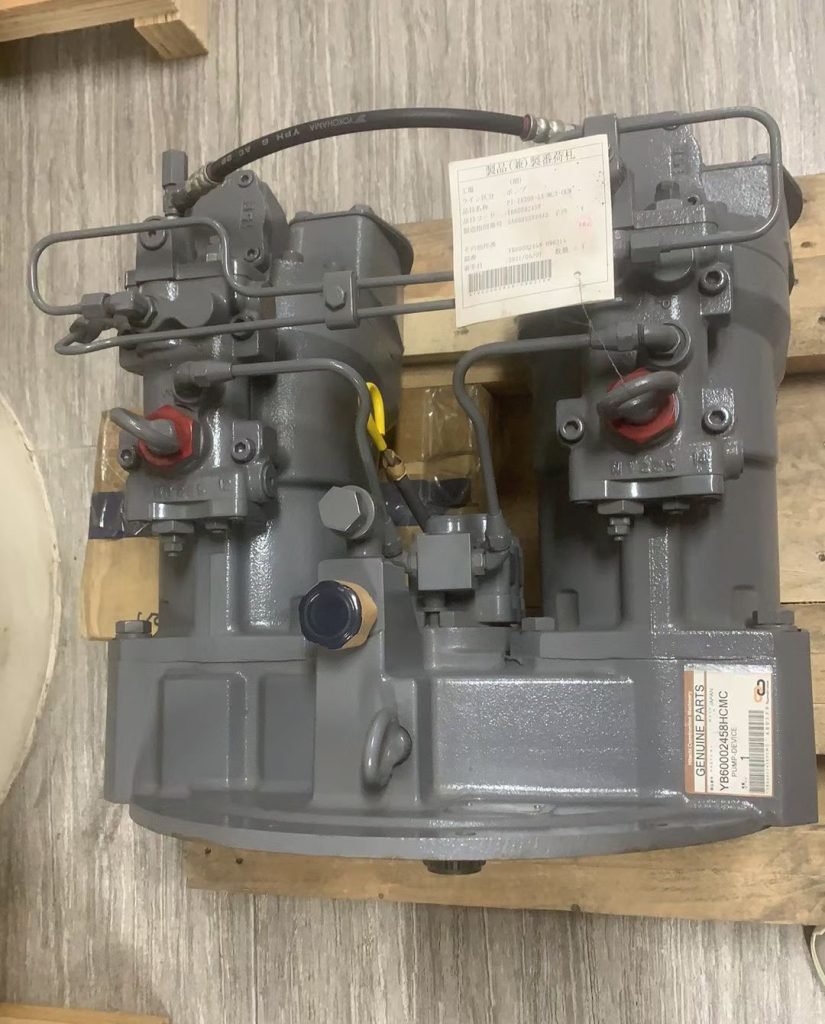
If your parts cross an ocean, the packaging is the first line of mechanical defense—not an afterthought. In 2026 customs data, approximately 7% of heavy machinery parts claims originate from freight damage, the majority preventable.
Evaluate your supplier’s crating methodology against these specific practices:
- Base pallet construction: For any consignment over 150 kg, the pallet should be built of hardwood (not softwood like pine) with minimum 120 x 120 mm bearers, and the footprint must allow fork access from all four sides. ISPM-15 heat-treatment marks should be clearly stamped—fumigation certificates alone are not enough for many destination ports.
- Load securing: Heavy cylindrical parts like final drive units should be bolted to the pallet base through the mounting flange holes, never just strapped. Lateral blocking must resist G-forces in all three axes during container handling. A correctly blocked pallet can survive an accidental drop of 10 cm without shifting.
- Corrosion protection for precision surfaces: Machined faces of hydraulic pump mounting flanges, valve spools, and cylinder rods need VCI (Volatile Corrosion Inhibitor) film, not just grease. Grease emulsifies in the presence of salt-laden marine air and eventually traps moisture. VCI emits molecules that form a monomolecular protective layer. The part, wrapped in VCI film, then bubble-wrap, then placed in a plywood crate with a desiccant bag, represents best-practice 2026 export packaging.
Ask for photos of test shipments—an unboxing sequence from a recent customer on another continent. If your supplier openly shares these, they have nothing to hide about their packaging durability.
4. Technical Support Depth: Interchangeability and Diagnostic Capability
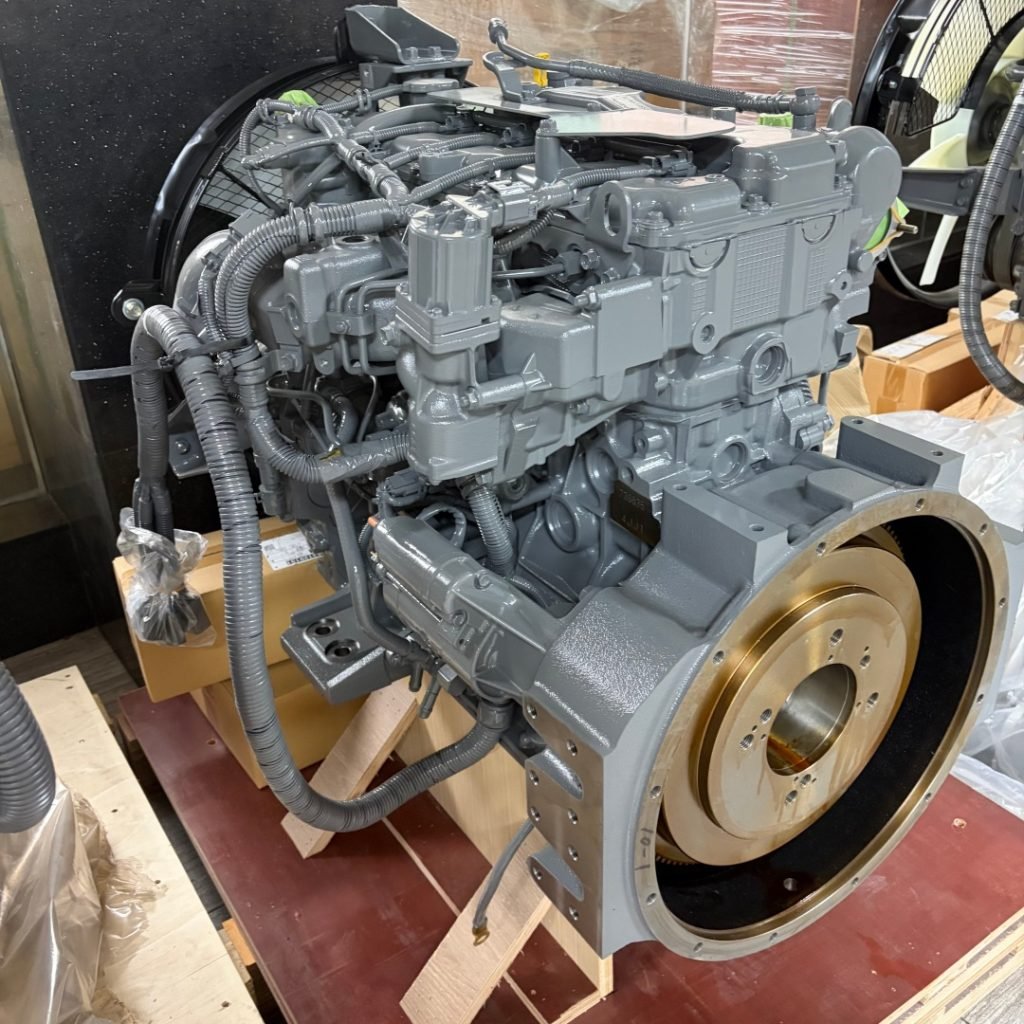
When a mechanic in Honduras calls because a PC200-8 main pump is making a whining noise but no fault codes appear, a parts supplier who just reads a catalogue is useless. A high-value supplier must function as an auxiliary engineering resource.
The benchmark is cross-reference capability. Most suppliers can swap a Komatsu OEM number to their own equivalent. But true technical support means mapping across competitors’ systems: can they identify that a Kayaba PSV2-55T valve bank used on a Sumitomo SH210 is functionally identical to one on a Case CX210, and provide the fitting differences? This requires a maintained internal database built from years of overhaul and failure analysis—not a copy-paste from the internet.
Further, the ability to diagnose by symptom, not just part number, separates veteran suppliers from novices. When you describe “excessive track wear on the outer link bushes but not on the sprocket segments,” an experienced supplier’s technical desk might ask about the working ground inclination and whether the machine regularly traverses side slopes. This leads to a root-cause recommendation (e.g., wider track shoes with offset idler brackets) rather than just selling you another set of standard links.
How to assess this remotely: submit a deliberately tricky parts enquiry—a partially damaged label, a mix of metric and imperial measurements, or a symptom instead of a part number. The response quality, follow-up questions, and time taken to provide a solution will tell you more about the supplier than a dozen ISO certificates.
5. After-Sales Collaboration: A Fair Fault Analysis Framework

Failures happen, even with conscientious suppliers. The marker of a partner is not that parts never fail, but how they handle a failure when it occurs. Traditional warranty models create an adversarial dynamic: the buyer claims, the supplier defends. The better approach is a cooperative technical investigation.
A fair process requires the supplier to provide a clear failure analysis protocol up front. This should mirror what we already touched on earlier: model and machine hours; installation photographs; operational video; and crucially, a structured teardown that avoids secondary damage. What makes this professional is the triage: having three independent technicians review the evidence (not one person with a vested outcome) and then issuing a report that attributes cause to material defect, installation error, application overload, or contamination, with photographic justification.
The best suppliers today are transparent about the fact that, based on field return data, a measurable percentage of “failed” parts result from incorrect assembly (e.g., torque on a hydraulic flange stretched past yield) or contaminated oil (a failed pump killed by abrasive particles from a collapsed suction strainer that wasn’t the supplier’s part). They will still often support the customer with a discount on a replacement or free technical guidance, even when not strictly liable, because the goal is fleet uptime. That’s a partner you keep.
6. Commercial Adaptability: Pricing Models and Risk Sharing
In 2026, straight-unit pricing is no longer sufficient for serious procurement relationships. Evaluate whether a potential supplier offers:
- Volume-ladder pricing for mixed SKU containers: Most wholesalers benefit from loading a 20GP with a mix of fast-moving filters and slower engine overhaul kits. A supplier who can build a load plan that optimizes freight cost per kg and still applies volume breaks demonstrates genuine wholesale thinking.
- Multi-shipment holding for scheduled maintenance: A rental fleet doing annual 2,000-hour oil changes across 15 machines might place a single order but request delivery in three batches. A supplier willing to warehouse your parts and release shipments against a schedule is absorbing carrying costs for you—a mark of a long-term oriented partner.
- Payment flexibility with instruments: In markets like Africa and parts of Southeast Asia, sight L/Cs remain common. A supplier who accepts a confirmed L/C at no extra surcharge, or offers open account terms after a successful transaction history, understands the capital constraints of local distributors and extends commercial trust in tandem with product trust.
Conclusion: Your 2026 Supplier Evaluation Framework
Collectively, these six dimensions—inventory integrity, metallurgical transparency, packaging engineering, technical interchangeability, fair failure analysis, and commercial flexibility—form a rigorous scorecard that goes far beyond landing page price comparisons.
The most reliable excavator parts supplier in 2026 is not the one with the longest catalogue or the lowest headline price. It is the one who can discuss case depth values and VCI film standards with the same fluency as CFR shipping terms. It is the one who treats your downtime as a shared problem, not a sales opportunity.
Before you place your next purchase order, consider sending a technical question—not “how much?” but “what’s the heat treatment specification on your D20 idler rim?” The answer will tell you everything you need to know about the partner on the other side.