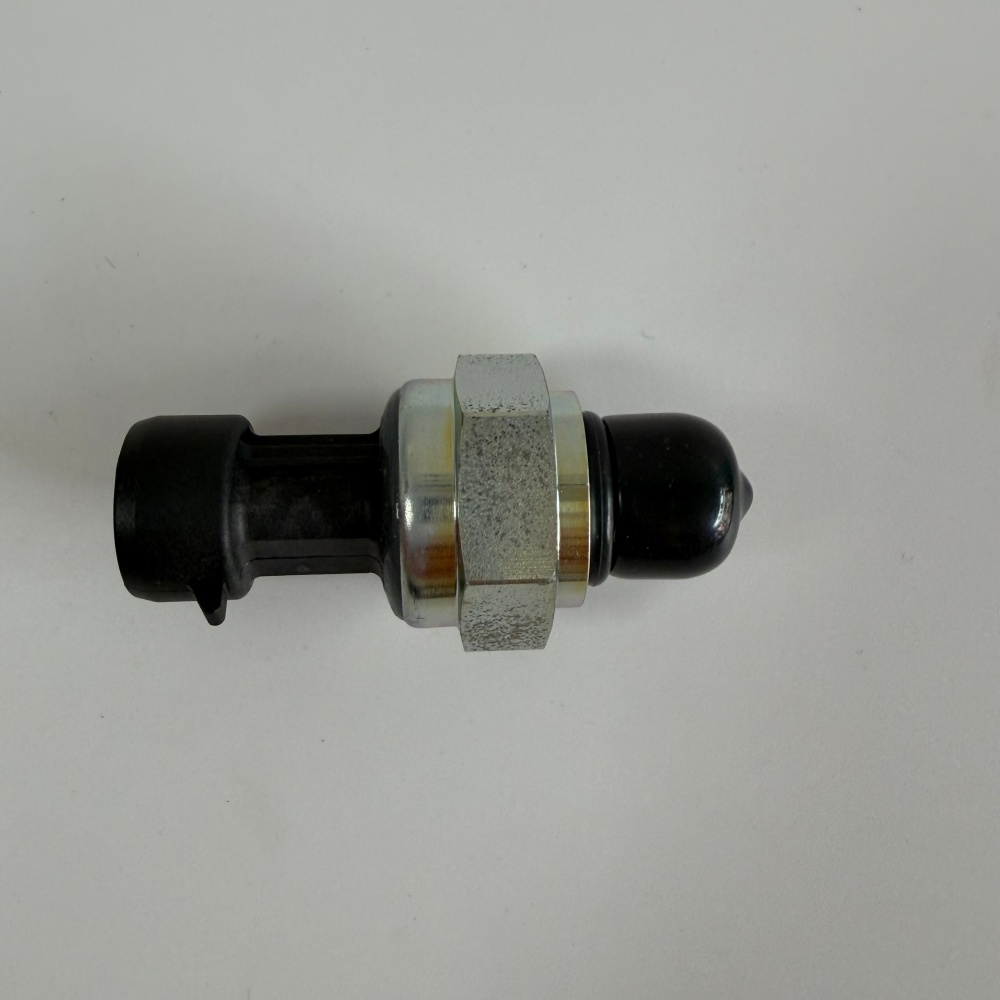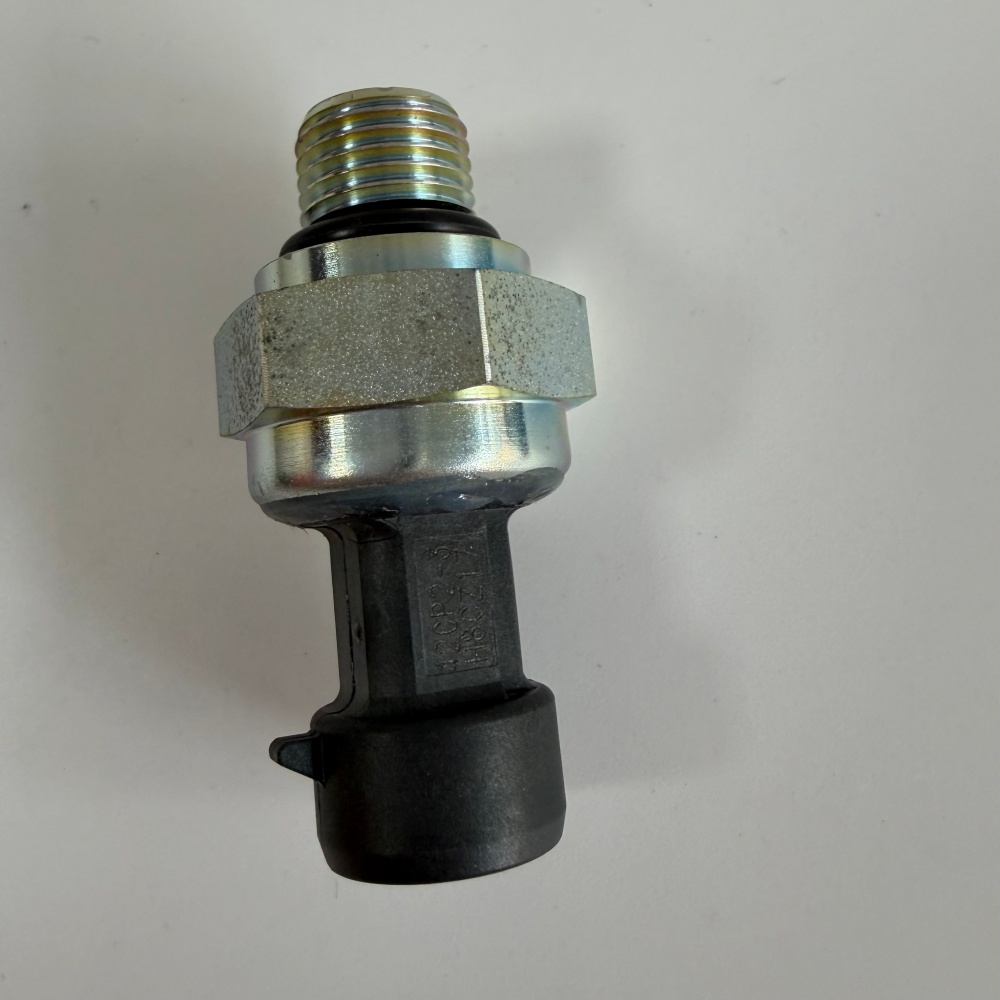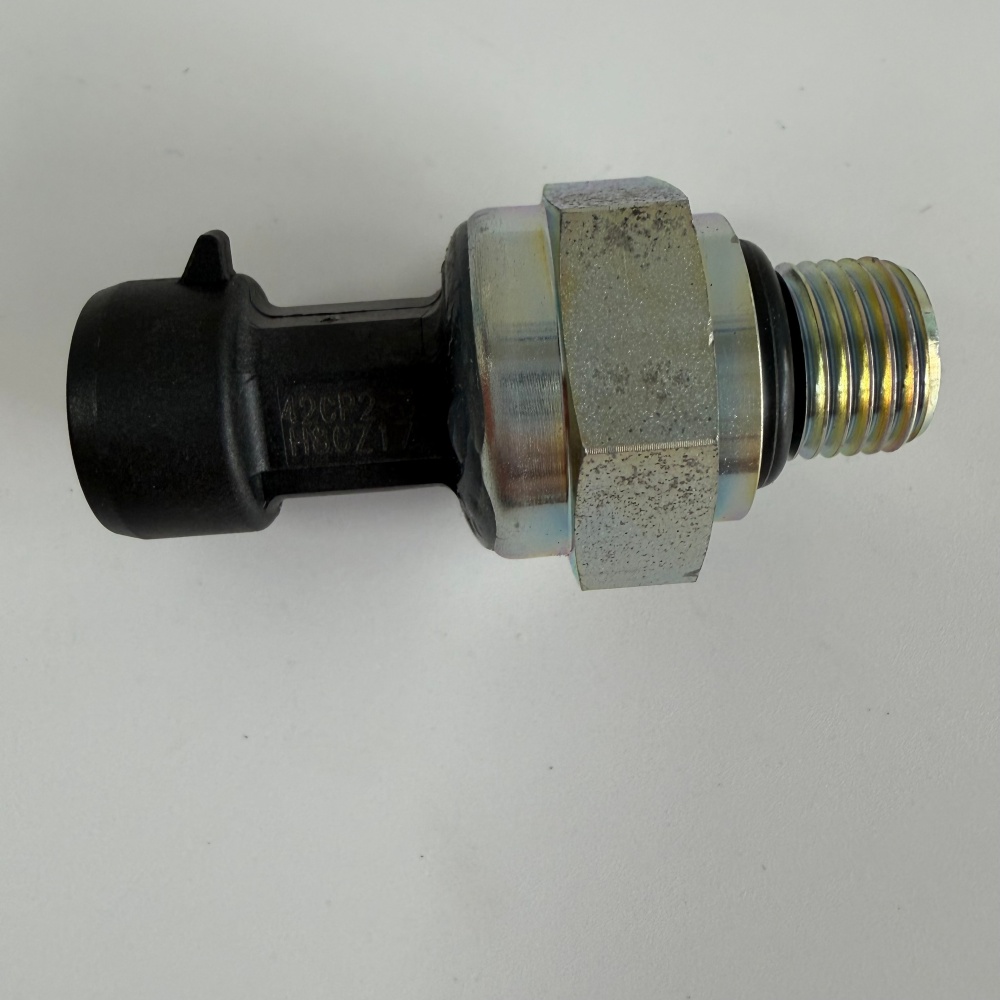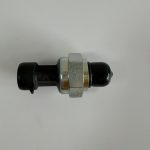
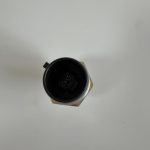
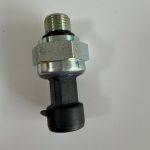
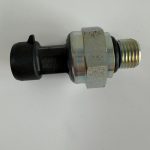
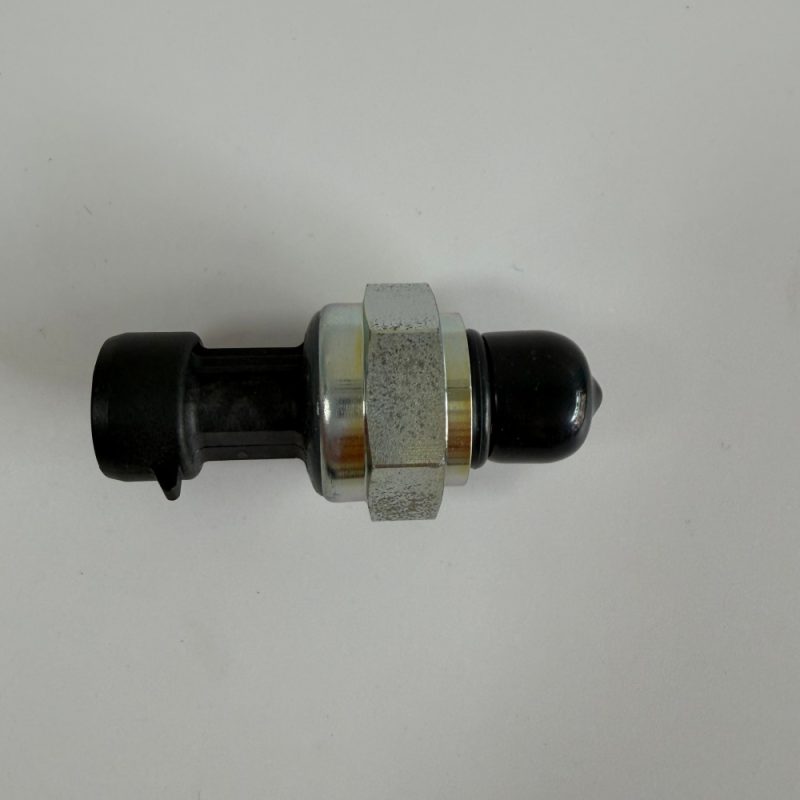
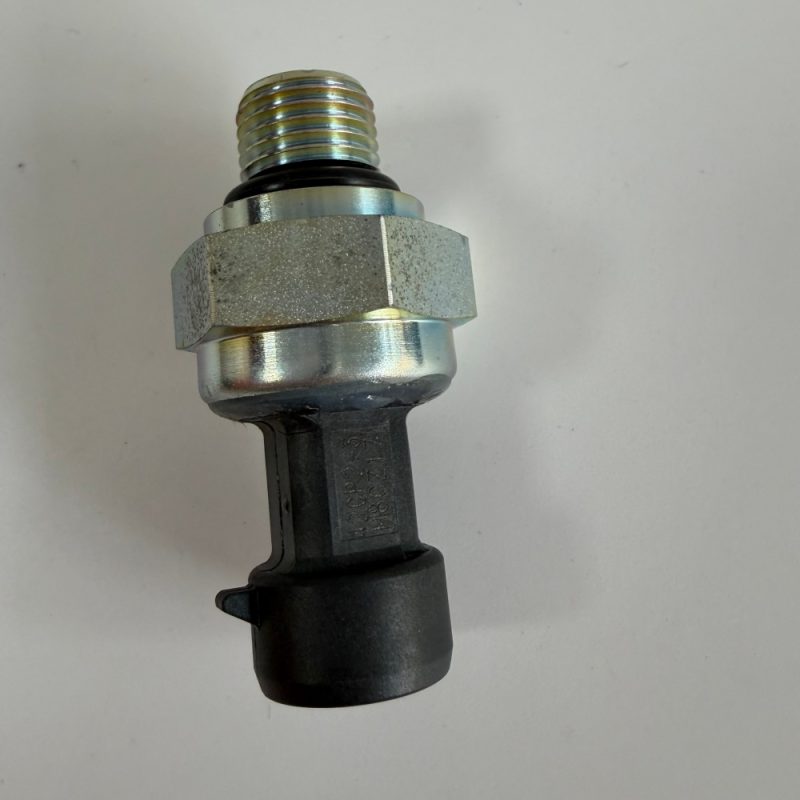
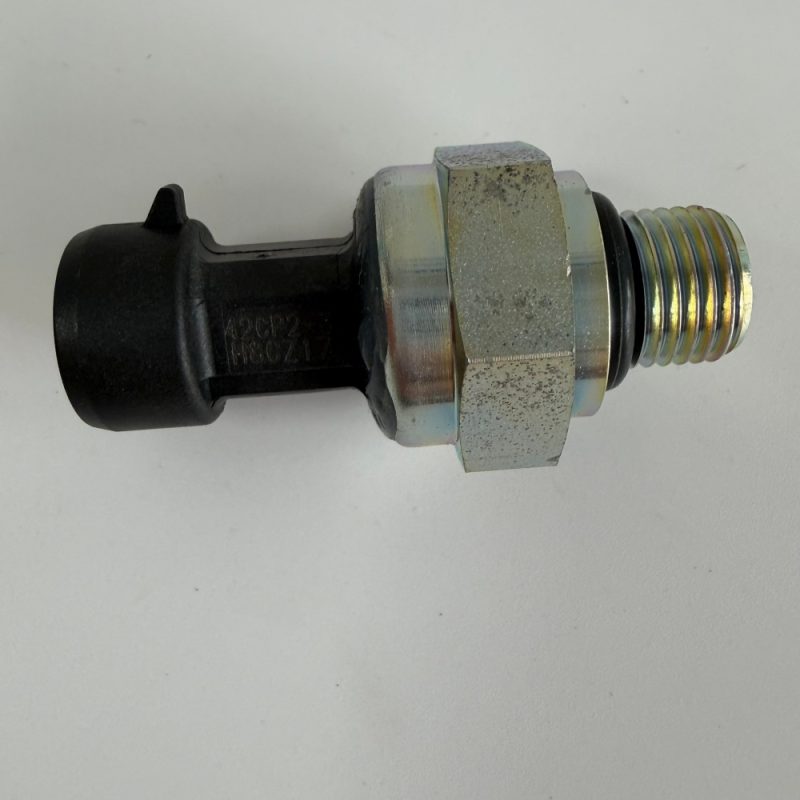
Description
Product Video
1. Pressure Sensor vs Pressure Switch – Why Confusing Them Costs You a Pump
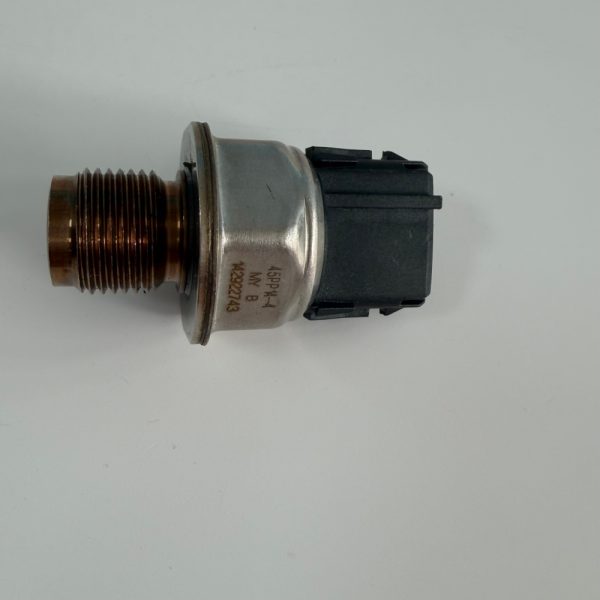
On EX200-5 and EX300-5 excavators, the 4332040 is a proportional pressure sensor, not an on/off switch. This is a critical distinction. Using the wrong type (or a cheap substitute) will send incorrect signals to the main controller – leading to improper pump flow, sluggish response, or catastrophic pump failure.
| Feature | Pressure Sensor (4332040) | Pressure Switch (common substitute) |
|---|---|---|
| Output | Variable voltage (0.5V – 4.5V) proportional to pressure | On/off (0V or 12V) at a set pressure point |
| What ECU sees | Exact pressure value at that point | Only “above” or “below” threshold |
| Use case | Pilot pressure monitoring for pump control | Warning lamp or cutoff |
| Consequence of swap | ECU misreads pressure – pump output erratic | No variable control – machine feels “dead” |
If a pressure switch is installed where a sensor belongs: The ECU gets only a high/low signal. It cannot modulate pump flow smoothly. The result is jerky movements, poor fuel economy, and eventual pump damage.
2. What This Sensor Tells the ECU – And Why It Matters for Your EX200-5/300-5
The 4332040 is typically located on the pilot manifold or main control valve, measuring pilot oil pressure (often from the PPC (Proportional Pressure Control) circuit). The ECU uses this data to:
| Pressure Reading | ECU Action |
|---|---|
| Low (0–5 bar) | Joysticks in neutral → pump output at minimum (saves fuel) |
| Medium (10–25 bar) | Partial lever movement → pump output proportional to demand |
| High (>30 bar) | Full lever stroke → pump upstroked to maximum |
Without accurate pressure data, the ECU cannot match pump flow to operator demand. The machine either lags behind your commands (slow response) or surges unpredictably.
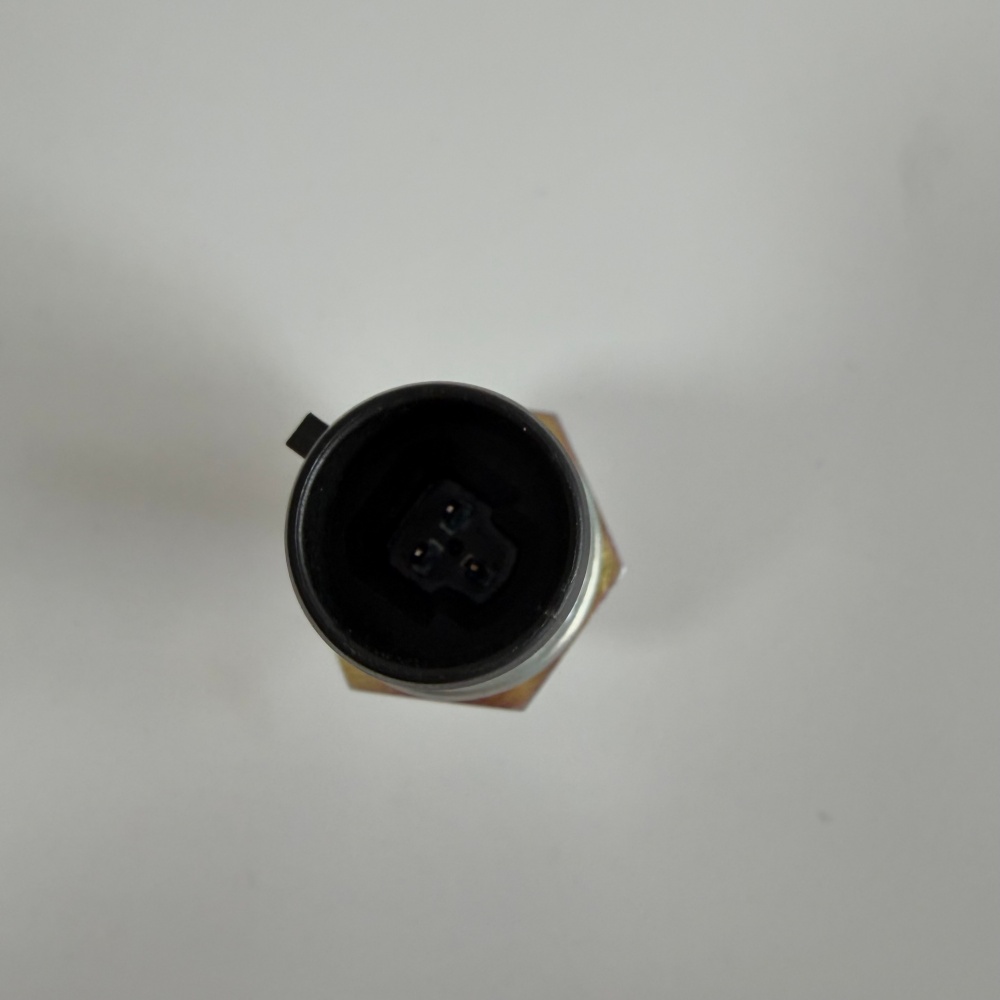
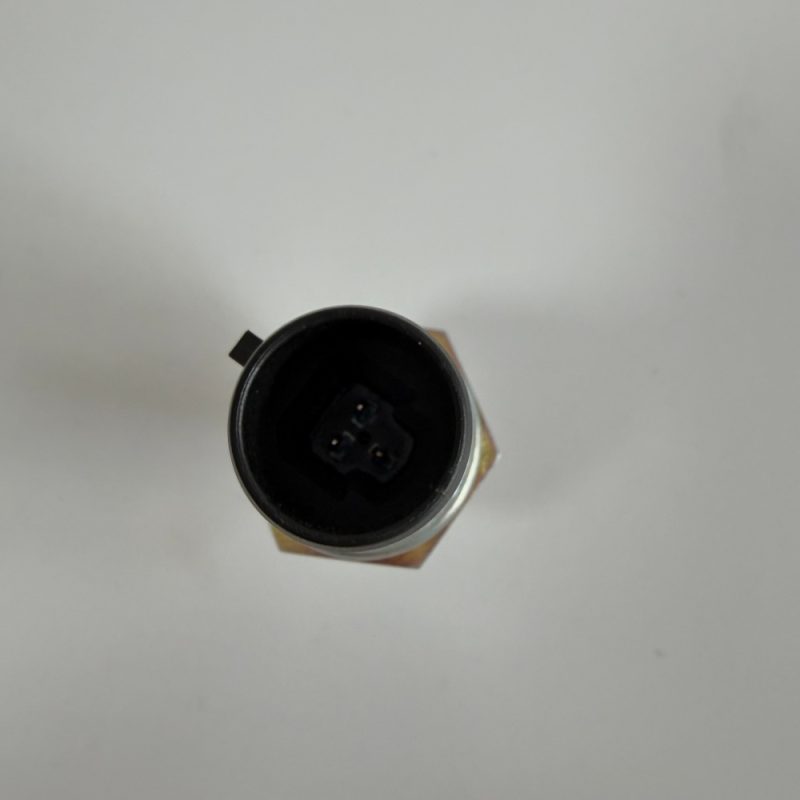
3. The 3-Pin Connector – Why It’s Better Than 2-Pin
This sensor has three pins (not two). That means it is a fully active device with separate power, ground, and signal lines. Benefits:
| Pin | Function | Advantage |
|---|---|---|
| 1 | Vcc (5V or 12V from ECU) | Regulated power – not affected by battery voltage drop |
| 2 | Ground (signal return) | Dedicated return – no ground loop errors |
| 3 | Signal output (0.5–4.5V) | Clean, noise‑resistant signal |
Cheap 2‑pin sensors often ground through the metal body. That works until corrosion or paint blocks the electrical path. Then the signal drifts or disappears entirely.
Our 4332040 is a true 3‑pin sensor with gold‑plated terminals for reliable contact over thousands of hours.
4. Real Case – The “Slow Response” That Wasn’t a Pump Problem
A workshop in Malaysia had an EX300-5 that felt sluggish. The owner thought the main pump was failing – a $5,000 repair. We asked them to monitor the pilot pressure displayed on the diagnostic tool. The pressure reading was stuck at 8 bar even when the operator moved the joystick fully.
Diagnosis: The pressure sensor 4332040 was outputting a fixed 1.2V signal regardless of actual pressure. The ECU thought the pilot pressure was low, so it kept the pump at minimum flow.
Solution: One new 4332040 sensor. Cost: under $100. Installation: 15 minutes. The machine dug as if it had a new pump.
Lesson: Always check sensor readings before condemning the pump. A $100 sensor can save a $5,000 pump.
5. How to Test This Sensor with a Multimeter – No Special Tools
You can verify the 4332040 in 10 minutes with a basic multimeter.
| Step | Action | Expected Result |
|---|---|---|
| 1 | Unplug connector, inspect pins for corrosion | Clean, no bent pins |
| 2 | Measure resistance between pin 2 (ground) and pin 3 (signal) | 5–8 kΩ (typical) |
| 3 | Measure resistance between pin 1 (Vcc) and pin 3 | 2–5 kΩ |
| 4 | Reconnect sensor (engine off, key on). Measure voltage between pin 2 and 3 | 0.5–0.7V (atmospheric pressure) |
| 5 | Start engine, operate joystick slowly – watch voltage | Should rise smoothly to 4.5V at full stroke |
| 6 | If voltage is stuck, jumps erratically, or stays at 0V – replace sensor |
Do not attempt to “clean” the sensor internally. The sensing element is a sealed silicon strain gauge. Cleaning will destroy it.
6. Installation Notes – Do’s and Don’ts
| Do | Don’t |
|---|---|
| Apply a small amount of hydraulic oil to the o‑ring before insertion | Use Teflon tape or thread sealant (can block the pressure port) |
| Torque to 20–25 Nm (hand‑tight plus ¼ turn) | Overtighten – the aluminum housing can crack |
| Route harness away from moving hoses | Pinch or stretch the wiring |
| Clear any stored diagnostic codes after replacement | Run the machine with old codes active – ECU may ignore new sensor |
7. Compatibility – Exact Fit for EX200-5, EX300-5
The 4332040 is also used on other Hitachi excavators with similar hydraulic control systems:
| Machine | Confirmed | Notes |
|---|---|---|
| EX200-5 | ✅ | Main pilot manifold |
| EX300-5 | ✅ | Same location |
| EX220-5 | ✅ | Interchangeable |
| EX270-5 | ✅ | Interchangeable |
| ZAX200-5/6 | ❌ Different part number (likely 4378790) – check |
If your machine is not listed, send us the old sensor photo – we will confirm.
8. Product Contents – What You Receive
| Item | Included | Note |
|---|---|---|
| Pressure sensor 4332040 | ✅ | Genuine Hitachi, made in Japan |
| O‑ring (for port) | ✅ | Pre‑installed on sensor thread |
| Protective cap | ✅ | Removable before install |
| Paper box | ✅ | With part number label |
| Installation torque guide | ✅ | Printed card (simplified) |
Not included: Harness connector (part of machine harness). If your harness plug is damaged, we can supply a replacement pigtail – ask.
9. Ordering & Delivery
| Item | Detail |
|---|---|
| MOQ | 1 piece |
| Lead time | 6–8 working days |
| Packaging | Paper box + bubble wrap in carton |
| Payment | T/T, XTransfer, PayPal, Western Union |
| Supply capacity | 300 pcs/month (genuine, limited) |
| Warranty | 6 months (manufacturing defects – electrical drift, seal leak) |
10. Before You Order – Quick Compatibility Check
We need one photo of your old sensor (showing the connector and any visible part number) and your machine serial number. We will reply within 24 hours.
Don’t let a bad pressure sensor cripple your EX200-5 or EX300-5. Verify the signal – restore smooth, responsive hydraulic control.