An excavator engine assembly can be quoted as a short block, long block, complete engine or drop-in package, yet those labels do not guarantee the same contents from one supplier to another. A quotation that says only “complete engine” may still leave the buyer responsible for the turbocharger, fuel system, starter, alternator, flywheel housing, wiring, controller, aftertreatment or installation hardware. The resulting surprise appears after the old engine has been removed, when downtime is already expensive.
The safer buying method is to define the exact engine identity, list every included and excluded component, compare physical and electronic interfaces, and agree on receiving evidence before shipment. This guide gives distributors, repair shops and fleet teams a practical scope matrix for that work. Machine-specific installation, test limits, fluids, fasteners, lifting points and commissioning steps must still come from the applicable excavator and engine manuals.
Control the scope before comparing prices
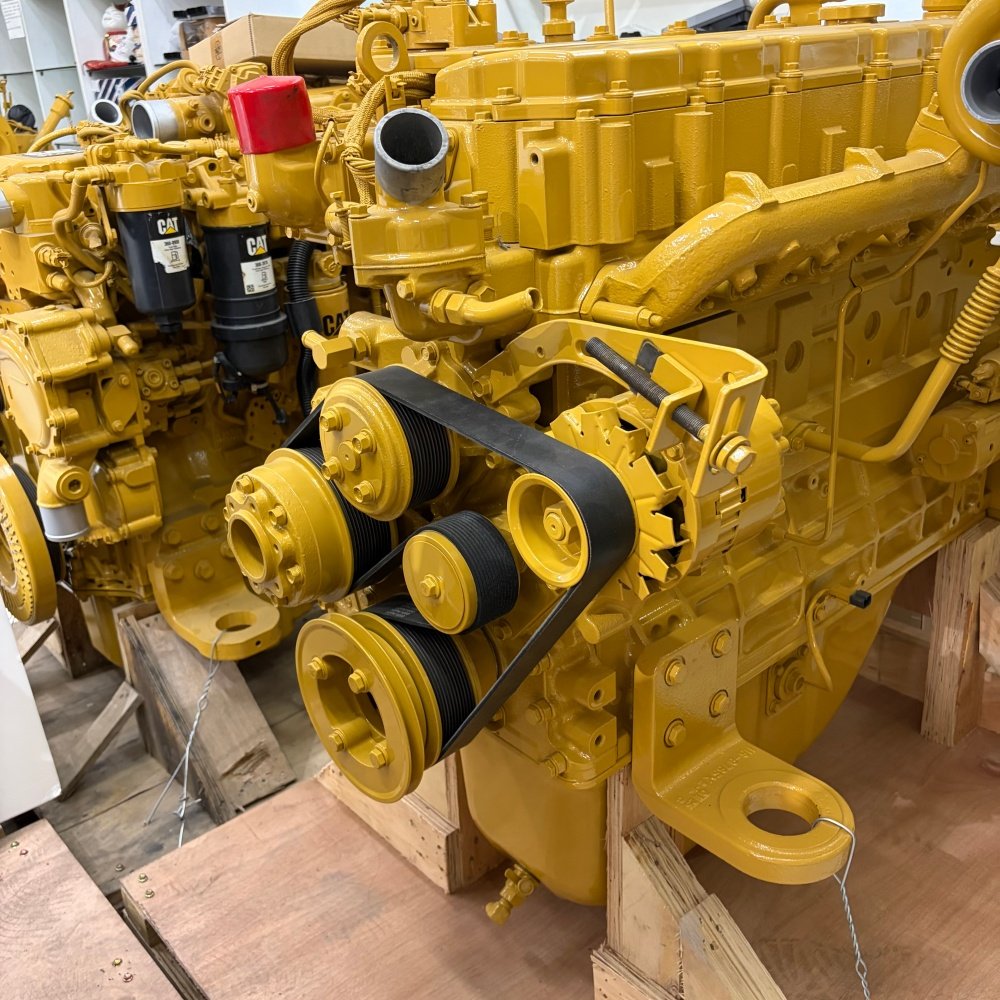
Price comparison is meaningful only after the quotations cover the same assembly level. Caterpillar presents complete replacement engines, long blocks and short blocks as separate replacement options and lists major internal groups commonly associated with its long-block offering. Komatsu’s remanufactured-component brochure also distinguishes short-block and long-block component groupings. These manufacturer examples establish that assembly level matters; they do not create a universal definition for every supplier or engine family.
Treat the label as a heading, then make the inclusion sheet the contract. Use “included,” “excluded,” “reused from old engine” or “not applicable” for every row. Avoid “standard,” “as shown” or “complete” without a component list.
| Scope area | Often associated with a block-level assembly | May be added on a more complete package | Buyer action |
|---|---|---|---|
| Core structure | Block, crankshaft, pistons and connecting rods | Cylinder head, valve train, covers and front housing | List each group; do not rely on the short-block or long-block label |
| Air and exhaust | Manifolds may be absent | Turbocharger, intake piping and exhaust connections may be fitted | Confirm turbo identity, orientation, ports and what remains vehicle-side |
| Fuel system | Frequently outside the base scope | Pump, rail, injectors, lines and filters may be installed | Record system generation, part identities and calibration requirements |
| Cooling and lubrication | Internal galleries and basic covers | Water pump, oil cooler, filter heads, thermostat housing and fan drive may be added | Verify ports, housings, pulleys and transfer parts |
| Electrical and controls | Usually limited or absent | Starter, alternator, sensors, harness and ECM may be included | Compare connectors, voltage, software or calibration needs and security functions |
| Installation interfaces | Basic block and housing faces | Flywheel, flywheel housing, mounts, brackets, couplings and belt drive may be installed | Use annotated photographs and measurements from the removed engine |
| Emissions equipment | Normally outside the internal assembly | EGR, dosing, DPF, SCR or related sensors may be offered separately or attached | Match the machine’s original regulated configuration and local requirements |
This matrix is deliberately phrased as a verification list. The contents vary by engine, market, remanufacturing program and supplier. A buyer should never assume that an accessory visible in a catalogue image is included in the delivered unit.
Identify the engine by build data, not appearance
Excavator model and engine family are useful search keys, but they are not a complete identity package. Production changes, regional emissions configurations, previous repowers and different OEM arrangements can place similar-looking engines behind different mounts, flywheel housings, fuel systems, controllers or aftertreatment.
Capture the machine plate and the engine dataplate before asking for a quote. Record the full machine serial number, engine model, engine serial number and every arrangement, specification or configuration field shown. Cummins explains that its QuickServe technical information provides parts catalogs and dataplate information by engine serial number or engine family. That is a useful model for the buying process: serial-specific build information is stronger evidence than a family name alone.
If the plate is damaged or unreadable, photograph the block stamp and all surviving labels, then ask the engine manufacturer or a qualified supplier which additional evidence is required. Do not guess a missing character. One digit can change the parts book, fuel-system version or arrangement.
| Identity field | Evidence to send | Written reply required from supplier |
|---|---|---|
| Machine | Brand, exact model, full serial and clear plate photo | Machine identity used for selection |
| Installed engine | Model, full serial, arrangement/specification data, block stamp and plate photo | Base engine and build reference matched |
| Existing configuration | Four-side installed photos plus top and rear views | Differences from quoted unit marked on annotated images |
| Controls | ECM labels, harness plugs, sensor connectors and fault-system information | Included controller/harness scope and any programming responsibility |
| Emissions | Original labels and photos of EGR or aftertreatment components | Configuration supplied and items to transfer or source |
| Commercial reference | Old invoice, engine part number and previous supplier documents if available | Cross-reference basis and unresolved exceptions |
Compare every mechanical and system interface
An engine can have the correct family name and still create an installation problem. Build an interface album before disassembly. Include the front drive, bellhousing and flywheel area, pump or coupling connection, engine mounts, sump shape and clearance, air inlet, exhaust outlet, cooling connections, oil services, fuel ports and electrical connectors. Place a scale or dimension reference in photographs where the service process permits.
Mounting and driven-equipment interfaces
Compare mounting-pad positions, brackets, isolators, flywheel housing, flywheel or flexplate, starter position, pilot features and the connection to the excavator’s hydraulic pump or drive coupling. Record what will be reused and who accepts responsibility for inspecting it. A transferred coupling, damper or mount should not silently move from the old work order into the new engine warranty discussion.
Air, exhaust, fuel and cooling interfaces
Check port location, diameter, flange pattern, hose route and clearance for the intake, turbocharger, exhaust, radiator, charge-air cooler, heater circuits and fuel system. Confirm whether manifolds, turbocharger, pumps, rails, injectors, filter heads, oil cooler, thermostat housing and fan drive are included. The final design must follow the machine and engine maker’s instructions; improvised adapters can introduce leaks, restriction, alignment problems or unsupported loads.
Electrical, software and emissions interfaces
Record system voltage, starter and alternator identities, sensor types, connector keys, harness routing, ECM numbers and network connections. Ask who supplies and configures the controller and whether the machine requires programming, parameter transfer, immobilizer work or calibration. For engines with emissions controls, identify the exact EGR and aftertreatment arrangement and keep the original labels. A mechanically similar engine is not automatically an acceptable substitute for a different regulated configuration.
Decide which old components may be transferred
Reusing serviceable accessories can reduce cost, but it also moves condition risk into the installation. Create a donor-component decision before the old engine is dismantled. Inspect each planned transfer part, record its identity and condition, and obtain approval from the person responsible for the repair. Typical candidates may include mounts, brackets, flywheel housing, coupling, starter, alternator, compressor, pumps, sensors, wiring, manifolds or aftertreatment connections.
Preserve evidence from the failed engine. Oil or coolant contamination, overheating, debris, lubrication failure or a fuel-system event can affect components that appear reusable. Cleanliness, flushing, replacement and testing decisions should follow the applicable failure analysis and service instructions. Keep the removed engine and key parts available until identity, root cause and warranty records are complete.
Use catalogue listings as RFQ starting points
The Hongtengda excavator engine assembly category currently provides model-family starting points for inquiries. Examples include a Mitsubishi 4M50 / SANY 215 listing, a 6D107 / QSB6.7 / QSB7 listing, and a Caterpillar C6.4 / E320D / E323D listing.
Those names help route an inquiry; they are not confirmation for a specific serial-numbered machine. Send the evidence pack and ask the supplier to state the selection basis, exact condition, included components, excluded components, transfer parts, configuration differences, test evidence, preservation method, package contents and warranty conditions on the quotation.
Set receiving and installation acceptance gates
A heavy engine must be received and moved under a planned lifting process. The UK Health and Safety Executive’s guidance on planning and organizing lifting operations calls for competent planning, appropriate supervision and safe execution, with suitable equipment and foreseeable risks addressed. Apply the rules and manufacturer instructions that govern your location and facility.
Before removing protective covers or transferring parts, compare the shipment with the approved scope sheet. Photograph the crate, shock or tilt indicators if used, engine from all sides, plates, openings, accessories and any damage. Quarantine the unit when identity, preservation, contamination, transport damage or scope does not match the order.
| Gate | Acceptance evidence | Hold condition |
|---|---|---|
| Shipment and packaging | Crate condition, restraints, protective covers and packing list photographed | Impact, water entry, broken restraint or undocumented package damage |
| Identity | Engine plate, serial, model and quoted reference agree | Missing plate, unreadable data or any identity mismatch |
| Supply scope | Every inclusion-sheet row checked against the delivered unit | Missing, substituted or unexpected components |
| Openings and cleanliness | Ports remain protected; preservation and storage condition documented | Open ports, debris, corrosion, leaked fluid or compromised protection |
| Interfaces | Approved photo and measurement comparison completed | Mount, housing, coupling, sump, port or connector conflict |
| Documents | Inspection/test record, package list, warranty terms and required instructions received | Required evidence is absent or belongs to another serial number |
| Installation release | Transfer parts accepted, root cause addressed and correct procedures available | Unresolved failure cause, missing tooling or unclear configuration responsibility |
Build the commercial scope sheet
The final purchase record should allow a receiver who never joined the sales conversation to determine exactly what was ordered. Attach the identity table, annotated interface photos and component matrix to the purchase order. State the engine condition in precise terms, the serial or build data promised, the test documents required, packaging and preservation expectations, the agreed inspection window, and the process for reporting a mismatch.
- Machine plate, engine plate and full serial data are legible and attached.
- The supplier repeats the base engine and configuration used for selection.
- Every major component is marked included, excluded, reused or not applicable.
- Mounts, housings, coupling, sump, ports, pulleys and connectors are reconciled.
- Fuel, electronic and emissions-system responsibilities are assigned.
- Transferred parts have an inspection owner and acceptance record.
- Pre-shipment photographs and serial-specific test evidence are defined.
- Receiving, discrepancy, storage and installation-release steps are documented.
For a written engine-assembly identification review, send Hongtengda the machine plate, engine plate, full serial and arrangement data, six-side installed-engine photographs, ECM and connector labels, emissions labels, and a completed included/excluded scope sheet. That package gives both buyer and supplier a clearer basis for the quotation than an excavator model or the phrase “complete engine” alone.