Water, fine dirt and microbial debris can reach an excavator’s fuel system through storage, transfer and tank handling. A filter or water separator is the final defense, but replacing the element without checking the contamination source can produce repeat restrictions or injector damage. This excavator fuel water separator guide organizes diagnosis, safe replacement and a precise parts request without assuming that one element fits every machine carrying the same model family name.
Separate restriction symptoms from fuel contamination
Record the exact complaint: hard starting, power loss under load, unstable speed, warning indication, visible water or repeated element restriction. Note fuel level, machine angle, ambient condition, recent refueling and whether the complaint began after a delivery or tank service. These details help distinguish a restricted element from air ingress, transfer-pump trouble, blocked tank ventilation, damaged lines or an electrical control fault.
Cummins explains that water, hard particles, organic debris and fuel degradation can affect modern diesel fuel systems in its diesel fuel contaminants guidance. That source supports contamination control; the Hitachi service manual still controls warning interpretation, test points and service limits.
| Evidence | Possible meaning | Next check |
|---|---|---|
| Visible water in bowl | Water entered during storage, transfer or tank breathing | Sample tank bottom and review recent fuel handling |
| Dark or slimy debris | Degraded fuel or biological contamination may be present | Inspect tank and obtain qualified fuel analysis |
| Collapsed or heavily loaded element | Severe restriction or wrong element condition | Check upstream contamination and housing fit |
| Air bubbles after service | Seal, drain, sensor or line may admit air | Inspect interfaces and prime by the manual |
Identify the element and every housing interface
Photograph the machine serial plate, the complete separator housing and the installed element before removal. Record every readable number. Measure and photograph the attachment type, sealing faces, center opening, overall envelope, drain or sensor interface, bowl connection and flow direction where marked. An element that threads on may still have the wrong seal position or bypass arrangement.
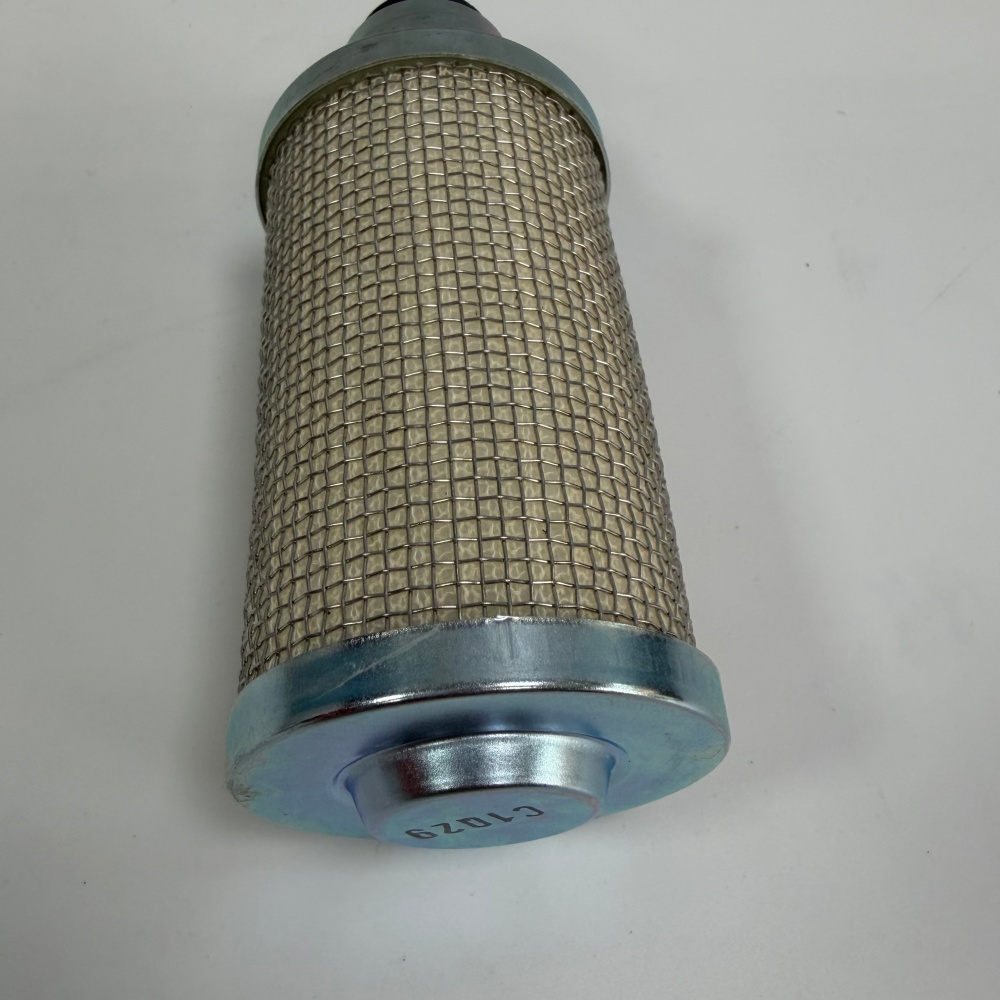
The catalog includes a Hitachi YA00002973 fuel filter / water separator listing associated in its title with ZAX490-5A and ZAX690-5A. Treat it as an enquiry candidate. Model wording and visual similarity do not prove fitment to a particular serial number or prove that a bowl, sensor, O-ring or drain is supplied.
Drain, isolate and remove without adding dirt
Park safely, lower the attachment, stop the engine and prevent unintended starting. Let hot surfaces cool. Clean the housing exterior before opening it and place a suitable container beneath the assembly. Follow the machine procedure for shutting off supply, draining water and relieving any fuel pressure. Capture fuel and contaminated materials according to site rules; do not allow open containers or ignition sources near the work.
Take separate samples if investigation is required: one from the separator drain before disturbing the housing and another from the tank’s specified sampling point. Label the time, machine, source and fuel level. A mixed catch pan cannot show where contamination originated. Do not return drained fuel to the tank. If free water, unusual solids or biological growth is suspected, quarantine the affected fuel and use a qualified laboratory or fuel-service provider rather than diagnosing contamination by color alone.
Caterpillar’s mini excavator maintenance page emphasizes scheduled inspection and model-specific manuals. The HSE’s work-equipment maintenance guidance supports isolation and competent maintenance. Neither source supplies the service sequence for this Hitachi element, so the exact operation and maintenance manual remains decisive.
| Removal checkpoint | Record | Reason |
|---|---|---|
| Housing before opening | Leaks, damage, water level and sensor wiring | Preserves pre-service evidence |
| Old element | Number, seal locations and loading pattern | Supports fitment and contamination review |
| Separated liquid | Water layer, solids, color and odor | Guides tank and supply investigation |
| Sealing surfaces | Corrosion, scratches and old gasket remains | Prevents repeat leakage or air entry |
| Drain and sensor | Threads, connector and seal condition | Confirms reusable interfaces |
Install, prime and verify the fuel circuit
Compare the new element with the removed one before installation. Confirm number, length, diameter, attachment, gasket position and every drain, bowl or sensor interface. Fit only the seals specified for that element. Lubricate, tighten, prefill or leave dry only as the machine or filter instructions require. Unfiltered prefilling can introduce contamination on the clean side.
Clean reusable bowls and sensor parts only by an approved method, then inspect them under good light. A hairline crack, damaged thread, distorted gasket seat or stiff drain can leak fuel or admit air even when the new element is correct. If the assembly has a water sensor, protect its connector and confirm that the harness is supported after refitting. Record which seals were renewed so a later leak investigation does not depend on memory.
The excavator-specific video below shows a fuel-filter replacement on a John Deere 35G mini excavator, including access, element comparison and priming context. It is useful process context, but its priming method and tightening practice must not be copied to a Hitachi machine without the correct manual.
Prime the system by the approved method and inspect every opened joint while the engine is stopped and after start-up. Watch for leakage, air bubbles, unstable speed and warning indications. Compare idle and controlled load response only after the system is fully bled. Do not use extended cranking as a substitute for proper bleeding. If restriction or water returns quickly, stop replacing elements and investigate the tank, transfer equipment and stored fuel.
Build a contamination-based filter RFQ
Use the Hitachi filter cartridge category to identify possible products, then ask for written fitment comparison. Send the full machine serial number, engine identity, filter-head number, old element number and clear photos of the top, bottom, seals and any reusable bowl. State whether the request is for an element only or an assembly with bowl, drain, heater, sensor and seals.
If the machine also has delivery problems, a related Hitachi electric fuel pump listing may help identify a separate supply component, but it is not a substitute for the separator and does not prove the cause of restriction. Keep the filter, pump, tank and line evidence separated in the RFQ.
| RFQ field | Evidence to provide | What supplier should confirm |
|---|---|---|
| Machine and engine | Complete serial plates | Applicable production range |
| Old element | All numbers and six-side photos | Direct cross-reference basis |
| Housing interfaces | Thread, seals, bowl, drain and sensor | Physical and functional match |
| Supply scope | Element-only or complete assembly request | Exactly what is included |
| Contamination evidence | Water, debris and repeat interval | Any additional service recommendation |
Prevent the next separator overload
Trace contamination upstream. Cummins’ fuel storage and transfer guidance explains the importance of storage-tank management, filtration and water control. Review supplier delivery, bulk tank draining, breathers, transfer hoses, nozzles and portable containers. A clean new element cannot correct a dirty storage or transfer system.
Record the element number, installation date, machine hours, removed-element condition, drained water and source-correction work. Recheck for leakage and water at the manual-defined interval and after suspected contaminated refueling. Release the excavator only after stable engine operation, normal warnings and dry service interfaces are confirmed. The Hongtengda contact page can be used to send the serial plate, old-element photos and housing evidence for written comparison.