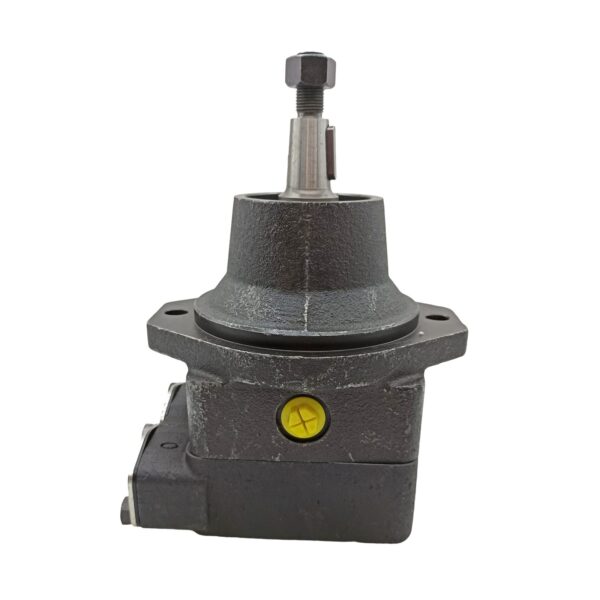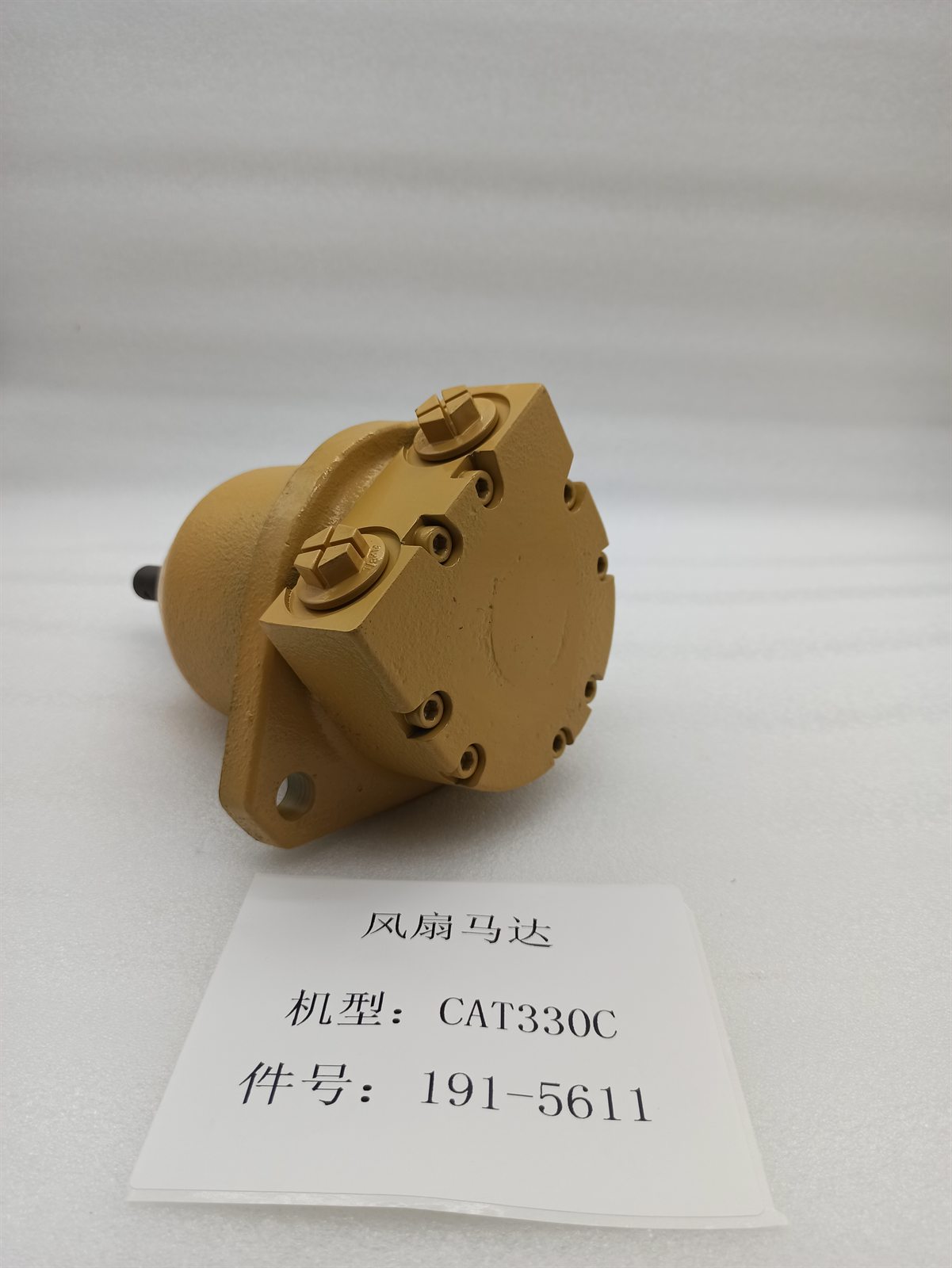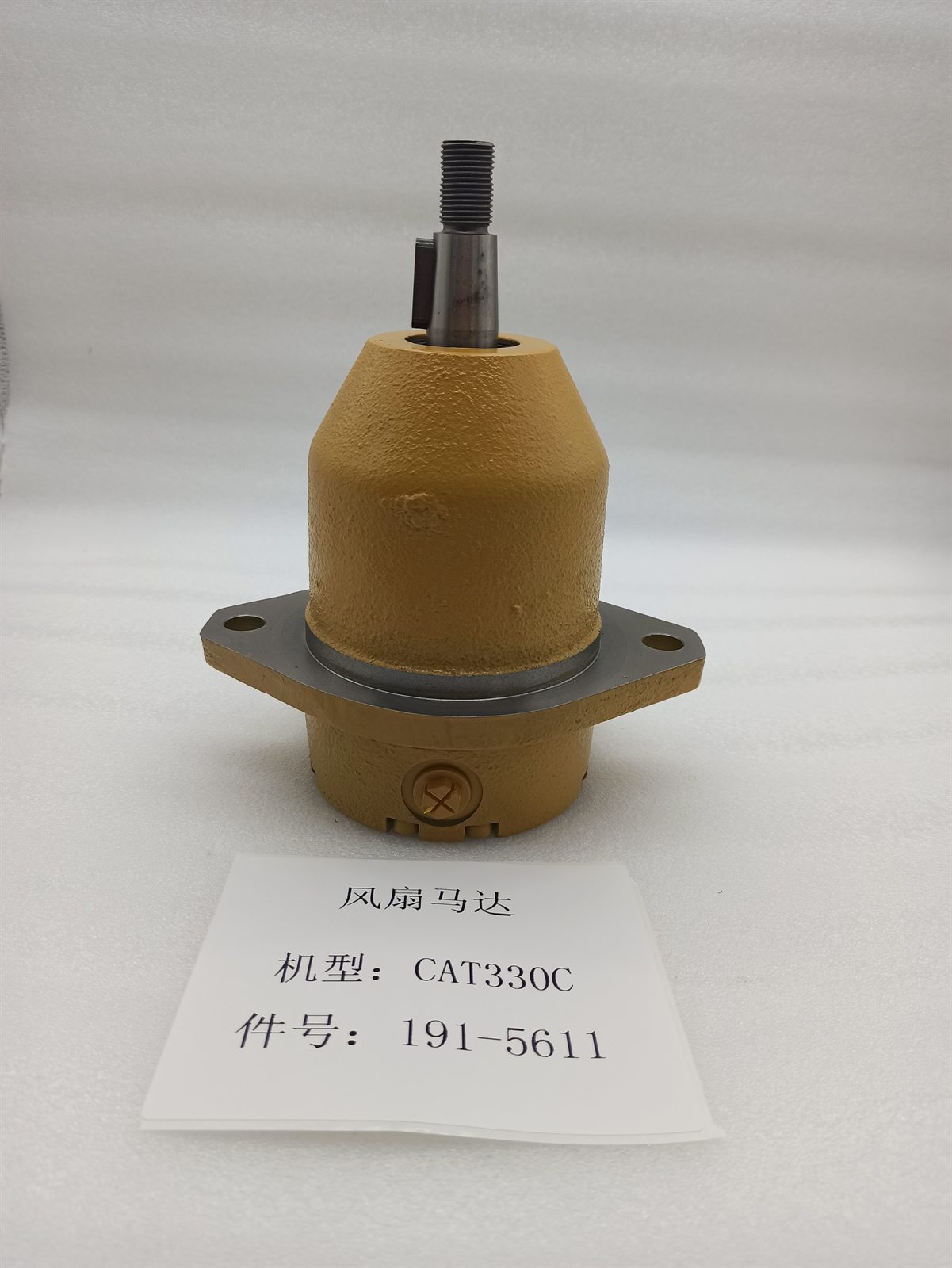
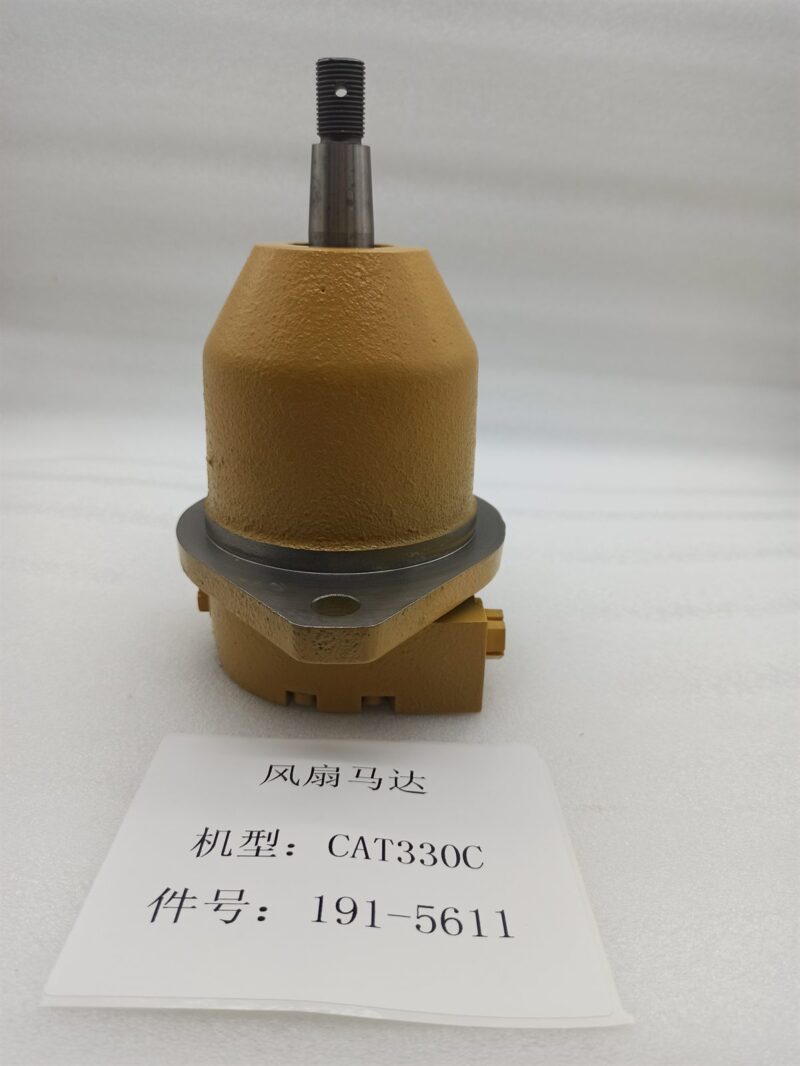
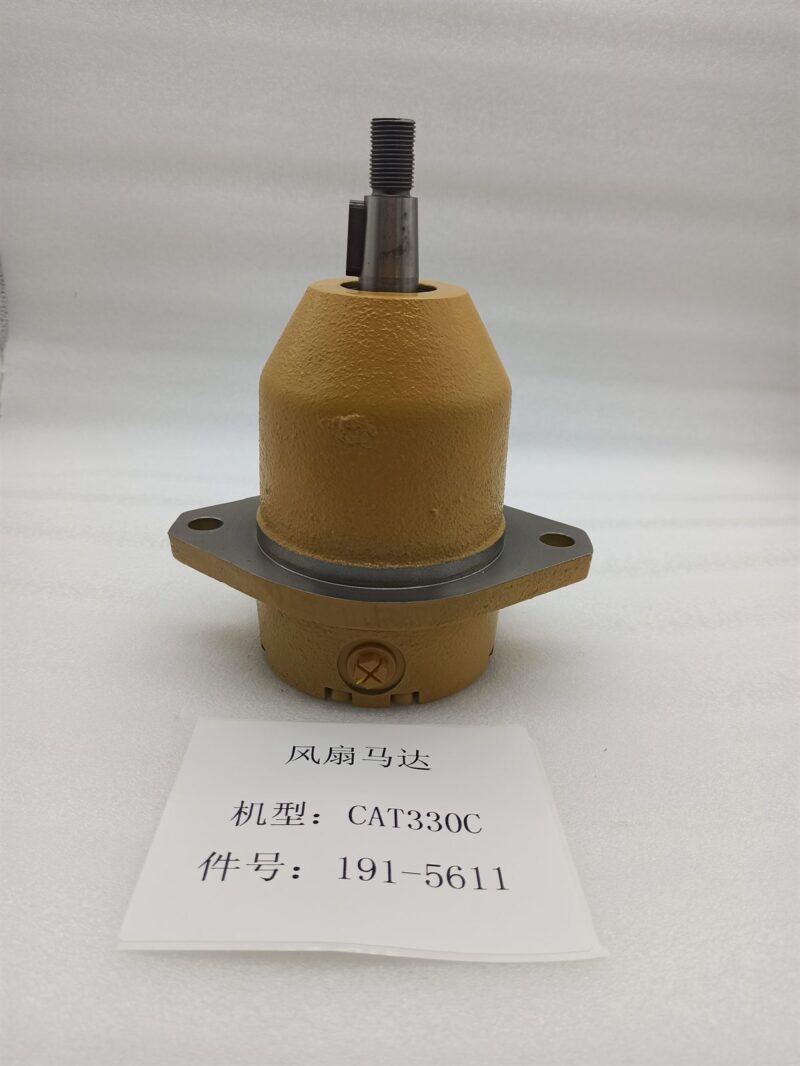
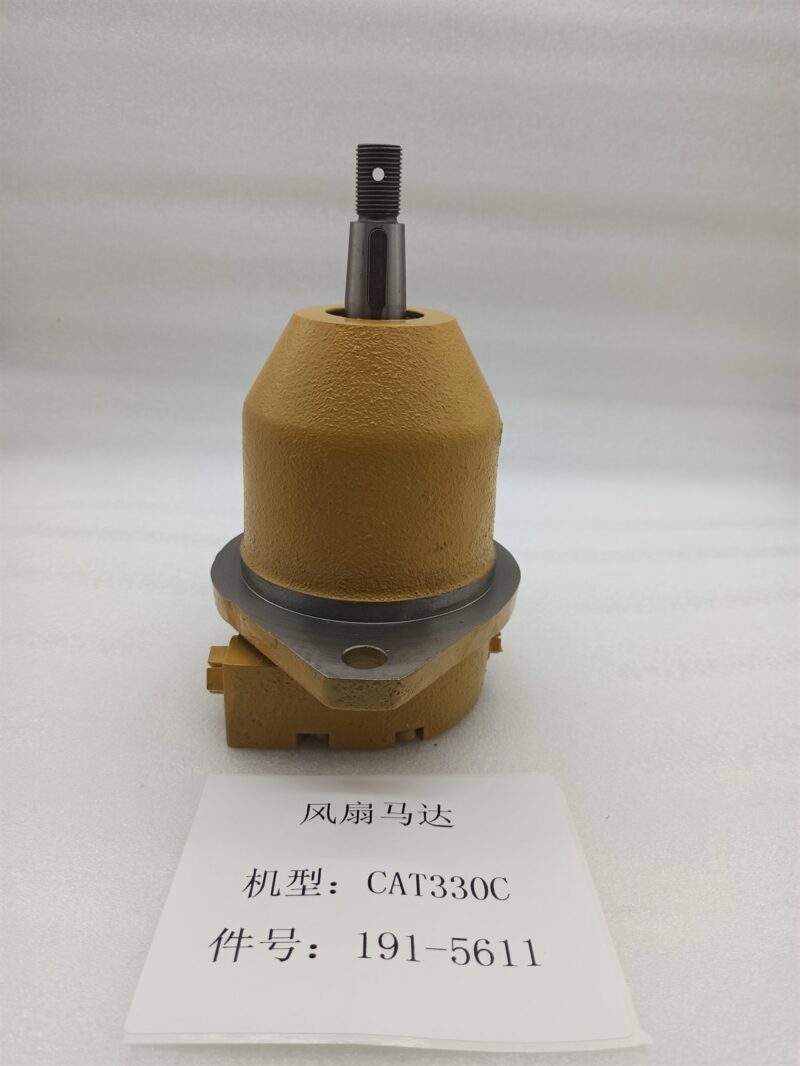
Description
The 330C sits in that generation of CAT excavators where the cooling package was already hydraulic but the control logic was still simple: fan speed followed coolant and oil temperature through a valve, and the motor did the rest. There is no regulator inside the motor to go wrong, which makes the diagnosis shorter than on later machines, and makes the oil the main thing standing between you and a second replacement.
What Caterpillar calls this part
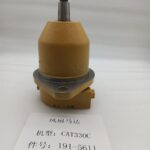
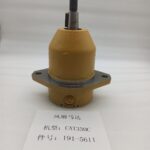
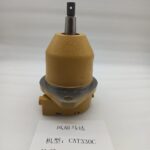
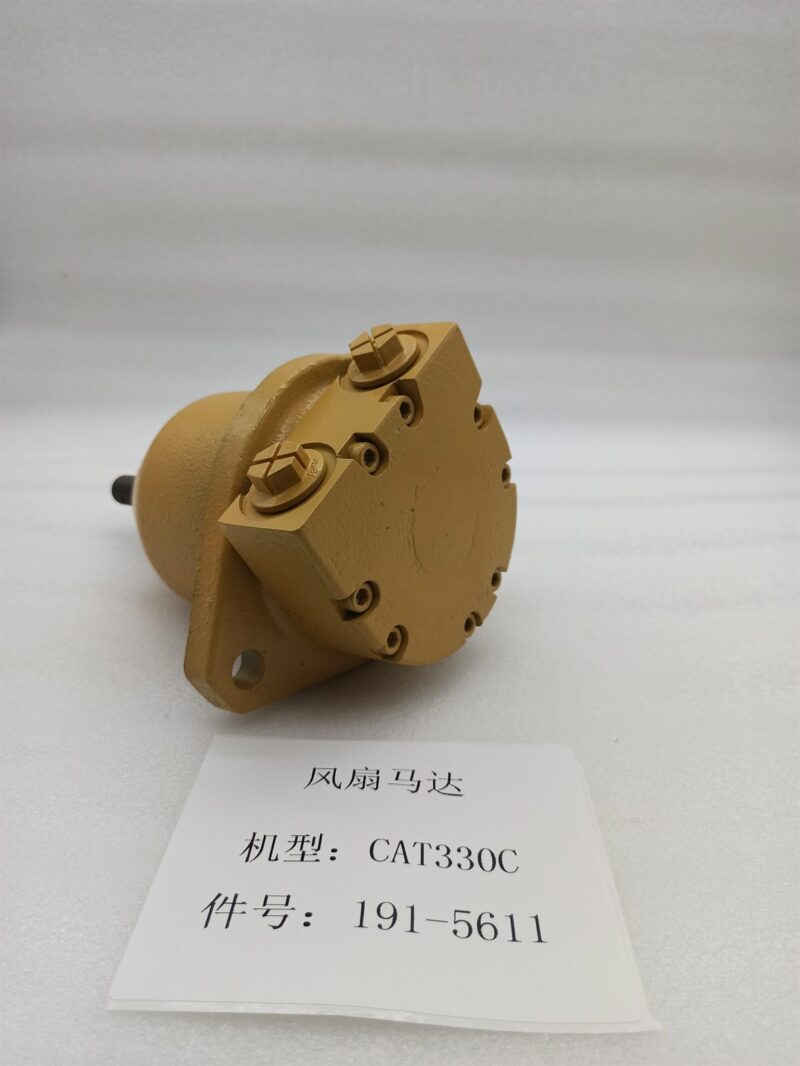
191-5611 is catalogued as a piston motor group, item name Motor Gp-Psf, described as a fixed displacement motor. The parallel reference 20R-0118 is listed in Caterpillar’s remanufactured parts programme as the same position. Several of these Cat-numbered fan motors are built by Bosch Rexroth and carry a Rexroth number underneath, which is useful when you are trying to source a seal kit rather than a whole unit.
Machine data for the 330C
| Item | Published figure for CAT 330C |
|---|---|
| Operating weight | approximately 35,100 kg (34,670 kg quoted for the 330C LN configuration) |
| Engine | Caterpillar C9 ATAAC, 8.8 litre, six cylinder, turbocharged |
| Net power | 182 kW (about 245 hp) at 1,800 rpm |
| Gross power | 197 kW (264 hp) |
| Main pump maximum flow | 560 L/min (148 gpm) |
| Relief pressure | 34.3 MPa |
| Fan pump in the same circuit | 194-8384 / 283-5992 |
Those two last rows are the reason this page and the pump page exist separately. A 330C that cannot reach fan speed has two candidate parts in the circuit, and buying the wrong one costs a week.
Which part is actually at fault
The motor is the downstream component. It receives oil and turns a shaft. If it is sound and the pump is not delivering, the fan is slow. If the pump is sound and the motor has worn internally, oil passes through the motor without turning it hard enough, and the energy comes out as heat in the hydraulic oil instead. That second case is the one that fools people, because the machine’s hydraulic oil temperature climbs before the coolant does, and everyone assumes a cooler problem.
Three checks separate them:
- Measure pressure and flow at the motor inlet ports. Short flow means the pump or its supply.
- Drain-test the motor: with the case drain line off, run the fan and collect the drain. Anything well beyond a trickle indicates internal bypass.
- Listen to the pump while the fan is commanded to full speed. A growl that rises with engine rpm is cavitation or wear in the gear set, not a motor problem.
Our fan motor diagnosis guide sets out the same sequence with test equipment, and the fan pump diagnosis article covers the pump side.
Fitment and what this part is not
Supplied for CAT 330C, 330C L, 330C FM, 330C LN and 330C MH material handlers with the C9 engine. It is not the 325C motor, which is 179-9778 / 20R-0121 and listed on its own page, and it is not the 330D or 336D motor, which is 234-4638 / 10R-8694 on the D-series machines. Supplier catalogues mix all three up routinely, so the number on your housing is the authority.
Ordering checklist
- Photograph the motor nameplate or the cast identification on the unit you removed. This settles 191-5611 versus 179-9778 in one image.
- Send the machine serial number including the prefix. Caterpillar’s parts information is organised by prefix, and the fan pump and motor combinations changed during production.
- Confirm shaft form and flange. Splines, keyway and bolt circle are what a workshop checks first when the box arrives; send us a photo of the old shaft end and we will match it.
- Order the filter with the part. A replacement motor without a new return filter element is a repeat claim waiting to happen.
Cleanliness and fitting
Hold the circuit around ISO 4406 18/16/13, which is the class Bosch Rexroth guidance points to for axial and slipper piston units in mobile service. Flush before fitting if the old motor produced debris, fill the casing with clean oil before the first crank, and keep the case drain line routing to tank with no restriction and no check valve in it. Then prove the fan reaches full speed under thermal load before the guard goes back on, and record coolant and hydraulic oil temperature at low and high idle so the next 500 hours have a baseline.
The mating pump for this machine is on our 194-8384 fan pump page, and other CAT cooling drive parts are under Caterpillar hydraulic fan motor.