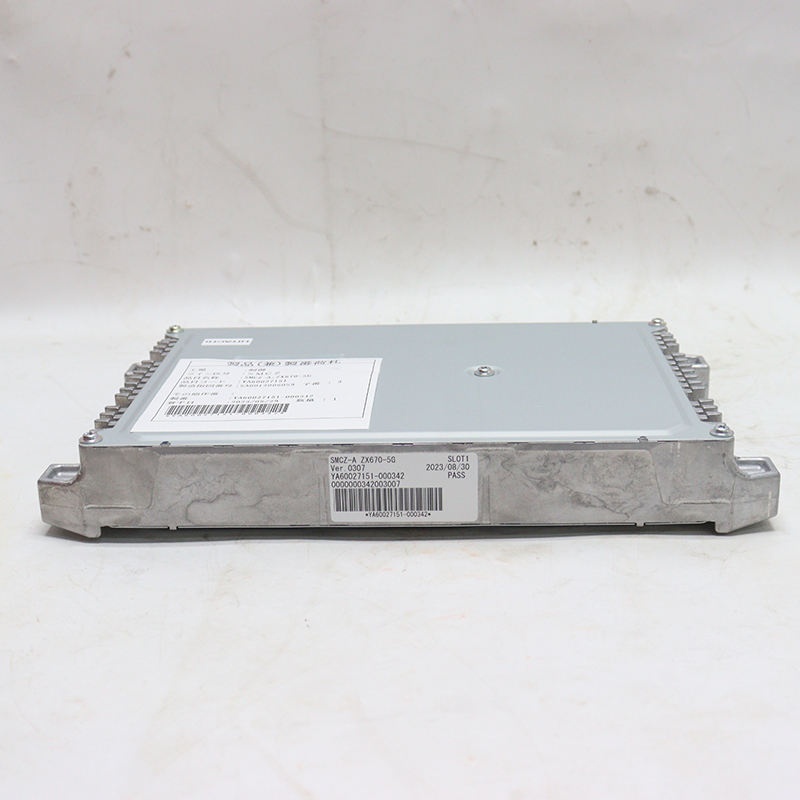
Hitachi ZAX670-5G SCM Engine Control Unit is presented in the Hongtengda catalog as an excavator-parts inquiry reference. This guide explains how a workshop, fleet owner, or distributor can diagnose the surrounding system, define the part correctly, compare a quotation, and commission the machine without turning a catalog association into an unsupported fitment promise. A controller is often replaced before power, ground, network, input, output load, connector, and configuration causes have been isolated. The practical task is therefore to build an evidence chain: identify the machine, document the old unit, test the system, inspect every interface, control contamination, and record the result. The product title and photograph are useful starting points. They do not by themselves prove interchangeability, internal specification, software, calibration, pressure setting, material, stock, delivery, warranty, or suitability for a particular serial number.
본 전자 컨트롤러 가이드가 다루는 내용
해당 부품은 굴삭기 전자 제어 네트워크 내에서 작동하며, 일반적인 역할은 센서 입력을 처리하고, 캘리브레이션된 제어 로직을 실행하고, 출력을 구동하고, 장비 네트워크에서 통신하고, 진단 정보를 저장하는 것입니다. 본 문서는 증상 포착부터 식별, 통제된 테스트, 구매, 설치 및 단계별 승인까지의 작업을 따릅니다. 일반적인 불만 사항으로는 통신 불가, 시동 불가, 출력 누락, 간헐적 셧다운, 잘못된 장비 모드, 반복 코드, 네트워크 오류 또는 구성 불일치가 있습니다. 이러한 관찰은 작동 조건이 기록될 때만 가치가 있습니다. 오일 및 냉각수 온도, 엔진 속도, 선택된 작업 모드, 어태치먼트 부하, 주행 방향, 상부 구조 위치, 활성 코드, 그리고 문제가 지속적인지 간헐적인지를 기록하십시오. 안전, 테스트 연결, 한계값, 유체, 조임 절차, 소프트웨어 단계 및 승인 기준에 대해서는 정확한 장비 서비스 정보를 사용하십시오. 본 문서의 일반 산업 자료는 방법을 설명하며, 모델별 값을 확립하지 않습니다. 견적된 전자 컨트롤러의 경우, 승인 전에 이 체크포인트를 확인됨, 미해결 또는 해당 없음으로 표시하십시오.
가정이 아닌 식별부터 시작하십시오
Begin with the full machine identification number and a readable record of the removed part. For Hitachi ZAX670-5G SCM Engine Control Unit, collect machine serial, controller label and hardware number, software or program reference, connector keys, pin count, network topology, power and ground tests, wake-up signals, codes, and original configuration record. Photograph the installed orientation before disconnecting anything, then add a simple sketch that gives every hose, connector, bracket, and adjacent obstruction a unique label. Do not collapse different evidence fields into one model name. A supplier needs to know which observation came from the machine plate, which came from the old component, and which came from an online or paper catalog. If two identifiers conflict, preserve the conflict and resolve it before shipment. The following table is designed to travel with the RFQ, quotation, receiving inspection, and workshop job card.
| 증거 그룹 | RFQ 또는 작업 파일에 포함되어야 할 사항 |
|---|---|
| 기계 식별 | 모델 패밀리 이름에 의존하기 전에 전체 장비 모델 및 일련번호/PIN을 기록하십시오. |
| 기존 유닛 식별 | 모든 태그, 주조 마크, 커넥터, 포트, 플랜지 및 방향 단서를 촬영하십시오. |
| 인터페이스 증거 | 장비 시리얼, 컨트롤러 라벨 및 하드웨어 번호, 소프트웨어 또는 프로그램 참조, 커넥터 키, 핀 수, 네트워크 토폴로지, 전원 및 접지 테스트, 웨이크업 신호, 코드 및 원래 구성 기록 |
| 고장 증거 | 부하 상태의 배터리 공급, 접지 전압 강하, 웨이크업 신호, 허용된 경우 네트워크 저항 및 파형, 입력 타당성, 출력 전류 거동, 통신 및 구성 상태 |
| 상업적 범위 | 상태, 포함된 하드웨어, 보존, 테스트 증거, 포장, 납기 및 보증을 서면으로 확인하십시오. |
주문 전 시스템 진단
Create a baseline while the machine is still complete whenever safe access is possible. Record battery supply under load, voltage drop on grounds, wake-up signal, network resistance and waveform where authorized, input plausibility, output-current behavior, communication, and configuration status. Compare repeatable operating points rather than isolated readings. A value taken with a cold machine, unknown engine speed, or different command cannot be compared reliably with a hot loaded test. Separate cause, consequence, and collateral damage. A weak actuator may change pump sound; a restricted return may create heat; a damaged harness may create a control response that resembles hydraulic wear. The objective is not to collect the largest number of measurements. It is to select tests that can disprove competing causes. Stop testing when stored hydraulic energy, unstable support, rotating parts, hot surfaces, fuel pressure, or uncontrolled movement cannot be managed. Depressurization, isolation, lifting, blocking, cleanliness, and personal protection must follow the machine and component instructions. The Hitachi ZAX670-5G SCM Engine Control Unit job card should show who completed this check, under what operating condition, and with which source.
Failure evidence specific to Hitachi ZAX670-5G SCM Engine Control Unit
Inspect case damage, connector pins, water ingress, corrosion, mounting and ground path, harness strain, label identity, repair evidence, and heat exposure. Treat contamination and damaged interfaces as system evidence, not merely as defects to wipe away. Photograph the condition before cleaning, sample fluids through a controlled method where required, and keep removed filters or magnetic debris linked to the job record. A replacement decision should explain why the observed failure could create the complaint and why plausible alternatives were rejected. If the evidence does not connect the component to the symptom, continue diagnosis. This discipline protects both the buyer and supplier from an expensive but inconclusive parts swap. When a removed unit is sent for evaluation, preserve ports and connectors immediately. Identify whether the report concerns the complete assembly, one subcomponent, or only the visible exterior. A clean exterior is not proof of acceptable internal condition, and an internal defect is not proof that every interface matches the offered replacement. When comparing offers for Hitachi ZAX670-5G SCM Engine Control Unit, ask each supplier to respond to this same evidence point in writing.
증거에 따라 수리, 재생 또는 교체를 선택하십시오
| 판단 | 증거 패턴 | 필요한 다음 조치 |
|---|---|---|
| 진단 계속 | 정체성이 불확실하거나 시스템 증거가 전자 컨트롤러 외부를 가리키는 경우. | 제어된 테스트를 완료하고 회로 양쪽을 비교하십시오. |
| 수리 또는 재생 | 인터페이스가 정확하고 복구 가능한 마모가 문서화됨. | 부품 범위, 측정값, 청결도, 테스트 방법 및 검수 기록에 합의하십시오. |
| 어셈블리 교체 | 구조적 또는 정밀 표면이 부적합하거나, 범위가 불확실하거나, 다운타임으로 인해 완전한 유닛이 유리함. | 완전한 인터페이스 세트를 일치시키고 서면 상태 및 테스트 증거를 확보하십시오. |
| 중단 및 에스컬레이션 | 균열, 불안전한 저장 에너지, 심각한 오염, 제어되지 않은 움직임 또는 누락된 서비스 정보가 존재함. | 계속하기 전에 장비 매뉴얼과 자격을 갖춘 수리 공정을 사용하십시오. |
Repair economics must include machine downtime, removal and installation labor, supporting-system cleanup, calibration or programming, freight, and the consequence of a repeat failure. Compare quotations on the same scope. A low price for a bare unit is not equivalent to a tested assembly with the required controls, fittings, documentation, and preservation. For remanufactured parts, ask which wear items and precision surfaces were inspected, what was replaced, how cleanliness was controlled, and what test record accompanies the serialised unit. For a new unit, ask for traceable identity, storage condition, protective packaging, and the exact supplied configuration. Keep this result in the receiving and commissioning file for Hitachi ZAX670-5G SCM Engine Control Unit so a later review can reproduce the decision.
검증 가능한 견적서 작성
A useful RFQ for Hitachi ZAX670-5G SCM Engine Control Unit includes the machine serial, application, full old-unit identity, interface photographs, measured geometry, symptom history, test evidence, related repairs, contamination findings, required condition, included hardware, destination, and deadline. Ask the supplier to repeat the decisive identifiers and scope on the quotation rather than replying only with a price. The catalog page for Hitachi ZAX670-5G SCM Engine Control Unit can be reviewed here. 문의 앵커로 사용하고, 리스팅을 적합성 확인으로 취급하기 전에 증거 패키지를 발송하십시오. 보다 광범위한 구매 프로세스에 대해서는 this related excavator guide 및 this supporting diagnostic article. 을(를) 검토하십시오. 상업적 주장은 서면으로 작성되어야 합니다. 견적된 품목의 실제 유닛 상태, 포함된 액세서리, 테스트 문서, 포장 방법, 납기, 운송 조건, 반품 조건 및 보증 기준을 확인하십시오.
설치 전 입고 검사
Quarantine the shipment until identity and condition are checked. Compare the packing label, unit tag, photographs, ports, connectors, mounting pattern, dimensions, handedness, and accessories with the approved quotation. Look for impact, corrosion, missing plugs, displaced seals, loose hardware, and contamination. Keep the old and replacement units side by side in the same orientation. Use a written comparison sheet and mark each decisive interface as matched, unmatched, or unresolved. Do not modify a bracket, connector, port, shaft, housing, or calibrated control to make an uncertain part fit; return the question to the supplier with photographs and measurements. Store the part according to its preservation requirements. Keep protective caps in place until the connection is ready, and keep electronic connectors dry and protected from electrostatic and mechanical damage. A workshop evaluating Hitachi ZAX670-5G SCM Engine Control Unit should resolve this point before modifying, installing, or returning the component.
설치 및 오염 제어
Before installation, correct the cause identified during diagnosis. Clean or replace affected lines, coolers, tanks, filters, breathers, fittings, and related components to the scope required by the failure evidence and service information. Transfer only confirmed fittings or controls, and document every transferred item. Use clean caps and dedicated plugs. Clean surrounding areas before opening the system, inspect hoses internally where damage or contamination is plausible, and never use lint-producing material on precision hydraulic or fuel interfaces. Lubricants, assembly fluids, seals, fasteners, and tightening methods must come from the exact service information. Route hoses and harnesses using the pre-removal labels. Check bend radius, twist, clamp position, heat exposure, abrasion, connector locks, ground paths, and service access. A correctly identified component can still fail when installation creates a new restriction, leak, electrical drop, or alignment error. For this Hitachi ZAX670-5G SCM Engine Control Unit inquiry, store the finding with the machine serial, old-unit photographs, and test record.
제어된 단계로 시운전
적용 가능한 장비 및 부품 절차에서 요구하는 대로만 프라이밍, 충전, 블리딩, 프로그래밍 또는 캘리브레이션을 수행하십시오. 정적 검사, 저위험 초기 작동, 무부하 기능 점검, 점진적으로 높은 요구 순으로 시작하십시오. 각 단계에서 누출, 소음, 온도, 코드, 유체 레벨 및 예상치 못한 움직임을 확인하기 위해 중단하십시오. 탈거 전에 사용한 동일한 기준선 측정을 반복하십시오: 부하 상태의 배터리 공급, 접지 전압 강하, 웨이크업 신호, 허용된 경우 네트워크 저항 및 파형, 입력 타당성, 출력 전류 거동, 통신 및 구성 상태. 성공적인 결과는 비교 가능한 조건에서의 증거 기반 변화입니다. 날짜, 기술자, 장비 가동 시간, 주변 조건, 계측기, 테스트 포인트, 판독값 및 관찰을 기록하여 다른 사람이 결정을 감사할 수 있도록 하십시오. 포장, 견적서, 입고 사진, 기존 부품 이미지, 테스트 결과, 유체 또는 필터 증거, 프로그래밍 기록 및 시운전 시트를 보관하십시오. 이 문서는 고장이 재발하거나 보증 검토가 필요한 경우 필수적입니다. 견적된 전자 컨트롤러의 경우, 승인 전에 이 체크포인트를 확인됨, 미해결 또는 해당 없음으로 표시하십시오.
기술 심층 분석: 부하 상태의 전원 및 접지
For Hitachi ZAX670-5G SCM Engine Control Unit, power and ground under load should be treated as a question that must be answered by measurements and documented observations. Define the test boundary first: what is connected, what is isolated, which operating state is used, which instrument is suitable, and what exact service source supplies the limit. This prevents a result from being detached from the conditions that produced it. Collect a pair of evidence sets whenever possible. The first describes the complaint state and the second describes a known comparison state, a commanded change, or the verified condition after repair. Preserve units, test-point identity, temperatures, engine speed, command percentage, and time. A trend often separates restriction, leakage, control error, mechanical drag, and intermittent electrical behavior more clearly than one peak value. Use the result to update the decision tree. If the evidence supports the component, define the precise repair or replacement scope. If it points elsewhere, protect the new part from being used as a diagnostic tool. If the result remains ambiguous, state what is missing and design the next safe test rather than converting uncertainty into a compatibility or failure claim.
Technical deep dive: network topology and termination
For Hitachi ZAX670-5G SCM Engine Control Unit, network topology and termination should be treated as a question that must be answered by measurements and documented observations. Define the test boundary first: what is connected, what is isolated, which operating state is used, which instrument is suitable, and what exact service source supplies the limit. This prevents a result from being detached from the conditions that produced it. Collect a pair of evidence sets whenever possible. The first describes the complaint state and the second describes a known comparison state, a commanded change, or the verified condition after repair. Preserve units, test-point identity, temperatures, engine speed, command percentage, and time. A trend often separates restriction, leakage, control error, mechanical drag, and intermittent electrical behavior more clearly than one peak value. Use the result to update the decision tree. If the evidence supports the component, define the precise repair or replacement scope. If it points elsewhere, protect the new part from being used as a diagnostic tool. If the result remains ambiguous, state what is missing and design the next safe test rather than converting uncertainty into a compatibility or failure claim.
Technical deep dive: input plausibility
For Hitachi ZAX670-5G SCM Engine Control Unit, input plausibility should be treated as a question that must be answered by measurements and documented observations. Define the test boundary first: what is connected, what is isolated, which operating state is used, which instrument is suitable, and what exact service source supplies the limit. This prevents a result from being detached from the conditions that produced it. Collect a pair of evidence sets whenever possible. The first describes the complaint state and the second describes a known comparison state, a commanded change, or the verified condition after repair. Preserve units, test-point identity, temperatures, engine speed, command percentage, and time. A trend often separates restriction, leakage, control error, mechanical drag, and intermittent electrical behavior more clearly than one peak value. Use the result to update the decision tree. If the evidence supports the component, define the precise repair or replacement scope. If it points elsewhere, protect the new part from being used as a diagnostic tool. If the result remains ambiguous, state what is missing and design the next safe test rather than converting uncertainty into a compatibility or failure claim.
Technical deep dive: output-load isolation
For Hitachi ZAX670-5G SCM Engine Control Unit, output-load isolation should be treated as a question that must be answered by measurements and documented observations. Define the test boundary first: what is connected, what is isolated, which operating state is used, which instrument is suitable, and what exact service source supplies the limit. This prevents a result from being detached from the conditions that produced it. Collect a pair of evidence sets whenever possible. The first describes the complaint state and the second describes a known comparison state, a commanded change, or the verified condition after repair. Preserve units, test-point identity, temperatures, engine speed, command percentage, and time. A trend often separates restriction, leakage, control error, mechanical drag, and intermittent electrical behavior more clearly than one peak value. Use the result to update the decision tree. If the evidence supports the component, define the precise repair or replacement scope. If it points elsewhere, protect the new part from being used as a diagnostic tool. If the result remains ambiguous, state what is missing and design the next safe test rather than converting uncertainty into a compatibility or failure claim.
Technical deep dive: water-ingress evidence
For Hitachi ZAX670-5G SCM Engine Control Unit, water-ingress evidence should be treated as a question that must be answered by measurements and documented observations. Define the test boundary first: what is connected, what is isolated, which operating state is used, which instrument is suitable, and what exact service source supplies the limit. This prevents a result from being detached from the conditions that produced it. Collect a pair of evidence sets whenever possible. The first describes the complaint state and the second describes a known comparison state, a commanded change, or the verified condition after repair. Preserve units, test-point identity, temperatures, engine speed, command percentage, and time. A trend often separates restriction, leakage, control error, mechanical drag, and intermittent electrical behavior more clearly than one peak value. Use the result to update the decision tree. If the evidence supports the component, define the precise repair or replacement scope. If it points elsewhere, protect the new part from being used as a diagnostic tool. If the result remains ambiguous, state what is missing and design the next safe test rather than converting uncertainty into a compatibility or failure claim.
Technical deep dive: hardware versus software identity
For Hitachi ZAX670-5G SCM Engine Control Unit, hardware versus software identity should be treated as a question that must be answered by measurements and documented observations. Define the test boundary first: what is connected, what is isolated, which operating state is used, which instrument is suitable, and what exact service source supplies the limit. This prevents a result from being detached from the conditions that produced it. Collect a pair of evidence sets whenever possible. The first describes the complaint state and the second describes a known comparison state, a commanded change, or the verified condition after repair. Preserve units, test-point identity, temperatures, engine speed, command percentage, and time. A trend often separates restriction, leakage, control error, mechanical drag, and intermittent electrical behavior more clearly than one peak value. Use the result to update the decision tree. If the evidence supports the component, define the precise repair or replacement scope. If it points elsewhere, protect the new part from being used as a diagnostic tool. If the result remains ambiguous, state what is missing and design the next safe test rather than converting uncertainty into a compatibility or failure claim.
Technical deep dive: programming and parameter transfer
For Hitachi ZAX670-5G SCM Engine Control Unit, programming and parameter transfer should be treated as a question that must be answered by measurements and documented observations. Define the test boundary first: what is connected, what is isolated, which operating state is used, which instrument is suitable, and what exact service source supplies the limit. This prevents a result from being detached from the conditions that produced it. Collect a pair of evidence sets whenever possible. The first describes the complaint state and the second describes a known comparison state, a commanded change, or the verified condition after repair. Preserve units, test-point identity, temperatures, engine speed, command percentage, and time. A trend often separates restriction, leakage, control error, mechanical drag, and intermittent electrical behavior more clearly than one peak value. Use the result to update the decision tree. If the evidence supports the component, define the precise repair or replacement scope. If it points elsewhere, protect the new part from being used as a diagnostic tool. If the result remains ambiguous, state what is missing and design the next safe test rather than converting uncertainty into a compatibility or failure claim.
Technical deep dive: post-install communication audit
For Hitachi ZAX670-5G SCM Engine Control Unit, post-install communication audit should be treated as a question that must be answered by measurements and documented observations. Define the test boundary first: what is connected, what is isolated, which operating state is used, which instrument is suitable, and what exact service source supplies the limit. This prevents a result from being detached from the conditions that produced it. Collect a pair of evidence sets whenever possible. The first describes the complaint state and the second describes a known comparison state, a commanded change, or the verified condition after repair. Preserve units, test-point identity, temperatures, engine speed, command percentage, and time. A trend often separates restriction, leakage, control error, mechanical drag, and intermittent electrical behavior more clearly than one peak value. Use the result to update the decision tree. If the evidence supports the component, define the precise repair or replacement scope. If it points elsewhere, protect the new part from being used as a diagnostic tool. If the result remains ambiguous, state what is missing and design the next safe test rather than converting uncertainty into a compatibility or failure claim.
Engineering audit: make the conclusion reproducible
A professional report lets a second technician reconstruct the decision without relying on memory. Number photographs, identify test instruments, record calibration status where relevant, cite the service procedure, show hose and connector labels, and link every conclusion to an observation. Distinguish measured facts from catalog associations and from hypotheses. For the supplier, the same discipline reduces quotation risk. A complete identity pack makes it possible to compare tags, interfaces, supplied controls, and condition before freight is committed. For the workshop, the report protects the diagnosis when multiple systems interact or when a failure returns after several operating hours. Close the report with unresolved items, acceptance conditions, and ownership of each next action. No pressure, flow, resistance, torque, clearance, software, or fitment value should be copied from a similar machine unless the exact service information confirms that it applies. Apply this step to Hitachi ZAX670-5G SCM Engine Control Unit only after its tag, interfaces, and installed orientation have been documented.
Related excavator video
Hitachi excavator electronic-system context; controller identity still requires label and serial verification. The video is supplementary; the exact machine manual, identity evidence, and measured test results control the job. The Hitachi ZAX670-5G SCM Engine Control Unit job card should show who completed this check, under what operating condition, and with which source.
Primary technical references and claim limits
These sources support general service, diagnostic, safety, cleanliness, sealing, electrical, engine, or hydraulic principles as applicable. They do not confirm that Hitachi ZAX670-5G SCM Engine Control Unit fits a particular machine serial, nor do they provide the serial-specific limits for this catalog item. Use the Hongtengda contact page to send the machine serial, old-part tag, interface photographs, measurements, fault evidence, required condition, and destination for a written comparison.
Frequently asked questions
Does the model name prove that Hitachi ZAX670-5G SCM Engine Control Unit will fit?
No. Model-family wording is an inquiry clue. Serial breaks, regional builds, engine or hydraulic arrangements, software, connectors, ports, mounts, and previous repairs can change the required part. Keep this result in the receiving and commissioning file for Hitachi ZAX670-5G SCM Engine Control Unit so a later review can reproduce the decision.
Should the workshop replace the part when a fault code or symptom names it?
Not automatically. A controller is often replaced before power, ground, network, input, output load, connector, and configuration causes have been isolated. Verify the circuit or system and document the evidence before ordering. For product reference 2945, this evidence remains subordinate to the exact machine serial and service documentation.
What should a buyer send with the first inquiry?
Send the complete machine serial, old-unit labels, installed and removed photographs, decisive dimensions and interfaces, battery supply under load, voltage drop on grounds, wake-up signal, network resistance and waveform where authorized, input plausibility, output-current behavior, communication, and configuration status, required condition, destination, and timing. A workshop evaluating Hitachi ZAX670-5G SCM Engine Control Unit should resolve this point before modifying, installing, or returning the component.