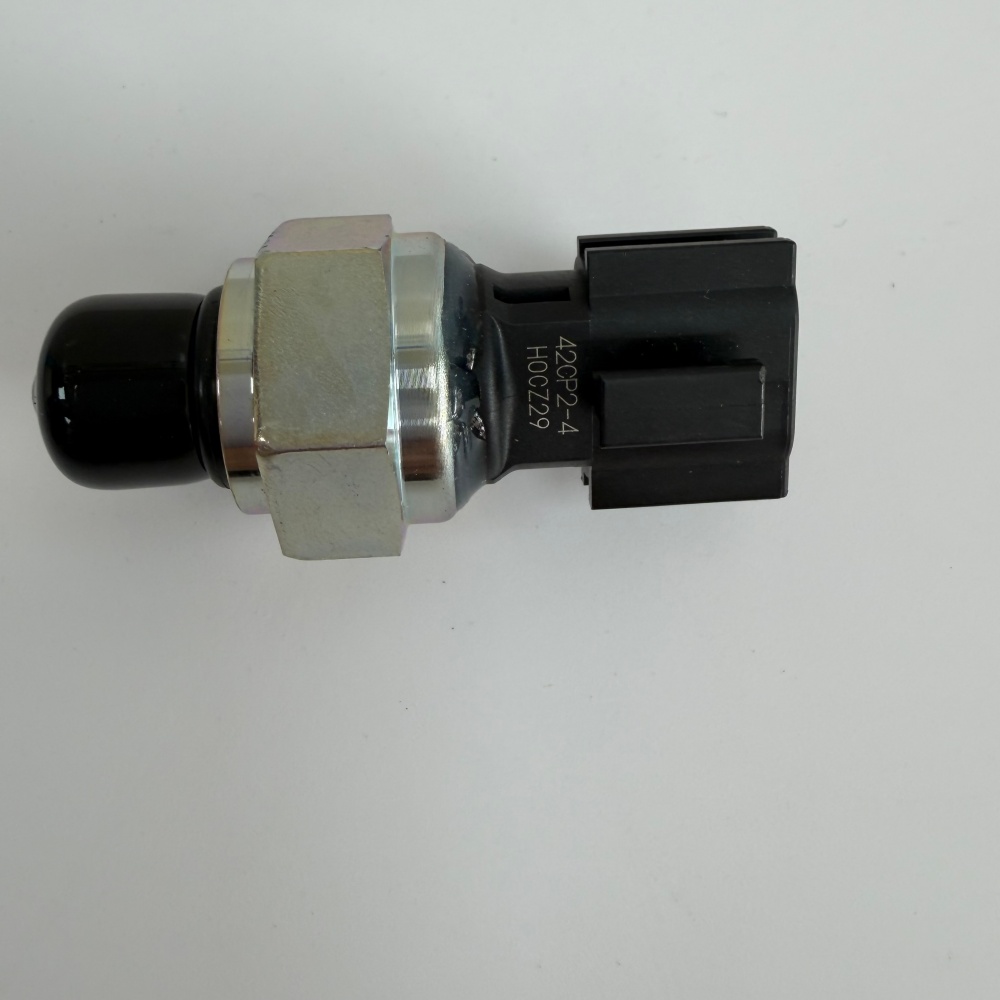
Hitachi 4436535 Low-Pressure Sensor (42CP2-4) is presented in the Hongtengda catalog as an excavator-parts inquiry reference. This guide explains how a workshop, fleet owner, or distributor can diagnose the surrounding system, define the part correctly, compare a quotation, and commission the machine without turning a catalog association into an unsupported fitment promise. A code naming a sensor circuit does not prove that the sensor itself is defective because supply, ground, harness, connector, controller, and mechanical conditions can produce the same code. The practical task is therefore to build an evidence chain: identify the machine, document the old unit, test the system, inspect every interface, control contamination, and record the result. The product title and photograph are useful starting points. They do not by themselves prove interchangeability, internal specification, software, calibration, pressure setting, material, stock, delivery, warranty, or suitability for a particular serial number.
ما يغطيه هذا الدليل الخاص بمستشعر الحفارة
يعمل المكون ضمن دائرة القياس والتحكم الإلكترونية للحفارة، ودوره العام هو تحويل حالة فيزيائية أو حدث دوراني إلى إشارة تستخدمها وحدة التحكم للحماية والعرض والتحكم في الآلة. تتابع المقالة المهمة من التقاط الأعراض عبر التحديد والاختبار المُتحكَّم فيه والشراء والتركيب والقبول التدريجي. تشمل الشكاوى النموذجية القراءات غير المعقولة، وانخفاض الأداء المتقطع، وعدم التشغيل، والتحكم غير المستقر، ورسائل التحذير، ورموز الأعطال، ومؤشرات الدائرة المفتوحة أو القصيرة، أو الفشل المرتبط بدرجة الحرارة. هذه الملاحظات قيّمة فقط عندما يتم تسجيل ظرف التشغيل. سجّل درجة حرارة الزيت وسائل التبريد، وسرعة المحرك، ووضع العمل المحدد، وحمل الملحق، واتجاه السير، وموضع الهيكل العلوي، والرموز النشطة، وما إذا كانت المشكلة ثابتة أم متقطعة. استخدم معلومات خدمة الآلة الدقيقة للسلامة وتوصيلات الاختبار والحدود والسوائل وإجراءات الشد وخطوات البرمجيات ومعايير القبول. المصادر الصناعية العامة في هذه المقالة تشرح الأساليب؛ لكنها لا تحدد القيم الخاصة بالطراز. بالنسبة لمستشعر الحفارة المذكور، ضع علامة على نقطة التحقق هذه كمؤكدة أو غير محلولة أو غير منطبقة قبل الموافقة.
ابدأ بالهوية، لا بالافتراضات
Begin with the full machine identification number and a readable record of the removed part. For Hitachi 4436535 Low-Pressure Sensor (42CP2-4), collect machine and engine serials, old-sensor marking, connector keying, pin count, thread and sealing geometry, harness condition, reference supply, ground, signal behavior, and scan data. Photograph the installed orientation before disconnecting anything, then add a simple sketch that gives every hose, connector, bracket, and adjacent obstruction a unique label. Do not collapse different evidence fields into one model name. A supplier needs to know which observation came from the machine plate, which came from the old component, and which came from an online or paper catalog. If two identifiers conflict, preserve the conflict and resolve it before shipment. The following table is designed to travel with the RFQ, quotation, receiving inspection, and workshop job card.
| مجموعة الأدلة | ما يجب أن يحتويه طلب عرض الأسعار أو ملف المهمة |
|---|---|
| هوية الآلة | سجّل طراز الآلة الكامل والرقم التسلسلي/PIN قبل الاعتماد على اسم عائلة الطراز. |
| هوية الوحدة القديمة | صوّر كل بطاقة وعلامة صب وموصل ومنفذ وشفة ودليل اتجاه. |
| أدلة الواجهة | الأرقام التسلسلية للآلة والمحرك، وعلامة المستشعر القديم، وتشفير الموصل، وعدد السنون، وهندسة القلاووظ والختم، وحالة ضفيرة الأسلاك، وتغذية المرجع، والأرضي، وسلوك الإشارة، وبيانات المسح |
| دليل العطل | جهد المرجع، وانخفاض الأرضي، واستجابة الإشارة، والمقاومة فقط حيث يحددها الاختبار الصحيح، وشكل الموجة أو التردد حيث يكون ذا صلة، ومعقولية بيانات المسح، وأدلة اختبار الاهتزاز |
| النطاق التجاري | أكّد كتابيًا الحالة، والعتاد المضمّن، والحفظ، وأدلة الاختبار، والتغليف، ومدة التسليم، والضمان. |
شخّص النظام قبل الطلب
Create a baseline while the machine is still complete whenever safe access is possible. Record reference voltage, ground drop, signal response, resistance only where the correct test specifies it, waveform or frequency where relevant, scan-data plausibility, and wiggle-test evidence. Compare repeatable operating points rather than isolated readings. A value taken with a cold machine, unknown engine speed, or different command cannot be compared reliably with a hot loaded test. Separate cause, consequence, and collateral damage. A weak actuator may change pump sound; a restricted return may create heat; a damaged harness may create a control response that resembles hydraulic wear. The objective is not to collect the largest number of measurements. It is to select tests that can disprove competing causes. Stop testing when stored hydraulic energy, unstable support, rotating parts, hot surfaces, fuel pressure, or uncontrolled movement cannot be managed. Depressurization, isolation, lifting, blocking, cleanliness, and personal protection must follow the machine and component instructions. The Hitachi 4436535 Low-Pressure Sensor (42CP2-4) job card should show who completed this check, under what operating condition, and with which source.
Failure evidence specific to Hitachi 4436535 Low-Pressure Sensor (42CP2-4)
Inspect connector lock, terminal tension, seal, cable strain, thread, probe length, sealing face, contamination, corrosion, and physical impact. Treat contamination and damaged interfaces as system evidence, not merely as defects to wipe away. Photograph the condition before cleaning, sample fluids through a controlled method where required, and keep removed filters or magnetic debris linked to the job record. A replacement decision should explain why the observed failure could create the complaint and why plausible alternatives were rejected. If the evidence does not connect the component to the symptom, continue diagnosis. This discipline protects both the buyer and supplier from an expensive but inconclusive parts swap. When a removed unit is sent for evaluation, preserve ports and connectors immediately. Identify whether the report concerns the complete assembly, one subcomponent, or only the visible exterior. A clean exterior is not proof of acceptable internal condition, and an internal defect is not proof that every interface matches the offered replacement. When comparing offers for Hitachi 4436535 Low-Pressure Sensor (42CP2-4), ask each supplier to respond to this same evidence point in writing.
اختر الإصلاح أو إعادة التصنيع أو الاستبدال بناءً على الأدلة
| القرار | نمط الأدلة | الإجراء التالي المطلوب |
|---|---|---|
| واصل التشخيص | الهوية غير مؤكدة أو أدلة النظام تشير خارج مستشعر الحفارة. | أكمل الاختبارات المُتحكَّم بها وقارن جانبي الدائرة. |
| إصلاح أو إعادة تصنيع | الواجهات صحيحة والتآكل القابل للاستعادة موثّق. | اتفق على نطاق القطع والقياسات والنظافة وطريقة الاختبار وسجل القبول. |
| استبدال التجميعة | الأسطح الهيكلية أو الدقيقة غير مناسبة، أو النطاق غير مؤكد، أو وقت التوقف يفضّل وحدة كاملة. | طابق مجموعة الواجهات الكاملة واحصل على أدلة الحالة والاختبار كتابيًا. |
| توقف وارفع الأمر | يوجد تشقق أو طاقة مخزنة غير آمنة أو تلوث شديد أو حركة غير مُتحكَّم بها أو معلومات خدمة مفقودة. | استخدم دليل الآلة وعملية إصلاح مؤهلة قبل المتابعة. |
Repair economics must include machine downtime, removal and installation labor, supporting-system cleanup, calibration or programming, freight, and the consequence of a repeat failure. Compare quotations on the same scope. A low price for a bare unit is not equivalent to a tested assembly with the required controls, fittings, documentation, and preservation. For remanufactured parts, ask which wear items and precision surfaces were inspected, what was replaced, how cleanliness was controlled, and what test record accompanies the serialised unit. For a new unit, ask for traceable identity, storage condition, protective packaging, and the exact supplied configuration. Keep this result in the receiving and commissioning file for Hitachi 4436535 Low-Pressure Sensor (42CP2-4) so a later review can reproduce the decision.
ابنِ عرض سعر قابلًا للتحقق
A useful RFQ for Hitachi 4436535 Low-Pressure Sensor (42CP2-4) includes the machine serial, application, full old-unit identity, interface photographs, measured geometry, symptom history, test evidence, related repairs, contamination findings, required condition, included hardware, destination, and deadline. Ask the supplier to repeat the decisive identifiers and scope on the quotation rather than replying only with a price. The catalog page for Hitachi 4436535 Low-Pressure Sensor (42CP2-4) can be reviewed هنا. استخدمها كمرتكز للاستفسار وأرسل حزمة الأدلة قبل التعامل مع القائمة كتأكيد توافق. لعملية شراء أوسع، راجع هذا الدليل المرتبط بالحفارات و هذا المقال التشخيصي الداعم. يجب كتابة الادعاءات التجارية. أكّد الحالة الفعلية للوحدة، والملحقات المضمّنة، وتوثيق الاختبار، وطريقة التغليف، ومدة التسليم، وشروط الشحن، وشروط الإرجاع، وأساس الضمان للعنصر المذكور في العرض.
فحص الاستلام قبل التركيب
Quarantine the shipment until identity and condition are checked. Compare the packing label, unit tag, photographs, ports, connectors, mounting pattern, dimensions, handedness, and accessories with the approved quotation. Look for impact, corrosion, missing plugs, displaced seals, loose hardware, and contamination. Keep the old and replacement units side by side in the same orientation. Use a written comparison sheet and mark each decisive interface as matched, unmatched, or unresolved. Do not modify a bracket, connector, port, shaft, housing, or calibrated control to make an uncertain part fit; return the question to the supplier with photographs and measurements. Store the part according to its preservation requirements. Keep protective caps in place until the connection is ready, and keep electronic connectors dry and protected from electrostatic and mechanical damage. A workshop evaluating Hitachi 4436535 Low-Pressure Sensor (42CP2-4) should resolve this point before modifying, installing, or returning the component.
التركيب والتحكم في التلوث
Before installation, correct the cause identified during diagnosis. Clean or replace affected lines, coolers, tanks, filters, breathers, fittings, and related components to the scope required by the failure evidence and service information. Transfer only confirmed fittings or controls, and document every transferred item. Use clean caps and dedicated plugs. Clean surrounding areas before opening the system, inspect hoses internally where damage or contamination is plausible, and never use lint-producing material on precision hydraulic or fuel interfaces. Lubricants, assembly fluids, seals, fasteners, and tightening methods must come from the exact service information. Route hoses and harnesses using the pre-removal labels. Check bend radius, twist, clamp position, heat exposure, abrasion, connector locks, ground paths, and service access. A correctly identified component can still fail when installation creates a new restriction, leak, electrical drop, or alignment error. For this Hitachi 4436535 Low-Pressure Sensor (42CP2-4) inquiry, store the finding with the machine serial, old-unit photographs, and test record.
شغّل على مراحل مُتحكَّم بها
املأ أو املأ أو انزف الهواء أو برمج أو عاير فقط وفقًا لما يتطلبه إجراء الآلة والمكون المعمول به. ابدأ بفحص ثابت، ثم تشغيل أولي منخفض المخاطر، ثم فحوصات وظيفية بدون حمل، ثم طلب متزايد تدريجيًا. توقف عند كل مرحلة لفحص التسربات والضوضاء ودرجة الحرارة والرموز ومستويات السوائل والحركة غير المتوقعة. أعد نفس قياسات خط الأساس المستخدمة قبل الإزالة: جهد المرجع، وانخفاض الأرضي، واستجابة الإشارة، والمقاومة فقط حيث يحددها الاختبار الصحيح، وشكل الموجة أو التردد حيث يكون ذا صلة، ومعقولية بيانات المسح، وأدلة اختبار الاهتزاز. النتيجة الناجحة هي تغيير قائم على الأدلة تحت ظروف قابلة للمقارنة. سجّل التاريخ والفني وساعات الآلة والظروف المحيطة والأجهزة ونقاط الاختبار والقراءات والملاحظات حتى يتمكن شخص آخر من تدقيق القرار. احتفظ بالتغليف وعرض السعر وصور الاستلام وصور القطعة القديمة ونتائج الاختبار وأدلة السوائل أو الفلاتر وسجل البرمجة وورقة التشغيل. هذا الملف ضروري إذا عاد عطل أو احتُيج إلى مراجعة ضمان. بالنسبة لمستشعر الحفارة المذكور، ضع علامة على نقطة التحقق هذه كمؤكدة أو غير محلولة أو غير منطبقة قبل الموافقة.
تحليل تقني معمق: عطل الدائرة مقابل عطل المكون
For Hitachi 4436535 Low-Pressure Sensor (42CP2-4), circuit fault versus component fault should be treated as a question that must be answered by measurements and documented observations. Define the test boundary first: what is connected, what is isolated, which operating state is used, which instrument is suitable, and what exact service source supplies the limit. This prevents a result from being detached from the conditions that produced it. Collect a pair of evidence sets whenever possible. The first describes the complaint state and the second describes a known comparison state, a commanded change, or the verified condition after repair. Preserve units, test-point identity, temperatures, engine speed, command percentage, and time. A trend often separates restriction, leakage, control error, mechanical drag, and intermittent electrical behavior more clearly than one peak value. Use the result to update the decision tree. If the evidence supports the component, define the precise repair or replacement scope. If it points elsewhere, protect the new part from being used as a diagnostic tool. If the result remains ambiguous, state what is missing and design the next safe test rather than converting uncertainty into a compatibility or failure claim.
تحليل تقني معمق: سلامة المرجع والأرضي
For Hitachi 4436535 Low-Pressure Sensor (42CP2-4), reference and ground integrity should be treated as a question that must be answered by measurements and documented observations. Define the test boundary first: what is connected, what is isolated, which operating state is used, which instrument is suitable, and what exact service source supplies the limit. This prevents a result from being detached from the conditions that produced it. Collect a pair of evidence sets whenever possible. The first describes the complaint state and the second describes a known comparison state, a commanded change, or the verified condition after repair. Preserve units, test-point identity, temperatures, engine speed, command percentage, and time. A trend often separates restriction, leakage, control error, mechanical drag, and intermittent electrical behavior more clearly than one peak value. Use the result to update the decision tree. If the evidence supports the component, define the precise repair or replacement scope. If it points elsewhere, protect the new part from being used as a diagnostic tool. If the result remains ambiguous, state what is missing and design the next safe test rather than converting uncertainty into a compatibility or failure claim.
تحليل تقني معمق: ميكانيكا أطراف الموصل
For Hitachi 4436535 Low-Pressure Sensor (42CP2-4), connector terminal mechanics should be treated as a question that must be answered by measurements and documented observations. Define the test boundary first: what is connected, what is isolated, which operating state is used, which instrument is suitable, and what exact service source supplies the limit. This prevents a result from being detached from the conditions that produced it. Collect a pair of evidence sets whenever possible. The first describes the complaint state and the second describes a known comparison state, a commanded change, or the verified condition after repair. Preserve units, test-point identity, temperatures, engine speed, command percentage, and time. A trend often separates restriction, leakage, control error, mechanical drag, and intermittent electrical behavior more clearly than one peak value. Use the result to update the decision tree. If the evidence supports the component, define the precise repair or replacement scope. If it points elsewhere, protect the new part from being used as a diagnostic tool. If the result remains ambiguous, state what is missing and design the next safe test rather than converting uncertainty into a compatibility or failure claim.
تحليل تقني معمق: معقولية الإشارة
For Hitachi 4436535 Low-Pressure Sensor (42CP2-4), signal plausibility should be treated as a question that must be answered by measurements and documented observations. Define the test boundary first: what is connected, what is isolated, which operating state is used, which instrument is suitable, and what exact service source supplies the limit. This prevents a result from being detached from the conditions that produced it. Collect a pair of evidence sets whenever possible. The first describes the complaint state and the second describes a known comparison state, a commanded change, or the verified condition after repair. Preserve units, test-point identity, temperatures, engine speed, command percentage, and time. A trend often separates restriction, leakage, control error, mechanical drag, and intermittent electrical behavior more clearly than one peak value. Use the result to update the decision tree. If the evidence supports the component, define the precise repair or replacement scope. If it points elsewhere, protect the new part from being used as a diagnostic tool. If the result remains ambiguous, state what is missing and design the next safe test rather than converting uncertainty into a compatibility or failure claim.
Technical deep dive: waveform or frequency evidence
For Hitachi 4436535 Low-Pressure Sensor (42CP2-4), waveform or frequency evidence should be treated as a question that must be answered by measurements and documented observations. Define the test boundary first: what is connected, what is isolated, which operating state is used, which instrument is suitable, and what exact service source supplies the limit. This prevents a result from being detached from the conditions that produced it. Collect a pair of evidence sets whenever possible. The first describes the complaint state and the second describes a known comparison state, a commanded change, or the verified condition after repair. Preserve units, test-point identity, temperatures, engine speed, command percentage, and time. A trend often separates restriction, leakage, control error, mechanical drag, and intermittent electrical behavior more clearly than one peak value. Use the result to update the decision tree. If the evidence supports the component, define the precise repair or replacement scope. If it points elsewhere, protect the new part from being used as a diagnostic tool. If the result remains ambiguous, state what is missing and design the next safe test rather than converting uncertainty into a compatibility or failure claim.
Technical deep dive: mechanical cause behind the reading
For Hitachi 4436535 Low-Pressure Sensor (42CP2-4), mechanical cause behind the reading should be treated as a question that must be answered by measurements and documented observations. Define the test boundary first: what is connected, what is isolated, which operating state is used, which instrument is suitable, and what exact service source supplies the limit. This prevents a result from being detached from the conditions that produced it. Collect a pair of evidence sets whenever possible. The first describes the complaint state and the second describes a known comparison state, a commanded change, or the verified condition after repair. Preserve units, test-point identity, temperatures, engine speed, command percentage, and time. A trend often separates restriction, leakage, control error, mechanical drag, and intermittent electrical behavior more clearly than one peak value. Use the result to update the decision tree. If the evidence supports the component, define the precise repair or replacement scope. If it points elsewhere, protect the new part from being used as a diagnostic tool. If the result remains ambiguous, state what is missing and design the next safe test rather than converting uncertainty into a compatibility or failure claim.
Technical deep dive: substitution and commissioning
For Hitachi 4436535 Low-Pressure Sensor (42CP2-4), substitution and commissioning should be treated as a question that must be answered by measurements and documented observations. Define the test boundary first: what is connected, what is isolated, which operating state is used, which instrument is suitable, and what exact service source supplies the limit. This prevents a result from being detached from the conditions that produced it. Collect a pair of evidence sets whenever possible. The first describes the complaint state and the second describes a known comparison state, a commanded change, or the verified condition after repair. Preserve units, test-point identity, temperatures, engine speed, command percentage, and time. A trend often separates restriction, leakage, control error, mechanical drag, and intermittent electrical behavior more clearly than one peak value. Use the result to update the decision tree. If the evidence supports the component, define the precise repair or replacement scope. If it points elsewhere, protect the new part from being used as a diagnostic tool. If the result remains ambiguous, state what is missing and design the next safe test rather than converting uncertainty into a compatibility or failure claim.
Engineering audit: make the conclusion reproducible
A professional report lets a second technician reconstruct the decision without relying on memory. Number photographs, identify test instruments, record calibration status where relevant, cite the service procedure, show hose and connector labels, and link every conclusion to an observation. Distinguish measured facts from catalog associations and from hypotheses. For the supplier, the same discipline reduces quotation risk. A complete identity pack makes it possible to compare tags, interfaces, supplied controls, and condition before freight is committed. For the workshop, the report protects the diagnosis when multiple systems interact or when a failure returns after several operating hours. Close the report with unresolved items, acceptance conditions, and ownership of each next action. No pressure, flow, resistance, torque, clearance, software, or fitment value should be copied from a similar machine unless the exact service information confirms that it applies. For the quoted excavator sensor, mark this checkpoint as confirmed, unresolved, or not applicable before approval.
Related excavator video
Excavator pressure-sensor fault example; model-specific values are not transferred to this product. The video is supplementary; the exact machine manual, identity evidence, and measured test results control the job. Apply this step to Hitachi 4436535 Low-Pressure Sensor (42CP2-4) only after its tag, interfaces, and installed orientation have been documented.
Primary technical references and claim limits
These sources support general service, diagnostic, safety, cleanliness, sealing, electrical, engine, or hydraulic principles as applicable. They do not confirm that Hitachi 4436535 Low-Pressure Sensor (42CP2-4) fits a particular machine serial, nor do they provide the serial-specific limits for this catalog item. Use صفحة الاتصال الخاصة بـ Hongtengda لإرسال الرقم التسلسلي للآلة، وعلامة القطعة القديمة، وصور الواجهة، والقياسات، وأدلة الأعطال، والحالة المطلوبة، والوجهة للحصول على مقارنة مكتوبة.
الأسئلة الشائعة
Does the model name prove that Hitachi 4436535 Low-Pressure Sensor (42CP2-4) will fit?
No. Model-family wording is an inquiry clue. Serial breaks, regional builds, engine or hydraulic arrangements, software, connectors, ports, mounts, and previous repairs can change the required part. When comparing offers for Hitachi 4436535 Low-Pressure Sensor (42CP2-4), ask each supplier to respond to this same evidence point in writing.
هل ينبغي للورشة استبدال القطعة عندما يشير رمز عطل أو عرض إلى أنها السبب؟
Not automatically. A code naming a sensor circuit does not prove that the sensor itself is defective because supply, ground, harness, connector, controller, and mechanical conditions can produce the same code. Verify the circuit or system and document the evidence before ordering. Keep this result in the receiving and commissioning file for Hitachi 4436535 Low-Pressure Sensor (42CP2-4) so a later review can reproduce the decision.
ما الذي ينبغي للمشتري إرساله مع أول استفسار؟
Send the complete machine serial, old-unit labels, installed and removed photographs, decisive dimensions and interfaces, reference voltage, ground drop, signal response, resistance only where the correct test specifies it, waveform or frequency where relevant, scan-data plausibility, and wiggle-test evidence, required condition, destination, and timing. For product reference 2310, this evidence remains subordinate to the exact machine serial and service documentation.