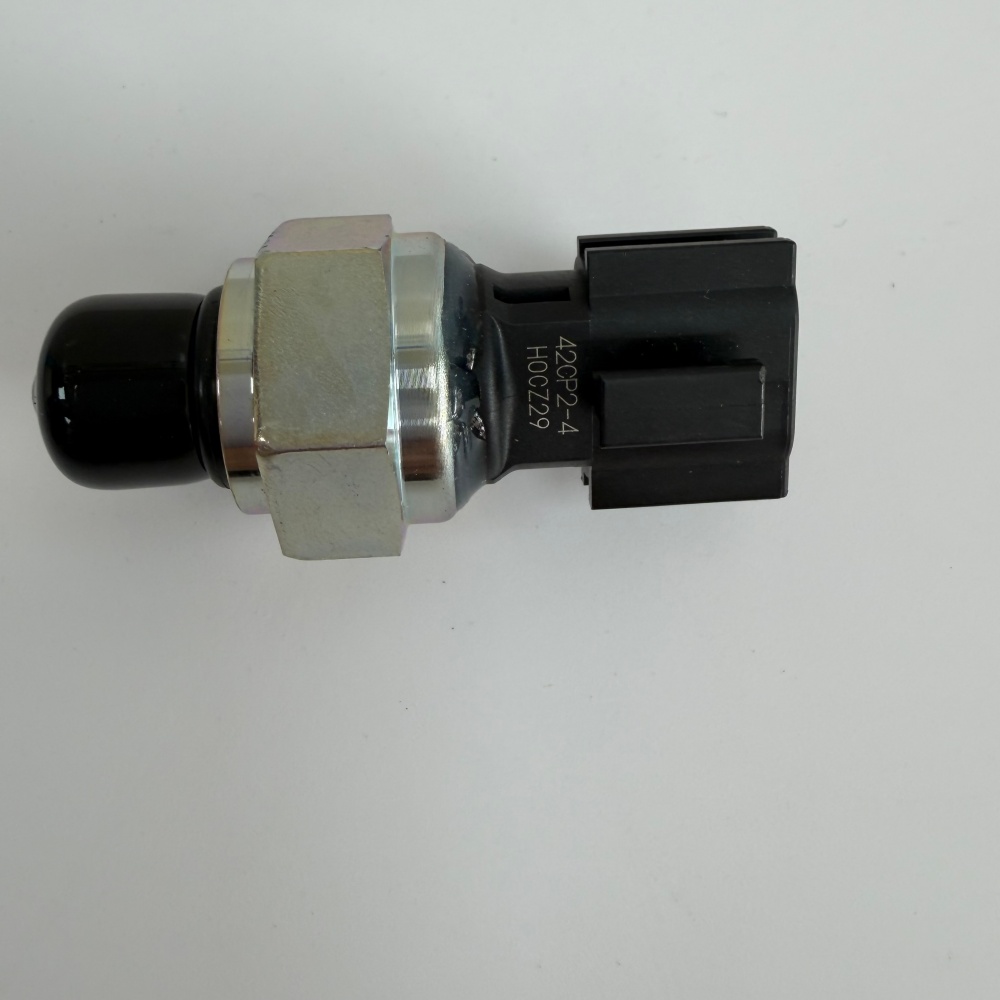
Hitachi 4436535 Low-Pressure Sensor (42CP2-4) is presented in the Hongtengda catalog as an excavator-parts inquiry reference. This guide explains how a workshop, fleet owner, or distributor can diagnose the surrounding system, define the part correctly, compare a quotation, and commission the machine without turning a catalog association into an unsupported fitment promise. A code naming a sensor circuit does not prove that the sensor itself is defective because supply, ground, harness, connector, controller, and mechanical conditions can produce the same code. The practical task is therefore to build an evidence chain: identify the machine, document the old unit, test the system, inspect every interface, control contamination, and record the result. The product title and photograph are useful starting points. They do not by themselves prove interchangeability, internal specification, software, calibration, pressure setting, material, stock, delivery, warranty, or suitability for a particular serial number.
Bu ekskavatör sensör kılavuzunun kapsadığı konular
Bileşen, ekskavatör elektronik ölçüm ve kontrol devresi içinde çalışır ve genel rolü, fiziksel bir durumu veya dönme olayını kontrolör tarafından koruma, gösterge ve makine kontrolü için kullanılan bir sinyale dönüştürmektir. Makale, semptom tespitinden tanımlama, kontrollü test, satın alma, kurulum ve aşamalı kabul sürecine kadar olan iş sürecini takip eder. Tipik şikayetler arasında mantıksız okumalar, aralıklı güç düşürme, çalışmama, kararsız kontrol, uyarı mesajları, arıza kodları, açık veya kısa devre göstergeleri ya da sıcaklığa duyarlı arıza yer alır. Bu gözlemler yalnızca çalışma koşulu kaydedildiğinde değerlidir. Yağ ve soğutma suyu sıcaklığını, motor devrini, seçili çalışma modunu, ataşman yükünü, seyir yönünü, üst yapı konumunu, aktif kodları ve sorunun sürekli mi yoksa aralıklı mı olduğunu not edin. Güvenlik, test bağlantıları, limitler, sıvılar, sıkma prosedürleri, yazılım adımları ve kabul kriterleri için tam makine servis bilgilerini kullanın. Bu makaledeki genel endüstri kaynakları yöntemleri açıklar; modele özgü değerleri belirlemezler. Teklif edilen ekskavatör sensörü için, onaydan önce bu kontrol noktasını onaylandı, çözülmedi veya uygulanamaz olarak işaretleyin.
Varsayımlarla değil, kimlikle başlayın
Begin with the full machine identification number and a readable record of the removed part. For Hitachi 4436535 Low-Pressure Sensor (42CP2-4), collect machine and engine serials, old-sensor marking, connector keying, pin count, thread and sealing geometry, harness condition, reference supply, ground, signal behavior, and scan data. Photograph the installed orientation before disconnecting anything, then add a simple sketch that gives every hose, connector, bracket, and adjacent obstruction a unique label. Do not collapse different evidence fields into one model name. A supplier needs to know which observation came from the machine plate, which came from the old component, and which came from an online or paper catalog. If two identifiers conflict, preserve the conflict and resolve it before shipment. The following table is designed to travel with the RFQ, quotation, receiving inspection, and workshop job card.
| Kanıt grubu | RFQ veya iş dosyasının içermesi gerekenler |
|---|---|
| Makine kimliği | Bir model ailesi adına güvenmeden önce tam makine modelini ve seri/PIN'ini kaydedin. |
| Eski ünite kimliği | Her etiketi, döküm işaretini, konektörü, portu, flanşı ve yönelim ipucunu fotoğraflayın. |
| Arayüz kanıtı | makine ve motor seri numaraları, eski sensör işareti, konnektör kilit kodlaması, pin sayısı, diş ve sızdırmazlık geometrisi, kablo demeti durumu, referans beslemesi, topraklama, sinyal davranışı ve tarama verileri |
| Arıza kanıtı | referans voltajı, toprak düşüşü, sinyal yanıtı, yalnızca doğru testin belirttiği yerlerde direnç, ilgili olduğunda dalga formu veya frekans, tarama verisi mantıksallığı ve sallama testi kanıtı |
| Ticari kapsam | Durumu, dahil edilen donanımı, korumayı, test kanıtını, ambalajı, teslim süresini ve garantiyi yazılı olarak teyit edin. |
Sipariş vermeden önce sistemi teşhis edin
Create a baseline while the machine is still complete whenever safe access is possible. Record reference voltage, ground drop, signal response, resistance only where the correct test specifies it, waveform or frequency where relevant, scan-data plausibility, and wiggle-test evidence. Compare repeatable operating points rather than isolated readings. A value taken with a cold machine, unknown engine speed, or different command cannot be compared reliably with a hot loaded test. Separate cause, consequence, and collateral damage. A weak actuator may change pump sound; a restricted return may create heat; a damaged harness may create a control response that resembles hydraulic wear. The objective is not to collect the largest number of measurements. It is to select tests that can disprove competing causes. Stop testing when stored hydraulic energy, unstable support, rotating parts, hot surfaces, fuel pressure, or uncontrolled movement cannot be managed. Depressurization, isolation, lifting, blocking, cleanliness, and personal protection must follow the machine and component instructions. The Hitachi 4436535 Low-Pressure Sensor (42CP2-4) job card should show who completed this check, under what operating condition, and with which source.
Failure evidence specific to Hitachi 4436535 Low-Pressure Sensor (42CP2-4)
Inspect connector lock, terminal tension, seal, cable strain, thread, probe length, sealing face, contamination, corrosion, and physical impact. Treat contamination and damaged interfaces as system evidence, not merely as defects to wipe away. Photograph the condition before cleaning, sample fluids through a controlled method where required, and keep removed filters or magnetic debris linked to the job record. A replacement decision should explain why the observed failure could create the complaint and why plausible alternatives were rejected. If the evidence does not connect the component to the symptom, continue diagnosis. This discipline protects both the buyer and supplier from an expensive but inconclusive parts swap. When a removed unit is sent for evaluation, preserve ports and connectors immediately. Identify whether the report concerns the complete assembly, one subcomponent, or only the visible exterior. A clean exterior is not proof of acceptable internal condition, and an internal defect is not proof that every interface matches the offered replacement. When comparing offers for Hitachi 4436535 Low-Pressure Sensor (42CP2-4), ask each supplier to respond to this same evidence point in writing.
Kanıta dayalı olarak onarım, yeniden üretim veya değiştirme seçin
| Karar | Kanıt modeli | Gerekli sonraki eylem |
|---|---|---|
| Teşhise devam edin | Kimlik belirsiz veya sistem kanıtı ekskavatör sensörünün dışına işaret ediyor. | Kontrollü testleri tamamlayın ve devrenin her iki tarafını karşılaştırın. |
| Onarım veya yeniden üretim | Arayüzler doğrudur ve geri kazanılabilir aşınma belgelenmiştir. | Parça kapsamı, ölçümler, temizlik, test yöntemi ve kabul kaydı üzerinde anlaşın. |
| Montajı değiştirin | Yapısal veya hassas yüzeyler uygun değildir, kapsam belirsizdir veya duruş süresi komple bir üniteyi desteklemektedir. | Komple arayüz setini eşleştirin ve yazılı durum ve test kanıtı edinin. |
| Durdurun ve üst birime iletin | Çatlama, güvenli olmayan depolanmış enerji, ciddi kirlenme, kontrolsüz hareket veya eksik servis bilgisi mevcuttur. | Devam etmeden önce makine kılavuzunu ve nitelikli bir onarım sürecini kullanın. |
Repair economics must include machine downtime, removal and installation labor, supporting-system cleanup, calibration or programming, freight, and the consequence of a repeat failure. Compare quotations on the same scope. A low price for a bare unit is not equivalent to a tested assembly with the required controls, fittings, documentation, and preservation. For remanufactured parts, ask which wear items and precision surfaces were inspected, what was replaced, how cleanliness was controlled, and what test record accompanies the serialised unit. For a new unit, ask for traceable identity, storage condition, protective packaging, and the exact supplied configuration. Keep this result in the receiving and commissioning file for Hitachi 4436535 Low-Pressure Sensor (42CP2-4) so a later review can reproduce the decision.
Kontrol edilebilir bir teklif oluşturun
A useful RFQ for Hitachi 4436535 Low-Pressure Sensor (42CP2-4) includes the machine serial, application, full old-unit identity, interface photographs, measured geometry, symptom history, test evidence, related repairs, contamination findings, required condition, included hardware, destination, and deadline. Ask the supplier to repeat the decisive identifiers and scope on the quotation rather than replying only with a price. The catalog page for Hitachi 4436535 Low-Pressure Sensor (42CP2-4) can be reviewed burada. Bunu bir sorgu çapası olarak kullanın ve listelemeyi bir uyumluluk onayı olarak değerlendirmeden önce kanıt paketini gönderin. Daha geniş bir satın alma süreci için inceleyin bu ilgili ekskavatör kılavuzu ve bu destekleyici teşhis makalesi. Ticari iddialar yazılı olmalıdır. Teklif edilen kalem için gerçek ünite durumunu, dahil edilen aksesuarları, test dokümantasyonunu, ambalaj yöntemini, teslim süresini, nakliye koşullarını, iade koşullarını ve garanti esasını teyit edin.
Kurulumdan önce teslim alma muayenesi
Quarantine the shipment until identity and condition are checked. Compare the packing label, unit tag, photographs, ports, connectors, mounting pattern, dimensions, handedness, and accessories with the approved quotation. Look for impact, corrosion, missing plugs, displaced seals, loose hardware, and contamination. Keep the old and replacement units side by side in the same orientation. Use a written comparison sheet and mark each decisive interface as matched, unmatched, or unresolved. Do not modify a bracket, connector, port, shaft, housing, or calibrated control to make an uncertain part fit; return the question to the supplier with photographs and measurements. Store the part according to its preservation requirements. Keep protective caps in place until the connection is ready, and keep electronic connectors dry and protected from electrostatic and mechanical damage. A workshop evaluating Hitachi 4436535 Low-Pressure Sensor (42CP2-4) should resolve this point before modifying, installing, or returning the component.
Installation and contamination control
Before installation, correct the cause identified during diagnosis. Clean or replace affected lines, coolers, tanks, filters, breathers, fittings, and related components to the scope required by the failure evidence and service information. Transfer only confirmed fittings or controls, and document every transferred item. Use clean caps and dedicated plugs. Clean surrounding areas before opening the system, inspect hoses internally where damage or contamination is plausible, and never use lint-producing material on precision hydraulic or fuel interfaces. Lubricants, assembly fluids, seals, fasteners, and tightening methods must come from the exact service information. Route hoses and harnesses using the pre-removal labels. Check bend radius, twist, clamp position, heat exposure, abrasion, connector locks, ground paths, and service access. A correctly identified component can still fail when installation creates a new restriction, leak, electrical drop, or alignment error. For this Hitachi 4436535 Low-Pressure Sensor (42CP2-4) inquiry, store the finding with the machine serial, old-unit photographs, and test record.
Commission in controlled stages
Prime, fill, bleed, program, or calibrate only as the applicable machine and component procedure requires. Begin with a static inspection, then a low-risk initial operation, then no-load function checks, then progressively higher demand. Stop at every stage to check leaks, noise, temperature, codes, fluid levels, and unexpected movement. Repeat the same baseline measurements used before removal: reference voltage, ground drop, signal response, resistance only where the correct test specifies it, waveform or frequency where relevant, scan-data plausibility, and wiggle-test evidence . A successful result is an evidence-based change under comparable conditions. Record the date, technician, machine hours, ambient condition, instruments, test points, readings, and observations so another person can audit the decision. Retain the packaging, quotation, receiving photographs, old-part images, test results, fluid or filter evidence, programming record, and commissioning sheet. This dossier is essential if a fault returns or a warranty review is needed. For the quoted excavator sensor, mark this checkpoint as confirmed, unresolved, or not applicable before approval.
Teknik derinlemesine inceleme: devre arızası ile bileşen arızası
For Hitachi 4436535 Low-Pressure Sensor (42CP2-4), circuit fault versus component fault should be treated as a question that must be answered by measurements and documented observations. Define the test boundary first: what is connected, what is isolated, which operating state is used, which instrument is suitable, and what exact service source supplies the limit. This prevents a result from being detached from the conditions that produced it. Collect a pair of evidence sets whenever possible. The first describes the complaint state and the second describes a known comparison state, a commanded change, or the verified condition after repair. Preserve units, test-point identity, temperatures, engine speed, command percentage, and time. A trend often separates restriction, leakage, control error, mechanical drag, and intermittent electrical behavior more clearly than one peak value. Use the result to update the decision tree. If the evidence supports the component, define the precise repair or replacement scope. If it points elsewhere, protect the new part from being used as a diagnostic tool. If the result remains ambiguous, state what is missing and design the next safe test rather than converting uncertainty into a compatibility or failure claim.
Technical deep dive: reference and ground integrity
For Hitachi 4436535 Low-Pressure Sensor (42CP2-4), reference and ground integrity should be treated as a question that must be answered by measurements and documented observations. Define the test boundary first: what is connected, what is isolated, which operating state is used, which instrument is suitable, and what exact service source supplies the limit. This prevents a result from being detached from the conditions that produced it. Collect a pair of evidence sets whenever possible. The first describes the complaint state and the second describes a known comparison state, a commanded change, or the verified condition after repair. Preserve units, test-point identity, temperatures, engine speed, command percentage, and time. A trend often separates restriction, leakage, control error, mechanical drag, and intermittent electrical behavior more clearly than one peak value. Use the result to update the decision tree. If the evidence supports the component, define the precise repair or replacement scope. If it points elsewhere, protect the new part from being used as a diagnostic tool. If the result remains ambiguous, state what is missing and design the next safe test rather than converting uncertainty into a compatibility or failure claim.
Technical deep dive: connector terminal mechanics
For Hitachi 4436535 Low-Pressure Sensor (42CP2-4), connector terminal mechanics should be treated as a question that must be answered by measurements and documented observations. Define the test boundary first: what is connected, what is isolated, which operating state is used, which instrument is suitable, and what exact service source supplies the limit. This prevents a result from being detached from the conditions that produced it. Collect a pair of evidence sets whenever possible. The first describes the complaint state and the second describes a known comparison state, a commanded change, or the verified condition after repair. Preserve units, test-point identity, temperatures, engine speed, command percentage, and time. A trend often separates restriction, leakage, control error, mechanical drag, and intermittent electrical behavior more clearly than one peak value. Use the result to update the decision tree. If the evidence supports the component, define the precise repair or replacement scope. If it points elsewhere, protect the new part from being used as a diagnostic tool. If the result remains ambiguous, state what is missing and design the next safe test rather than converting uncertainty into a compatibility or failure claim.
Technical deep dive: signal plausibility
For Hitachi 4436535 Low-Pressure Sensor (42CP2-4), signal plausibility should be treated as a question that must be answered by measurements and documented observations. Define the test boundary first: what is connected, what is isolated, which operating state is used, which instrument is suitable, and what exact service source supplies the limit. This prevents a result from being detached from the conditions that produced it. Collect a pair of evidence sets whenever possible. The first describes the complaint state and the second describes a known comparison state, a commanded change, or the verified condition after repair. Preserve units, test-point identity, temperatures, engine speed, command percentage, and time. A trend often separates restriction, leakage, control error, mechanical drag, and intermittent electrical behavior more clearly than one peak value. Use the result to update the decision tree. If the evidence supports the component, define the precise repair or replacement scope. If it points elsewhere, protect the new part from being used as a diagnostic tool. If the result remains ambiguous, state what is missing and design the next safe test rather than converting uncertainty into a compatibility or failure claim.
Technical deep dive: waveform or frequency evidence
For Hitachi 4436535 Low-Pressure Sensor (42CP2-4), waveform or frequency evidence should be treated as a question that must be answered by measurements and documented observations. Define the test boundary first: what is connected, what is isolated, which operating state is used, which instrument is suitable, and what exact service source supplies the limit. This prevents a result from being detached from the conditions that produced it. Collect a pair of evidence sets whenever possible. The first describes the complaint state and the second describes a known comparison state, a commanded change, or the verified condition after repair. Preserve units, test-point identity, temperatures, engine speed, command percentage, and time. A trend often separates restriction, leakage, control error, mechanical drag, and intermittent electrical behavior more clearly than one peak value. Use the result to update the decision tree. If the evidence supports the component, define the precise repair or replacement scope. If it points elsewhere, protect the new part from being used as a diagnostic tool. If the result remains ambiguous, state what is missing and design the next safe test rather than converting uncertainty into a compatibility or failure claim.
Technical deep dive: mechanical cause behind the reading
For Hitachi 4436535 Low-Pressure Sensor (42CP2-4), mechanical cause behind the reading should be treated as a question that must be answered by measurements and documented observations. Define the test boundary first: what is connected, what is isolated, which operating state is used, which instrument is suitable, and what exact service source supplies the limit. This prevents a result from being detached from the conditions that produced it. Collect a pair of evidence sets whenever possible. The first describes the complaint state and the second describes a known comparison state, a commanded change, or the verified condition after repair. Preserve units, test-point identity, temperatures, engine speed, command percentage, and time. A trend often separates restriction, leakage, control error, mechanical drag, and intermittent electrical behavior more clearly than one peak value. Use the result to update the decision tree. If the evidence supports the component, define the precise repair or replacement scope. If it points elsewhere, protect the new part from being used as a diagnostic tool. If the result remains ambiguous, state what is missing and design the next safe test rather than converting uncertainty into a compatibility or failure claim.
Technical deep dive: substitution and commissioning
For Hitachi 4436535 Low-Pressure Sensor (42CP2-4), substitution and commissioning should be treated as a question that must be answered by measurements and documented observations. Define the test boundary first: what is connected, what is isolated, which operating state is used, which instrument is suitable, and what exact service source supplies the limit. This prevents a result from being detached from the conditions that produced it. Collect a pair of evidence sets whenever possible. The first describes the complaint state and the second describes a known comparison state, a commanded change, or the verified condition after repair. Preserve units, test-point identity, temperatures, engine speed, command percentage, and time. A trend often separates restriction, leakage, control error, mechanical drag, and intermittent electrical behavior more clearly than one peak value. Use the result to update the decision tree. If the evidence supports the component, define the precise repair or replacement scope. If it points elsewhere, protect the new part from being used as a diagnostic tool. If the result remains ambiguous, state what is missing and design the next safe test rather than converting uncertainty into a compatibility or failure claim.
Mühendislik denetimi: sonucu yeniden üretilebilir hale getirin
A professional report lets a second technician reconstruct the decision without relying on memory. Number photographs, identify test instruments, record calibration status where relevant, cite the service procedure, show hose and connector labels, and link every conclusion to an observation. Distinguish measured facts from catalog associations and from hypotheses. For the supplier, the same discipline reduces quotation risk. A complete identity pack makes it possible to compare tags, interfaces, supplied controls, and condition before freight is committed. For the workshop, the report protects the diagnosis when multiple systems interact or when a failure returns after several operating hours. Close the report with unresolved items, acceptance conditions, and ownership of each next action. No pressure, flow, resistance, torque, clearance, software, or fitment value should be copied from a similar machine unless the exact service information confirms that it applies. For the quoted excavator sensor, mark this checkpoint as confirmed, unresolved, or not applicable before approval.
Related excavator video
Excavator pressure-sensor fault example; model-specific values are not transferred to this product. The video is supplementary; the exact machine manual, identity evidence, and measured test results control the job. Apply this step to Hitachi 4436535 Low-Pressure Sensor (42CP2-4) only after its tag, interfaces, and installed orientation have been documented.
Primary technical references and claim limits
These sources support general service, diagnostic, safety, cleanliness, sealing, electrical, engine, or hydraulic principles as applicable. They do not confirm that Hitachi 4436535 Low-Pressure Sensor (42CP2-4) fits a particular machine serial, nor do they provide the serial-specific limits for this catalog item. Use the Hongtengda contact page to send the machine serial, old-part tag, interface photographs, measurements, fault evidence, required condition, and destination for a written comparison.
Frequently asked questions
Does the model name prove that Hitachi 4436535 Low-Pressure Sensor (42CP2-4) will fit?
No. Model-family wording is an inquiry clue. Serial breaks, regional builds, engine or hydraulic arrangements, software, connectors, ports, mounts, and previous repairs can change the required part. When comparing offers for Hitachi 4436535 Low-Pressure Sensor (42CP2-4), ask each supplier to respond to this same evidence point in writing.
Should the workshop replace the part when a fault code or symptom names it?
Not automatically. A code naming a sensor circuit does not prove that the sensor itself is defective because supply, ground, harness, connector, controller, and mechanical conditions can produce the same code. Verify the circuit or system and document the evidence before ordering. Keep this result in the receiving and commissioning file for Hitachi 4436535 Low-Pressure Sensor (42CP2-4) so a later review can reproduce the decision.
What should a buyer send with the first inquiry?
Send the complete machine serial, old-unit labels, installed and removed photographs, decisive dimensions and interfaces, reference voltage, ground drop, signal response, resistance only where the correct test specifies it, waveform or frequency where relevant, scan-data plausibility, and wiggle-test evidence, required condition, destination, and timing. For product reference 2310, this evidence remains subordinate to the exact machine serial and service documentation.