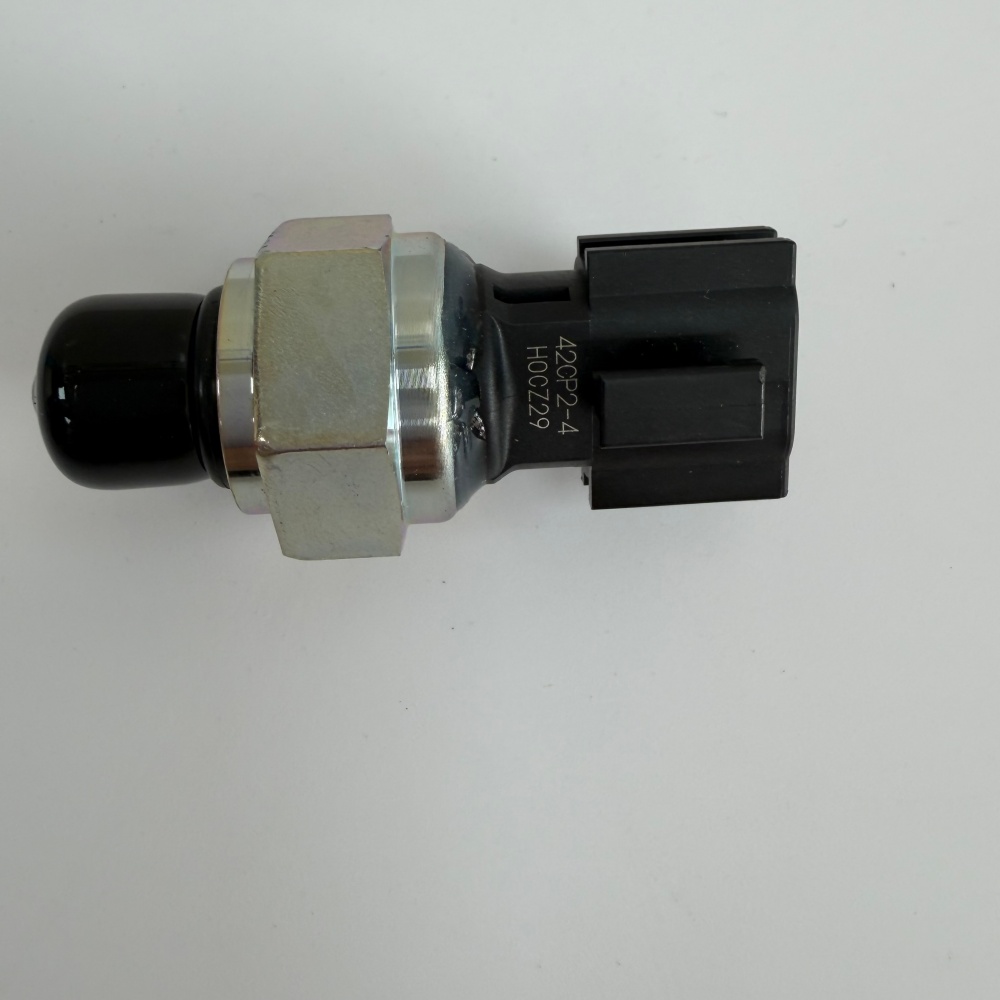
Hitachi 4436535 Low-Pressure Sensor (42CP2-4) is presented in the Hongtengda catalog as an excavator-parts inquiry reference. This guide explains how a workshop, fleet owner, or distributor can diagnose the surrounding system, define the part correctly, compare a quotation, and commission the machine without turning a catalog association into an unsupported fitment promise. A code naming a sensor circuit does not prove that the sensor itself is defective because supply, ground, harness, connector, controller, and mechanical conditions can produce the same code. The practical task is therefore to build an evidence chain: identify the machine, document the old unit, test the system, inspect every interface, control contamination, and record the result. The product title and photograph are useful starting points. They do not by themselves prove interchangeability, internal specification, software, calibration, pressure setting, material, stock, delivery, warranty, or suitability for a particular serial number.
Cosa copre questa guida sui sensori per escavatori
Il componente opera all'interno del circuito elettronico di misurazione e controllo dell'escavatore e il suo ruolo generale è convertire una condizione fisica o un evento rotazionale in un segnale utilizzato dalla centralina per protezione, visualizzazione e controllo della macchina. L'articolo segue il lavoro dalla rilevazione del sintomo attraverso identificazione, test controllati, acquisto, installazione e accettazione a fasi. I reclami tipici includono letture non plausibili, derate intermittente, mancato avvio, controllo instabile, messaggi di avviso, codici di guasto, indicazioni di circuito aperto o in corto, o guasto sensibile alla temperatura. Tali osservazioni sono preziose solo quando viene registrata la condizione operativa. Annotare temperatura dell'olio e del liquido refrigerante, regime motore, modalità di lavoro selezionata, carico dell'accessorio, direzione di marcia, posizione della sovrastruttura, codici attivi e se il problema è costante o intermittente. Utilizzare le informazioni di servizio esatte della macchina per sicurezza, connessioni di test, limiti, fluidi, procedure di serraggio, passaggi software e criteri di accettazione. Le fonti generiche di settore citate in questo articolo spiegano i metodi; non stabiliscono valori specifici per modello. Per il sensore per escavatore quotato, contrassegnare questo punto di controllo come confermato, irrisolto o non applicabile prima dell'approvazione.
Iniziare con l'identità, non con le supposizioni
Begin with the full machine identification number and a readable record of the removed part. For Hitachi 4436535 Low-Pressure Sensor (42CP2-4), collect machine and engine serials, old-sensor marking, connector keying, pin count, thread and sealing geometry, harness condition, reference supply, ground, signal behavior, and scan data. Photograph the installed orientation before disconnecting anything, then add a simple sketch that gives every hose, connector, bracket, and adjacent obstruction a unique label. Do not collapse different evidence fields into one model name. A supplier needs to know which observation came from the machine plate, which came from the old component, and which came from an online or paper catalog. If two identifiers conflict, preserve the conflict and resolve it before shipment. The following table is designed to travel with the RFQ, quotation, receiving inspection, and workshop job card.
| Gruppo di prove | Cosa dovrebbe contenere la RFQ o il fascicolo di lavoro |
|---|---|
| Identità della macchina | Registrare il modello completo della macchina e il numero di serie/PIN prima di fare affidamento sul nome della famiglia di modelli. |
| Identità dell'unità vecchia | Fotografare ogni targhetta, marchio di fusione, connettore, porta, flangia e indizio di orientamento. |
| Prove di interfaccia | numeri di serie della macchina e del motore, marcatura del vecchio sensore, codifica del connettore, numero di pin, geometria di filettatura e tenuta, condizione del cablaggio, alimentazione di riferimento, massa, comportamento del segnale e dati di scansione |
| Evidenza del guasto | tensione di riferimento, caduta di massa, risposta del segnale, resistenza solo dove il test corretto lo specifica, forma d'onda o frequenza ove pertinente, plausibilità dei dati di scansione e prove di wiggle-test |
| Ambito commerciale | Confermare per iscritto condizioni, hardware incluso, conservazione, prove di test, imballaggio, tempi di consegna e garanzia. |
Diagnosticare il sistema prima di ordinare
Create a baseline while the machine is still complete whenever safe access is possible. Record reference voltage, ground drop, signal response, resistance only where the correct test specifies it, waveform or frequency where relevant, scan-data plausibility, and wiggle-test evidence. Compare repeatable operating points rather than isolated readings. A value taken with a cold machine, unknown engine speed, or different command cannot be compared reliably with a hot loaded test. Separate cause, consequence, and collateral damage. A weak actuator may change pump sound; a restricted return may create heat; a damaged harness may create a control response that resembles hydraulic wear. The objective is not to collect the largest number of measurements. It is to select tests that can disprove competing causes. Stop testing when stored hydraulic energy, unstable support, rotating parts, hot surfaces, fuel pressure, or uncontrolled movement cannot be managed. Depressurization, isolation, lifting, blocking, cleanliness, and personal protection must follow the machine and component instructions. The Hitachi 4436535 Low-Pressure Sensor (42CP2-4) job card should show who completed this check, under what operating condition, and with which source.
Failure evidence specific to Hitachi 4436535 Low-Pressure Sensor (42CP2-4)
Inspect connector lock, terminal tension, seal, cable strain, thread, probe length, sealing face, contamination, corrosion, and physical impact. Treat contamination and damaged interfaces as system evidence, not merely as defects to wipe away. Photograph the condition before cleaning, sample fluids through a controlled method where required, and keep removed filters or magnetic debris linked to the job record. A replacement decision should explain why the observed failure could create the complaint and why plausible alternatives were rejected. If the evidence does not connect the component to the symptom, continue diagnosis. This discipline protects both the buyer and supplier from an expensive but inconclusive parts swap. When a removed unit is sent for evaluation, preserve ports and connectors immediately. Identify whether the report concerns the complete assembly, one subcomponent, or only the visible exterior. A clean exterior is not proof of acceptable internal condition, and an internal defect is not proof that every interface matches the offered replacement. When comparing offers for Hitachi 4436535 Low-Pressure Sensor (42CP2-4), ask each supplier to respond to this same evidence point in writing.
Scegliere riparazione, ricostruzione o sostituzione in base alle prove
| Decisione | Schema delle prove | Azione successiva richiesta |
|---|---|---|
| Continuare la diagnosi | L'identità è incerta o le prove di sistema indicano al di fuori del sensore per escavatore. | Completare i test controllati e confrontare entrambi i lati del circuito. |
| Riparare o ricostruire | Le interfacce sono corrette e l'usura recuperabile è documentata. | Concordare ambito delle parti, misurazioni, pulizia, metodo di test e record di accettazione. |
| Sostituire il gruppo | Le superfici strutturali o di precisione non sono idonee, l'ambito è incerto o i tempi di fermo favoriscono un'unità completa. | Abbinare il set completo di interfacce e ottenere prove scritte di condizioni e test. |
| Fermarsi e scalare | Sono presenti crepe, energia immagazzinata pericolosa, contaminazione grave, movimento incontrollato o informazioni di servizio mancanti. | Utilizzare il manuale della macchina e un processo di riparazione qualificato prima di continuare. |
Repair economics must include machine downtime, removal and installation labor, supporting-system cleanup, calibration or programming, freight, and the consequence of a repeat failure. Compare quotations on the same scope. A low price for a bare unit is not equivalent to a tested assembly with the required controls, fittings, documentation, and preservation. For remanufactured parts, ask which wear items and precision surfaces were inspected, what was replaced, how cleanliness was controlled, and what test record accompanies the serialised unit. For a new unit, ask for traceable identity, storage condition, protective packaging, and the exact supplied configuration. Keep this result in the receiving and commissioning file for Hitachi 4436535 Low-Pressure Sensor (42CP2-4) so a later review can reproduce the decision.
Costruire un preventivo verificabile
A useful RFQ for Hitachi 4436535 Low-Pressure Sensor (42CP2-4) includes the machine serial, application, full old-unit identity, interface photographs, measured geometry, symptom history, test evidence, related repairs, contamination findings, required condition, included hardware, destination, and deadline. Ask the supplier to repeat the decisive identifiers and scope on the quotation rather than replying only with a price. The catalog page for Hitachi 4436535 Low-Pressure Sensor (42CP2-4) can be reviewed qui. Utilizzarla come ancora di indagine e inviare il pacchetto di prove prima di trattare l'inserzione come conferma di compatibilità. Per un processo di acquisto più ampio, consultare questa guida correlata per escavatori e questo articolo diagnostico di supporto. Le affermazioni commerciali dovrebbero essere scritte. Confermare le condizioni effettive dell'unità, gli accessori inclusi, la documentazione di test, il metodo di imballaggio, i tempi di consegna, i termini di spedizione, le condizioni di reso e la base di garanzia per l'articolo quotato.
Ispezione di ricevimento prima dell'installazione
Quarantine the shipment until identity and condition are checked. Compare the packing label, unit tag, photographs, ports, connectors, mounting pattern, dimensions, handedness, and accessories with the approved quotation. Look for impact, corrosion, missing plugs, displaced seals, loose hardware, and contamination. Keep the old and replacement units side by side in the same orientation. Use a written comparison sheet and mark each decisive interface as matched, unmatched, or unresolved. Do not modify a bracket, connector, port, shaft, housing, or calibrated control to make an uncertain part fit; return the question to the supplier with photographs and measurements. Store the part according to its preservation requirements. Keep protective caps in place until the connection is ready, and keep electronic connectors dry and protected from electrostatic and mechanical damage. A workshop evaluating Hitachi 4436535 Low-Pressure Sensor (42CP2-4) should resolve this point before modifying, installing, or returning the component.
Installazione e controllo della contaminazione
Before installation, correct the cause identified during diagnosis. Clean or replace affected lines, coolers, tanks, filters, breathers, fittings, and related components to the scope required by the failure evidence and service information. Transfer only confirmed fittings or controls, and document every transferred item. Use clean caps and dedicated plugs. Clean surrounding areas before opening the system, inspect hoses internally where damage or contamination is plausible, and never use lint-producing material on precision hydraulic or fuel interfaces. Lubricants, assembly fluids, seals, fasteners, and tightening methods must come from the exact service information. Route hoses and harnesses using the pre-removal labels. Check bend radius, twist, clamp position, heat exposure, abrasion, connector locks, ground paths, and service access. A correctly identified component can still fail when installation creates a new restriction, leak, electrical drop, or alignment error. For this Hitachi 4436535 Low-Pressure Sensor (42CP2-4) inquiry, store the finding with the machine serial, old-unit photographs, and test record.
Mettere in servizio in fasi controllate
Eseguire adescamento, riempimento, spurgo, programmazione o calibrazione solo come richiesto dalla procedura applicabile della macchina e del componente. Iniziare con un'ispezione statica, poi un'operazione iniziale a basso rischio, poi controlli funzionali a vuoto, poi richiesta progressivamente maggiore. Fermarsi a ogni fase per verificare perdite, rumore, temperatura, codici, livelli dei fluidi e movimenti inattesi. Ripetere le stesse misurazioni di baseline utilizzate prima della rimozione: tensione di riferimento, caduta di massa, risposta del segnale, resistenza solo dove il test corretto lo specifica, forma d'onda o frequenza ove pertinente, plausibilità dei dati di scansione e prove di wiggle-test. Un risultato positivo è un cambiamento basato su prove in condizioni comparabili. Registrare data, tecnico, ore macchina, condizioni ambientali, strumenti, punti di test, letture e osservazioni, in modo che un'altra persona possa verificare la decisione. Conservare imballaggio, preventivo, fotografie di ricezione, immagini del vecchio componente, risultati dei test, prove su fluidi o filtri, registro di programmazione e scheda di messa in servizio. Questo dossier è essenziale se un guasto si ripresenta o è necessaria una revisione della garanzia. Per il sensore per escavatore quotato, contrassegnare questo punto di controllo come confermato, irrisolto o non applicabile prima dell'approvazione.
Approfondimento tecnico: guasto del circuito versus guasto del componente
For Hitachi 4436535 Low-Pressure Sensor (42CP2-4), circuit fault versus component fault should be treated as a question that must be answered by measurements and documented observations. Define the test boundary first: what is connected, what is isolated, which operating state is used, which instrument is suitable, and what exact service source supplies the limit. This prevents a result from being detached from the conditions that produced it. Collect a pair of evidence sets whenever possible. The first describes the complaint state and the second describes a known comparison state, a commanded change, or the verified condition after repair. Preserve units, test-point identity, temperatures, engine speed, command percentage, and time. A trend often separates restriction, leakage, control error, mechanical drag, and intermittent electrical behavior more clearly than one peak value. Use the result to update the decision tree. If the evidence supports the component, define the precise repair or replacement scope. If it points elsewhere, protect the new part from being used as a diagnostic tool. If the result remains ambiguous, state what is missing and design the next safe test rather than converting uncertainty into a compatibility or failure claim.
Approfondimento tecnico: integrità del riferimento e della massa
For Hitachi 4436535 Low-Pressure Sensor (42CP2-4), reference and ground integrity should be treated as a question that must be answered by measurements and documented observations. Define the test boundary first: what is connected, what is isolated, which operating state is used, which instrument is suitable, and what exact service source supplies the limit. This prevents a result from being detached from the conditions that produced it. Collect a pair of evidence sets whenever possible. The first describes the complaint state and the second describes a known comparison state, a commanded change, or the verified condition after repair. Preserve units, test-point identity, temperatures, engine speed, command percentage, and time. A trend often separates restriction, leakage, control error, mechanical drag, and intermittent electrical behavior more clearly than one peak value. Use the result to update the decision tree. If the evidence supports the component, define the precise repair or replacement scope. If it points elsewhere, protect the new part from being used as a diagnostic tool. If the result remains ambiguous, state what is missing and design the next safe test rather than converting uncertainty into a compatibility or failure claim.
Approfondimento tecnico: meccanica dei terminali del connettore
For Hitachi 4436535 Low-Pressure Sensor (42CP2-4), connector terminal mechanics should be treated as a question that must be answered by measurements and documented observations. Define the test boundary first: what is connected, what is isolated, which operating state is used, which instrument is suitable, and what exact service source supplies the limit. This prevents a result from being detached from the conditions that produced it. Collect a pair of evidence sets whenever possible. The first describes the complaint state and the second describes a known comparison state, a commanded change, or the verified condition after repair. Preserve units, test-point identity, temperatures, engine speed, command percentage, and time. A trend often separates restriction, leakage, control error, mechanical drag, and intermittent electrical behavior more clearly than one peak value. Use the result to update the decision tree. If the evidence supports the component, define the precise repair or replacement scope. If it points elsewhere, protect the new part from being used as a diagnostic tool. If the result remains ambiguous, state what is missing and design the next safe test rather than converting uncertainty into a compatibility or failure claim.
Approfondimento tecnico: plausibilità del segnale
For Hitachi 4436535 Low-Pressure Sensor (42CP2-4), signal plausibility should be treated as a question that must be answered by measurements and documented observations. Define the test boundary first: what is connected, what is isolated, which operating state is used, which instrument is suitable, and what exact service source supplies the limit. This prevents a result from being detached from the conditions that produced it. Collect a pair of evidence sets whenever possible. The first describes the complaint state and the second describes a known comparison state, a commanded change, or the verified condition after repair. Preserve units, test-point identity, temperatures, engine speed, command percentage, and time. A trend often separates restriction, leakage, control error, mechanical drag, and intermittent electrical behavior more clearly than one peak value. Use the result to update the decision tree. If the evidence supports the component, define the precise repair or replacement scope. If it points elsewhere, protect the new part from being used as a diagnostic tool. If the result remains ambiguous, state what is missing and design the next safe test rather than converting uncertainty into a compatibility or failure claim.
Technical deep dive: waveform or frequency evidence
For Hitachi 4436535 Low-Pressure Sensor (42CP2-4), waveform or frequency evidence should be treated as a question that must be answered by measurements and documented observations. Define the test boundary first: what is connected, what is isolated, which operating state is used, which instrument is suitable, and what exact service source supplies the limit. This prevents a result from being detached from the conditions that produced it. Collect a pair of evidence sets whenever possible. The first describes the complaint state and the second describes a known comparison state, a commanded change, or the verified condition after repair. Preserve units, test-point identity, temperatures, engine speed, command percentage, and time. A trend often separates restriction, leakage, control error, mechanical drag, and intermittent electrical behavior more clearly than one peak value. Use the result to update the decision tree. If the evidence supports the component, define the precise repair or replacement scope. If it points elsewhere, protect the new part from being used as a diagnostic tool. If the result remains ambiguous, state what is missing and design the next safe test rather than converting uncertainty into a compatibility or failure claim.
Technical deep dive: mechanical cause behind the reading
For Hitachi 4436535 Low-Pressure Sensor (42CP2-4), mechanical cause behind the reading should be treated as a question that must be answered by measurements and documented observations. Define the test boundary first: what is connected, what is isolated, which operating state is used, which instrument is suitable, and what exact service source supplies the limit. This prevents a result from being detached from the conditions that produced it. Collect a pair of evidence sets whenever possible. The first describes the complaint state and the second describes a known comparison state, a commanded change, or the verified condition after repair. Preserve units, test-point identity, temperatures, engine speed, command percentage, and time. A trend often separates restriction, leakage, control error, mechanical drag, and intermittent electrical behavior more clearly than one peak value. Use the result to update the decision tree. If the evidence supports the component, define the precise repair or replacement scope. If it points elsewhere, protect the new part from being used as a diagnostic tool. If the result remains ambiguous, state what is missing and design the next safe test rather than converting uncertainty into a compatibility or failure claim.
Technical deep dive: substitution and commissioning
For Hitachi 4436535 Low-Pressure Sensor (42CP2-4), substitution and commissioning should be treated as a question that must be answered by measurements and documented observations. Define the test boundary first: what is connected, what is isolated, which operating state is used, which instrument is suitable, and what exact service source supplies the limit. This prevents a result from being detached from the conditions that produced it. Collect a pair of evidence sets whenever possible. The first describes the complaint state and the second describes a known comparison state, a commanded change, or the verified condition after repair. Preserve units, test-point identity, temperatures, engine speed, command percentage, and time. A trend often separates restriction, leakage, control error, mechanical drag, and intermittent electrical behavior more clearly than one peak value. Use the result to update the decision tree. If the evidence supports the component, define the precise repair or replacement scope. If it points elsewhere, protect the new part from being used as a diagnostic tool. If the result remains ambiguous, state what is missing and design the next safe test rather than converting uncertainty into a compatibility or failure claim.
Audit tecnico: rendere la conclusione riproducibile
A professional report lets a second technician reconstruct the decision without relying on memory. Number photographs, identify test instruments, record calibration status where relevant, cite the service procedure, show hose and connector labels, and link every conclusion to an observation. Distinguish measured facts from catalog associations and from hypotheses. For the supplier, the same discipline reduces quotation risk. A complete identity pack makes it possible to compare tags, interfaces, supplied controls, and condition before freight is committed. For the workshop, the report protects the diagnosis when multiple systems interact or when a failure returns after several operating hours. Close the report with unresolved items, acceptance conditions, and ownership of each next action. No pressure, flow, resistance, torque, clearance, software, or fitment value should be copied from a similar machine unless the exact service information confirms that it applies. For the quoted excavator sensor, mark this checkpoint as confirmed, unresolved, or not applicable before approval.
Video correlato sull'escavatore
Excavator pressure-sensor fault example; model-specific values are not transferred to this product. The video is supplementary; the exact machine manual, identity evidence, and measured test results control the job. Apply this step to Hitachi 4436535 Low-Pressure Sensor (42CP2-4) only after its tag, interfaces, and installed orientation have been documented.
Riferimenti tecnici primari e limiti delle affermazioni
These sources support general service, diagnostic, safety, cleanliness, sealing, electrical, engine, or hydraulic principles as applicable. They do not confirm that Hitachi 4436535 Low-Pressure Sensor (42CP2-4) fits a particular machine serial, nor do they provide the serial-specific limits for this catalog item. Use la pagina di contatto Hongtengda per inviare il numero di serie della macchina, la targhetta del vecchio componente, le fotografie delle interfacce, le misurazioni, l'evidenza del guasto, la condizione richiesta e la destinazione per un confronto scritto.
Domande frequenti
Does the model name prove that Hitachi 4436535 Low-Pressure Sensor (42CP2-4) will fit?
No. Model-family wording is an inquiry clue. Serial breaks, regional builds, engine or hydraulic arrangements, software, connectors, ports, mounts, and previous repairs can change the required part. When comparing offers for Hitachi 4436535 Low-Pressure Sensor (42CP2-4), ask each supplier to respond to this same evidence point in writing.
L'officina dovrebbe sostituire il componente quando un codice di guasto o un sintomo lo indica?
Not automatically. A code naming a sensor circuit does not prove that the sensor itself is defective because supply, ground, harness, connector, controller, and mechanical conditions can produce the same code. Verify the circuit or system and document the evidence before ordering. Keep this result in the receiving and commissioning file for Hitachi 4436535 Low-Pressure Sensor (42CP2-4) so a later review can reproduce the decision.
Cosa dovrebbe inviare un acquirente con la prima richiesta?
Send the complete machine serial, old-unit labels, installed and removed photographs, decisive dimensions and interfaces, reference voltage, ground drop, signal response, resistance only where the correct test specifies it, waveform or frequency where relevant, scan-data plausibility, and wiggle-test evidence, required condition, destination, and timing. For product reference 2310, this evidence remains subordinate to the exact machine serial and service documentation.