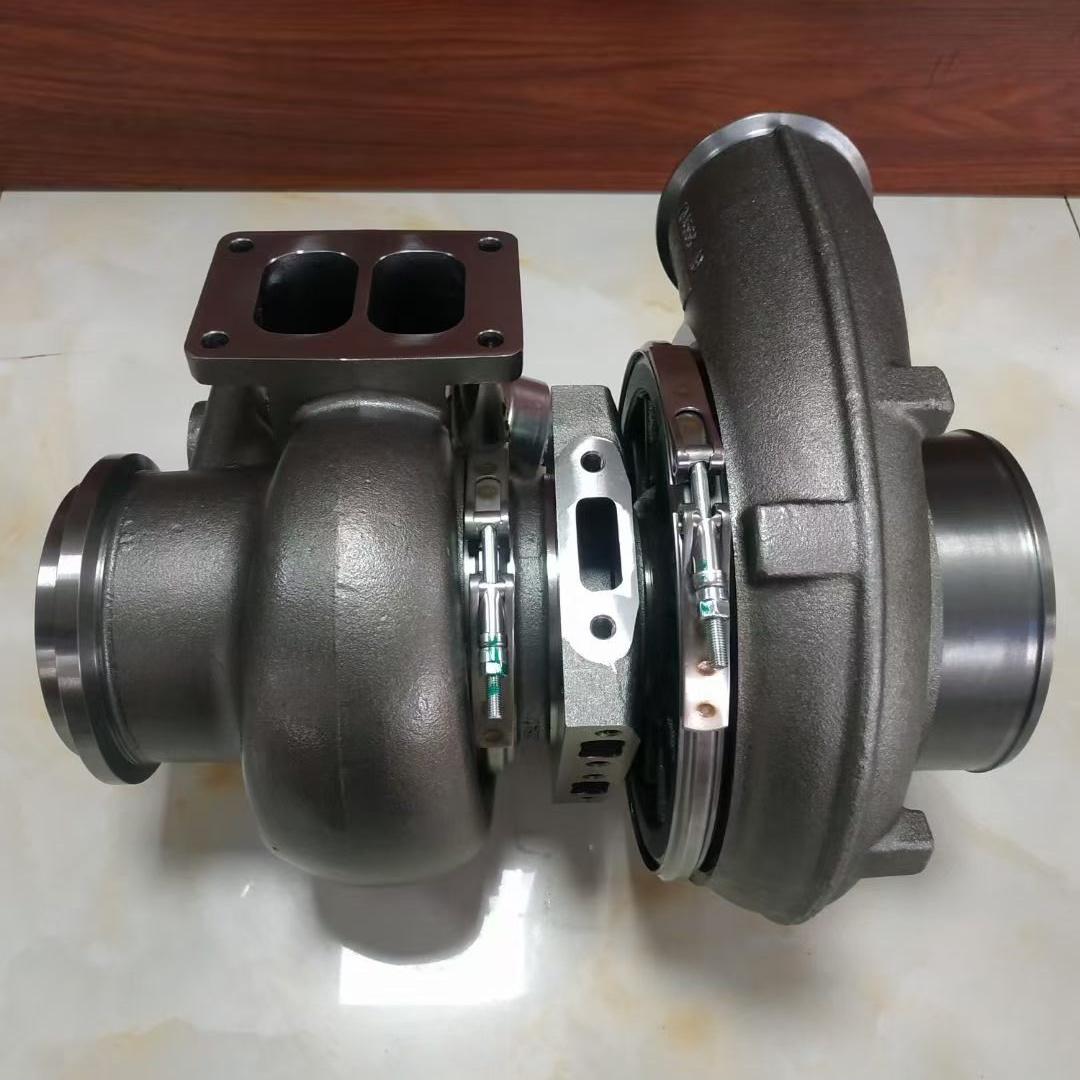
Caterpillar C18 Turbocharger is presented in the Hongtengda catalog as an excavator-parts inquiry reference. This guide explains how a workshop, fleet owner, or distributor can diagnose the surrounding system, define the part correctly, compare a quotation, and commission the machine without turning a catalog association into an unsupported fitment promise. Replacing a turbo without correcting oil starvation, drain restriction, intake leakage, exhaust restriction, contamination, or engine blow-by can repeat the failure. The practical task is therefore to build an evidence chain: identify the machine, document the old unit, test the system, inspect every interface, control contamination, and record the result. The product title and photograph are useful starting points. They do not by themselves prove interchangeability, internal specification, software, calibration, pressure setting, material, stock, delivery, warranty, or suitability for a particular serial number.
Qué cubre esta guía del turbocompresor
El componente trabaja dentro del sistema de aire y escape del motor de la excavadora y su función general es utilizar la energía de los gases de escape para elevar la masa de aire de admisión, dependiendo de aceite limpio, aire sin restricciones, tuberías de escape en buen estado y control correcto del motor. El artículo sigue el trabajo desde la captura de síntomas hasta la identificación, las pruebas controladas, la compra, la instalación y la aceptación por etapas. Las quejas típicas incluyen humo, baja potencia, fuga de aceite, ruido, contacto del compresor o la turbina, respuesta lenta, fallas de sobrealimentación o falla repetida del turbo. Esas observaciones solo son valiosas cuando se registra la condición de operación. Anote la temperatura del aceite y del refrigerante, la velocidad del motor, el modo de trabajo seleccionado, la carga del implemento, la dirección de desplazamiento, la posición de la superestructura, los códigos activos y si el problema es constante o intermitente. Utilice la información de servicio exacta de la máquina para seguridad, conexiones de prueba, límites, fluidos, procedimientos de apriete, pasos de software y criterios de aceptación. Las fuentes generales de la industria en este artículo explican métodos; no establecen valores específicos del modelo. Para el turbocompresor cotizado, marque este punto de control como confirmado, no resuelto o no aplicable antes de la aprobación.
Comience con la identidad, no con suposiciones
Begin with the full machine identification number and a readable record of the removed part. For Caterpillar C18 Turbocharger, collect engine and machine serials, turbo tag, housing and flange geometry, oil feed and drain orientation, actuator details, air-path condition, exhaust restriction, and failure debris. Photograph the installed orientation before disconnecting anything, then add a simple sketch that gives every hose, connector, bracket, and adjacent obstruction a unique label. Do not collapse different evidence fields into one model name. A supplier needs to know which observation came from the machine plate, which came from the old component, and which came from an online or paper catalog. If two identifiers conflict, preserve the conflict and resolve it before shipment. The following table is designed to travel with the RFQ, quotation, receiving inspection, and workshop job card.
| Grupo de evidencia | Qué debe contener la RFQ o el expediente de trabajo |
|---|---|
| Identidad de la máquina | Registre el modelo completo de la máquina y el número de serie/PIN antes de confiar en un nombre de familia de modelo. |
| Identidad de la unidad antigua | Fotografíe cada placa, marca de fundición, conector, puerto, brida y pista de orientación. |
| Evidencia de interfaz | números de serie del motor y de la máquina, etiqueta del turbo, geometría de la carcasa y la brida, orientación de la alimentación y el drenaje de aceite, detalles del actuador, condición de la trayectoria de aire, restricción del escape y residuos de falla |
| Evidencia de falla | datos de sobrealimentación y comando, restricción de admisión, evidencia de escape, condición del suministro y drenaje de aceite, evidencia de movimiento del eje, códigos de falla, comportamiento del humo y verificaciones de fugas |
| Alcance comercial | Confirme por escrito la condición, el hardware incluido, la preservación, la evidencia de prueba, el embalaje, el plazo de entrega y la garantía. |
Diagnostique el sistema antes de ordenar
Create a baseline while the machine is still complete whenever safe access is possible. Record boost and command data, intake restriction, exhaust evidence, oil supply and drain condition, shaft movement evidence, fault codes, smoke behavior, and leak checks. Compare repeatable operating points rather than isolated readings. A value taken with a cold machine, unknown engine speed, or different command cannot be compared reliably with a hot loaded test. Separate cause, consequence, and collateral damage. A weak actuator may change pump sound; a restricted return may create heat; a damaged harness may create a control response that resembles hydraulic wear. The objective is not to collect the largest number of measurements. It is to select tests that can disprove competing causes. Stop testing when stored hydraulic energy, unstable support, rotating parts, hot surfaces, fuel pressure, or uncontrolled movement cannot be managed. Depressurization, isolation, lifting, blocking, cleanliness, and personal protection must follow the machine and component instructions. The Caterpillar C18 Turbocharger job card should show who completed this check, under what operating condition, and with which source.
Failure evidence specific to Caterpillar C18 Turbocharger
Inspect compressor and turbine wheels, housing contact, oil feed and drain, air-filter history, charge-air plumbing, exhaust manifold, foreign-object evidence, and mounting faces. Treat contamination and damaged interfaces as system evidence, not merely as defects to wipe away. Photograph the condition before cleaning, sample fluids through a controlled method where required, and keep removed filters or magnetic debris linked to the job record. A replacement decision should explain why the observed failure could create the complaint and why plausible alternatives were rejected. If the evidence does not connect the component to the symptom, continue diagnosis. This discipline protects both the buyer and supplier from an expensive but inconclusive parts swap. When a removed unit is sent for evaluation, preserve ports and connectors immediately. Identify whether the report concerns the complete assembly, one subcomponent, or only the visible exterior. A clean exterior is not proof of acceptable internal condition, and an internal defect is not proof that every interface matches the offered replacement. When comparing offers for Caterpillar C18 Turbocharger, ask each supplier to respond to this same evidence point in writing.
Elija reparación, reconstrucción o reemplazo según la evidencia
| Decisión | Patrón de evidencia | Acción siguiente requerida |
|---|---|---|
| Continuar el diagnóstico | La identidad es incierta o la evidencia del sistema apunta fuera del turbocompresor. | Complete pruebas controladas y compare ambos lados del circuito. |
| Reparar o reconstruir | Las interfaces son correctas y el desgaste recuperable está documentado. | Acuerde el alcance de las piezas, las mediciones, la limpieza, el método de prueba y el registro de aceptación. |
| Reemplazar el conjunto | Las superficies estructurales o de precisión no son adecuadas, el alcance es incierto, o el tiempo de inactividad favorece una unidad completa. | Iguale el conjunto completo de interfaces y obtenga evidencia escrita de condición y prueba. |
| Detener y escalar | Existe agrietamiento, energía almacenada insegura, contaminación severa, movimiento descontrolado o información de servicio faltante. | Utilice el manual de la máquina y un proceso de reparación calificado antes de continuar. |
Repair economics must include machine downtime, removal and installation labor, supporting-system cleanup, calibration or programming, freight, and the consequence of a repeat failure. Compare quotations on the same scope. A low price for a bare unit is not equivalent to a tested assembly with the required controls, fittings, documentation, and preservation. For remanufactured parts, ask which wear items and precision surfaces were inspected, what was replaced, how cleanliness was controlled, and what test record accompanies the serialised unit. For a new unit, ask for traceable identity, storage condition, protective packaging, and the exact supplied configuration. Keep this result in the receiving and commissioning file for Caterpillar C18 Turbocharger so a later review can reproduce the decision.
Construya una cotización que pueda verificarse
A useful RFQ for Caterpillar C18 Turbocharger includes the machine serial, application, full old-unit identity, interface photographs, measured geometry, symptom history, test evidence, related repairs, contamination findings, required condition, included hardware, destination, and deadline. Ask the supplier to repeat the decisive identifiers and scope on the quotation rather than replying only with a price. The catalog page for Caterpillar C18 Turbocharger can be reviewed aquí. Úsela como ancla de consulta y envíe el paquete de evidencia antes de tratar el listado como una confirmación de compatibilidad. Para un proceso de compra más amplio, revise esta guía relacionada de excavadora y este artículo de diagnóstico de apoyo. Las afirmaciones comerciales deben ser por escrito. Confirme la condición real de la unidad, los accesorios incluidos, la documentación de prueba, el método de embalaje, el plazo de entrega, los términos de envío, las condiciones de devolución y la base de garantía del artículo cotizado.
Inspección de recepción antes de la instalación
Quarantine the shipment until identity and condition are checked. Compare the packing label, unit tag, photographs, ports, connectors, mounting pattern, dimensions, handedness, and accessories with the approved quotation. Look for impact, corrosion, missing plugs, displaced seals, loose hardware, and contamination. Keep the old and replacement units side by side in the same orientation. Use a written comparison sheet and mark each decisive interface as matched, unmatched, or unresolved. Do not modify a bracket, connector, port, shaft, housing, or calibrated control to make an uncertain part fit; return the question to the supplier with photographs and measurements. Store the part according to its preservation requirements. Keep protective caps in place until the connection is ready, and keep electronic connectors dry and protected from electrostatic and mechanical damage. A workshop evaluating Caterpillar C18 Turbocharger should resolve this point before modifying, installing, or returning the component.
Instalación y control de contaminación
Before installation, correct the cause identified during diagnosis. Clean or replace affected lines, coolers, tanks, filters, breathers, fittings, and related components to the scope required by the failure evidence and service information. Transfer only confirmed fittings or controls, and document every transferred item. Use clean caps and dedicated plugs. Clean surrounding areas before opening the system, inspect hoses internally where damage or contamination is plausible, and never use lint-producing material on precision hydraulic or fuel interfaces. Lubricants, assembly fluids, seals, fasteners, and tightening methods must come from the exact service information. Route hoses and harnesses using the pre-removal labels. Check bend radius, twist, clamp position, heat exposure, abrasion, connector locks, ground paths, and service access. A correctly identified component can still fail when installation creates a new restriction, leak, electrical drop, or alignment error. For this Caterpillar C18 Turbocharger inquiry, store the finding with the machine serial, old-unit photographs, and test record.
Puesta en servicio en etapas controladas
Cebe, llene, purgue, programe o calibre solo según lo requiera el procedimiento aplicable de la máquina y del componente. Comience con una inspección estática, luego una operación inicial de bajo riesgo, luego verificaciones de función sin carga, luego una demanda progresivamente mayor. Deténgase en cada etapa para verificar fugas, ruido, temperatura, códigos, niveles de fluido y movimiento inesperado. Repita las mismas mediciones de línea base utilizadas antes del desmontaje: datos de sobrealimentación y comando, restricción de admisión, evidencia de escape, condición del suministro y drenaje de aceite, evidencia de movimiento del eje, códigos de falla, comportamiento del humo y verificaciones de fugas. Un resultado exitoso es un cambio basado en evidencia bajo condiciones comparables. Registre la fecha, el técnico, las horas de la máquina, la condición ambiental, los instrumentos, los puntos de prueba, las lecturas y las observaciones para que otra persona pueda auditar la decisión. Conserve el embalaje, la cotización, las fotografías de recepción, las imágenes de la pieza antigua, los resultados de las pruebas, la evidencia de fluidos o filtros, el registro de programación y la hoja de puesta en servicio. Este expediente es esencial si un fallo regresa o se necesita una revisión de garantía. Para el turbocompresor cotizado, marque este punto de control como confirmado, no resuelto o no aplicable antes de la aprobación.
Análisis técnico profundo: integridad de la alimentación de aceite
For Caterpillar C18 Turbocharger, oil-feed integrity should be treated as a question that must be answered by measurements and documented observations. Define the test boundary first: what is connected, what is isolated, which operating state is used, which instrument is suitable, and what exact service source supplies the limit. This prevents a result from being detached from the conditions that produced it. Collect a pair of evidence sets whenever possible. The first describes the complaint state and the second describes a known comparison state, a commanded change, or the verified condition after repair. Preserve units, test-point identity, temperatures, engine speed, command percentage, and time. A trend often separates restriction, leakage, control error, mechanical drag, and intermittent electrical behavior more clearly than one peak value. Use the result to update the decision tree. If the evidence supports the component, define the precise repair or replacement scope. If it points elsewhere, protect the new part from being used as a diagnostic tool. If the result remains ambiguous, state what is missing and design the next safe test rather than converting uncertainty into a compatibility or failure claim.
Análisis técnico profundo: geometría del drenaje de aceite
For Caterpillar C18 Turbocharger, oil-drain geometry should be treated as a question that must be answered by measurements and documented observations. Define the test boundary first: what is connected, what is isolated, which operating state is used, which instrument is suitable, and what exact service source supplies the limit. This prevents a result from being detached from the conditions that produced it. Collect a pair of evidence sets whenever possible. The first describes the complaint state and the second describes a known comparison state, a commanded change, or the verified condition after repair. Preserve units, test-point identity, temperatures, engine speed, command percentage, and time. A trend often separates restriction, leakage, control error, mechanical drag, and intermittent electrical behavior more clearly than one peak value. Use the result to update the decision tree. If the evidence supports the component, define the precise repair or replacement scope. If it points elsewhere, protect the new part from being used as a diagnostic tool. If the result remains ambiguous, state what is missing and design the next safe test rather than converting uncertainty into a compatibility or failure claim.
Análisis técnico profundo: daño por objetos extraños en el compresor
For Caterpillar C18 Turbocharger, compressor foreign-object damage should be treated as a question that must be answered by measurements and documented observations. Define the test boundary first: what is connected, what is isolated, which operating state is used, which instrument is suitable, and what exact service source supplies the limit. This prevents a result from being detached from the conditions that produced it. Collect a pair of evidence sets whenever possible. The first describes the complaint state and the second describes a known comparison state, a commanded change, or the verified condition after repair. Preserve units, test-point identity, temperatures, engine speed, command percentage, and time. A trend often separates restriction, leakage, control error, mechanical drag, and intermittent electrical behavior more clearly than one peak value. Use the result to update the decision tree. If the evidence supports the component, define the precise repair or replacement scope. If it points elsewhere, protect the new part from being used as a diagnostic tool. If the result remains ambiguous, state what is missing and design the next safe test rather than converting uncertainty into a compatibility or failure claim.
Análisis técnico profundo: evidencia de turbina y escape
For Caterpillar C18 Turbocharger, turbine and exhaust evidence should be treated as a question that must be answered by measurements and documented observations. Define the test boundary first: what is connected, what is isolated, which operating state is used, which instrument is suitable, and what exact service source supplies the limit. This prevents a result from being detached from the conditions that produced it. Collect a pair of evidence sets whenever possible. The first describes the complaint state and the second describes a known comparison state, a commanded change, or the verified condition after repair. Preserve units, test-point identity, temperatures, engine speed, command percentage, and time. A trend often separates restriction, leakage, control error, mechanical drag, and intermittent electrical behavior more clearly than one peak value. Use the result to update the decision tree. If the evidence supports the component, define the precise repair or replacement scope. If it points elsewhere, protect the new part from being used as a diagnostic tool. If the result remains ambiguous, state what is missing and design the next safe test rather than converting uncertainty into a compatibility or failure claim.
Análisis técnico profundo: filtro de aire y fugas de aire de carga
For Caterpillar C18 Turbocharger, air-filter and charge-air leakage should be treated as a question that must be answered by measurements and documented observations. Define the test boundary first: what is connected, what is isolated, which operating state is used, which instrument is suitable, and what exact service source supplies the limit. This prevents a result from being detached from the conditions that produced it. Collect a pair of evidence sets whenever possible. The first describes the complaint state and the second describes a known comparison state, a commanded change, or the verified condition after repair. Preserve units, test-point identity, temperatures, engine speed, command percentage, and time. A trend often separates restriction, leakage, control error, mechanical drag, and intermittent electrical behavior more clearly than one peak value. Use the result to update the decision tree. If the evidence supports the component, define the precise repair or replacement scope. If it points elsewhere, protect the new part from being used as a diagnostic tool. If the result remains ambiguous, state what is missing and design the next safe test rather than converting uncertainty into a compatibility or failure claim.
Technical deep dive: actuator and control identity
For Caterpillar C18 Turbocharger, actuator and control identity should be treated as a question that must be answered by measurements and documented observations. Define the test boundary first: what is connected, what is isolated, which operating state is used, which instrument is suitable, and what exact service source supplies the limit. This prevents a result from being detached from the conditions that produced it. Collect a pair of evidence sets whenever possible. The first describes the complaint state and the second describes a known comparison state, a commanded change, or the verified condition after repair. Preserve units, test-point identity, temperatures, engine speed, command percentage, and time. A trend often separates restriction, leakage, control error, mechanical drag, and intermittent electrical behavior more clearly than one peak value. Use the result to update the decision tree. If the evidence supports the component, define the precise repair or replacement scope. If it points elsewhere, protect the new part from being used as a diagnostic tool. If the result remains ambiguous, state what is missing and design the next safe test rather than converting uncertainty into a compatibility or failure claim.
Technical deep dive: clean installation
For Caterpillar C18 Turbocharger, clean installation should be treated as a question that must be answered by measurements and documented observations. Define the test boundary first: what is connected, what is isolated, which operating state is used, which instrument is suitable, and what exact service source supplies the limit. This prevents a result from being detached from the conditions that produced it. Collect a pair of evidence sets whenever possible. The first describes the complaint state and the second describes a known comparison state, a commanded change, or the verified condition after repair. Preserve units, test-point identity, temperatures, engine speed, command percentage, and time. A trend often separates restriction, leakage, control error, mechanical drag, and intermittent electrical behavior more clearly than one peak value. Use the result to update the decision tree. If the evidence supports the component, define the precise repair or replacement scope. If it points elsewhere, protect the new part from being used as a diagnostic tool. If the result remains ambiguous, state what is missing and design the next safe test rather than converting uncertainty into a compatibility or failure claim.
Technical deep dive: first-start lubrication
For Caterpillar C18 Turbocharger, first-start lubrication should be treated as a question that must be answered by measurements and documented observations. Define the test boundary first: what is connected, what is isolated, which operating state is used, which instrument is suitable, and what exact service source supplies the limit. This prevents a result from being detached from the conditions that produced it. Collect a pair of evidence sets whenever possible. The first describes the complaint state and the second describes a known comparison state, a commanded change, or the verified condition after repair. Preserve units, test-point identity, temperatures, engine speed, command percentage, and time. A trend often separates restriction, leakage, control error, mechanical drag, and intermittent electrical behavior more clearly than one peak value. Use the result to update the decision tree. If the evidence supports the component, define the precise repair or replacement scope. If it points elsewhere, protect the new part from being used as a diagnostic tool. If the result remains ambiguous, state what is missing and design the next safe test rather than converting uncertainty into a compatibility or failure claim.
Engineering audit: make the conclusion reproducible
A professional report lets a second technician reconstruct the decision without relying on memory. Number photographs, identify test instruments, record calibration status where relevant, cite the service procedure, show hose and connector labels, and link every conclusion to an observation. Distinguish measured facts from catalog associations and from hypotheses. For the supplier, the same discipline reduces quotation risk. A complete identity pack makes it possible to compare tags, interfaces, supplied controls, and condition before freight is committed. For the workshop, the report protects the diagnosis when multiple systems interact or when a failure returns after several operating hours. Close the report with unresolved items, acceptance conditions, and ownership of each next action. No pressure, flow, resistance, torque, clearance, software, or fitment value should be copied from a similar machine unless the exact service information confirms that it applies. Apply this step to Caterpillar C18 Turbocharger only after its tag, interfaces, and installed orientation have been documented.
Referencias técnicas primarias y límites de afirmación
- www.garrettmotion.com fuente técnica
- www.garrettmotion.com fuente técnica
- www.cummins.com technical source
These sources support general service, diagnostic, safety, cleanliness, sealing, electrical, engine, or hydraulic principles as applicable. They do not confirm that Caterpillar C18 Turbocharger fits a particular machine serial, nor do they provide the serial-specific limits for this catalog item. Use la página de contacto de Hongtengda para enviar el número de serie de la máquina, la etiqueta de la pieza antigua, las fotografías de las interfaces, las mediciones, la evidencia de falla, la condición requerida y el destino para una comparación por escrito.
Preguntas frecuentes
Does the model name prove that Caterpillar C18 Turbocharger will fit?
No. Model-family wording is an inquiry clue. Serial breaks, regional builds, engine or hydraulic arrangements, software, connectors, ports, mounts, and previous repairs can change the required part. When comparing offers for Caterpillar C18 Turbocharger, ask each supplier to respond to this same evidence point in writing.
¿Debe el taller reemplazar la pieza cuando un código de falla o síntoma la nombra?
Not automatically. Replacing a turbo without correcting oil starvation, drain restriction, intake leakage, exhaust restriction, contamination, or engine blow-by can repeat the failure. Verify the circuit or system and document the evidence before ordering. Keep this result in the receiving and commissioning file for Caterpillar C18 Turbocharger so a later review can reproduce the decision.
¿Qué debe enviar un comprador con la primera consulta?
Send the complete machine serial, old-unit labels, installed and removed photographs, decisive dimensions and interfaces, boost and command data, intake restriction, exhaust evidence, oil supply and drain condition, shaft movement evidence, fault codes, smoke behavior, and leak checks, required condition, destination, and timing. For product reference 2007, this evidence remains subordinate to the exact machine serial and service documentation.