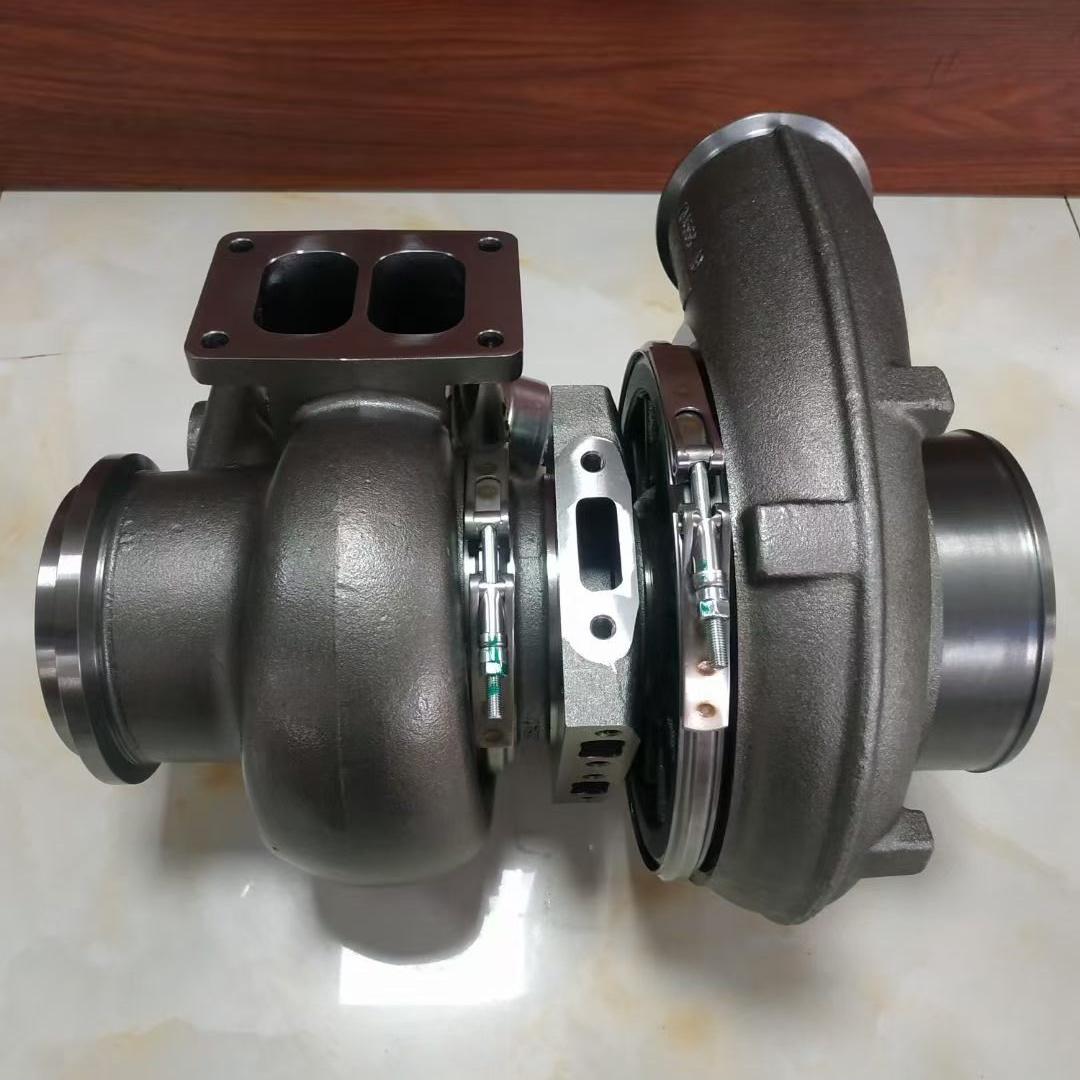
Caterpillar C18 Turbocharger is presented in the Hongtengda catalog as an excavator-parts inquiry reference. This guide explains how a workshop, fleet owner, or distributor can diagnose the surrounding system, define the part correctly, compare a quotation, and commission the machine without turning a catalog association into an unsupported fitment promise. Replacing a turbo without correcting oil starvation, drain restriction, intake leakage, exhaust restriction, contamination, or engine blow-by can repeat the failure. The practical task is therefore to build an evidence chain: identify the machine, document the old unit, test the system, inspect every interface, control contamination, and record the result. The product title and photograph are useful starting points. They do not by themselves prove interchangeability, internal specification, software, calibration, pressure setting, material, stock, delivery, warranty, or suitability for a particular serial number.
Ce que couvre ce guide du turbocompresseur
Le composant fonctionne au sein du système d'admission d'air et d'échappement du moteur de l'excavatrice et son rôle général est d'utiliser l'énergie des gaz d'échappement pour augmenter la masse d'air d'admission, tout en dépendant d'une huile propre, d'un air non restreint, d'une tuyauterie d'échappement saine et d'un contrôle moteur correct. L'article suit le travail depuis la capture des symptômes jusqu'à l'identification, les essais contrôlés, l'achat, l'installation et la réception par étapes. Les plaintes typiques incluent la fumée, la faible puissance, les fuites d'huile, le bruit, le contact du compresseur ou de la turbine, la réponse lente, les défauts de suralimentation ou la défaillance répétée du turbo. Ces observations ne sont précieuses que lorsque les conditions de fonctionnement sont enregistrées. Notez la température de l'huile et du liquide de refroidissement, le régime moteur, le mode de travail sélectionné, la charge de l'accessoire, la direction de déplacement, la position de la structure supérieure, les codes actifs et si le problème est constant ou intermittent. Utilisez les informations de service exactes de la machine pour la sécurité, les connexions de test, les limites, les fluides, les procédures de serrage, les étapes logicielles et les critères d'acceptation. Les sources industrielles générales citées dans cet article expliquent les méthodes ; elles n'établissent pas de valeurs spécifiques au modèle. Pour le turbocompresseur cité, marquez ce point de contrôle comme confirmé, non résolu ou non applicable avant approbation.
Commencez par l'identité, pas par les suppositions
Begin with the full machine identification number and a readable record of the removed part. For Caterpillar C18 Turbocharger, collect engine and machine serials, turbo tag, housing and flange geometry, oil feed and drain orientation, actuator details, air-path condition, exhaust restriction, and failure debris. Photograph the installed orientation before disconnecting anything, then add a simple sketch that gives every hose, connector, bracket, and adjacent obstruction a unique label. Do not collapse different evidence fields into one model name. A supplier needs to know which observation came from the machine plate, which came from the old component, and which came from an online or paper catalog. If two identifiers conflict, preserve the conflict and resolve it before shipment. The following table is designed to travel with the RFQ, quotation, receiving inspection, and workshop job card.
| Groupe de preuves | Ce que la demande de prix ou le dossier de travail doit contenir |
|---|---|
| Identité de la machine | Enregistrez le modèle complet de la machine et le numéro de série/PIN avant de vous fier à un nom de famille de modèle. |
| Identité de l'unité ancienne | Photographiez chaque plaque, marque de coulée, connecteur, orifice, bride et indice d'orientation. |
| Preuves d'interface | numéros de série du moteur et de la machine, plaque du turbo, géométrie du carter et de la bride, orientation de l'alimentation et du drain d'huile, détails de l'actionneur, état du circuit d'air, restriction à l'échappement et débris de défaillance |
| Preuve du défaut | données de suralimentation et de commande, restriction à l'admission, preuves d'échappement, état de l'alimentation et du drain d'huile, preuves de jeu de l'arbre, codes de défaut, comportement de la fumée et contrôles d'étanchéité |
| Périmètre commercial | Confirmez par écrit l'état, la quincaillerie incluse, la préservation, les preuves d'essai, l'emballage, le délai de livraison et la garantie. |
Diagnostiquez le système avant de commander
Create a baseline while the machine is still complete whenever safe access is possible. Record boost and command data, intake restriction, exhaust evidence, oil supply and drain condition, shaft movement evidence, fault codes, smoke behavior, and leak checks. Compare repeatable operating points rather than isolated readings. A value taken with a cold machine, unknown engine speed, or different command cannot be compared reliably with a hot loaded test. Separate cause, consequence, and collateral damage. A weak actuator may change pump sound; a restricted return may create heat; a damaged harness may create a control response that resembles hydraulic wear. The objective is not to collect the largest number of measurements. It is to select tests that can disprove competing causes. Stop testing when stored hydraulic energy, unstable support, rotating parts, hot surfaces, fuel pressure, or uncontrolled movement cannot be managed. Depressurization, isolation, lifting, blocking, cleanliness, and personal protection must follow the machine and component instructions. The Caterpillar C18 Turbocharger job card should show who completed this check, under what operating condition, and with which source.
Failure evidence specific to Caterpillar C18 Turbocharger
Inspect compressor and turbine wheels, housing contact, oil feed and drain, air-filter history, charge-air plumbing, exhaust manifold, foreign-object evidence, and mounting faces. Treat contamination and damaged interfaces as system evidence, not merely as defects to wipe away. Photograph the condition before cleaning, sample fluids through a controlled method where required, and keep removed filters or magnetic debris linked to the job record. A replacement decision should explain why the observed failure could create the complaint and why plausible alternatives were rejected. If the evidence does not connect the component to the symptom, continue diagnosis. This discipline protects both the buyer and supplier from an expensive but inconclusive parts swap. When a removed unit is sent for evaluation, preserve ports and connectors immediately. Identify whether the report concerns the complete assembly, one subcomponent, or only the visible exterior. A clean exterior is not proof of acceptable internal condition, and an internal defect is not proof that every interface matches the offered replacement. When comparing offers for Caterpillar C18 Turbocharger, ask each supplier to respond to this same evidence point in writing.
Choisissez la réparation, la reconstruction ou le remplacement à partir des preuves
| Décision | Schéma de preuves | Action suivante requise |
|---|---|---|
| Poursuivre le diagnostic | L'identité est incertaine ou les preuves systémiques pointent en dehors du turbocompresseur. | Effectuez des essais contrôlés complets et comparez les deux côtés du circuit. |
| Réparation ou reconstruction | Les interfaces sont correctes et l'usure récupérable est documentée. | Convenez de l'étendue des pièces, des mesures, de la propreté, de la méthode d'essai et du dossier de réception. |
| Remplacement de l'ensemble | Les surfaces structurelles ou de précision sont inadaptées, l'étendue est incertaine, ou le temps d'arrêt favorise une unité complète. | Faites correspondre l'ensemble complet des interfaces et obtenez par écrit l'état et les preuves d'essai. |
| Arrêter et escalader | Des fissures, une énergie stockée dangereuse, une contamination sévère, un mouvement incontrôlé ou des informations de service manquantes sont présents. | Utilisez le manuel de la machine et un processus de réparation qualifié avant de continuer. |
Repair economics must include machine downtime, removal and installation labor, supporting-system cleanup, calibration or programming, freight, and the consequence of a repeat failure. Compare quotations on the same scope. A low price for a bare unit is not equivalent to a tested assembly with the required controls, fittings, documentation, and preservation. For remanufactured parts, ask which wear items and precision surfaces were inspected, what was replaced, how cleanliness was controlled, and what test record accompanies the serialised unit. For a new unit, ask for traceable identity, storage condition, protective packaging, and the exact supplied configuration. Keep this result in the receiving and commissioning file for Caterpillar C18 Turbocharger so a later review can reproduce the decision.
Construisez une offre vérifiable
A useful RFQ for Caterpillar C18 Turbocharger includes the machine serial, application, full old-unit identity, interface photographs, measured geometry, symptom history, test evidence, related repairs, contamination findings, required condition, included hardware, destination, and deadline. Ask the supplier to repeat the decisive identifiers and scope on the quotation rather than replying only with a price. The catalog page for Caterpillar C18 Turbocharger can be reviewed ici. Utilisez-la comme point d'ancrage pour la demande et envoyez le dossier de preuves avant de traiter la fiche comme une confirmation de compatibilité. Pour un processus d'achat plus large, consultez ce guide d'excavatrice associé et cet article de diagnostic complémentaire. Les affirmations commerciales doivent être écrites. Confirmez l'état réel de l'unité, les accessoires inclus, la documentation d'essai, la méthode d'emballage, le délai de livraison, les conditions d'expédition, les conditions de retour et la base de garantie pour l'article cité.
Inspection à réception avant installation
Quarantine the shipment until identity and condition are checked. Compare the packing label, unit tag, photographs, ports, connectors, mounting pattern, dimensions, handedness, and accessories with the approved quotation. Look for impact, corrosion, missing plugs, displaced seals, loose hardware, and contamination. Keep the old and replacement units side by side in the same orientation. Use a written comparison sheet and mark each decisive interface as matched, unmatched, or unresolved. Do not modify a bracket, connector, port, shaft, housing, or calibrated control to make an uncertain part fit; return the question to the supplier with photographs and measurements. Store the part according to its preservation requirements. Keep protective caps in place until the connection is ready, and keep electronic connectors dry and protected from electrostatic and mechanical damage. A workshop evaluating Caterpillar C18 Turbocharger should resolve this point before modifying, installing, or returning the component.
Installation et maîtrise de la contamination
Before installation, correct the cause identified during diagnosis. Clean or replace affected lines, coolers, tanks, filters, breathers, fittings, and related components to the scope required by the failure evidence and service information. Transfer only confirmed fittings or controls, and document every transferred item. Use clean caps and dedicated plugs. Clean surrounding areas before opening the system, inspect hoses internally where damage or contamination is plausible, and never use lint-producing material on precision hydraulic or fuel interfaces. Lubricants, assembly fluids, seals, fasteners, and tightening methods must come from the exact service information. Route hoses and harnesses using the pre-removal labels. Check bend radius, twist, clamp position, heat exposure, abrasion, connector locks, ground paths, and service access. A correctly identified component can still fail when installation creates a new restriction, leak, electrical drop, or alignment error. For this Caterpillar C18 Turbocharger inquiry, store the finding with the machine serial, old-unit photographs, and test record.
Mise en service par étapes contrôlées
Amorçage, remplissage, purge, programmation ou calibration uniquement selon les procédures applicables de la machine et du composant. Commencez par une inspection statique, puis un fonctionnement initial à faible risque, puis des contrôles de fonction à vide, puis une demande progressivement plus élevée. Arrêtez-vous à chaque étape pour vérifier les fuites, le bruit, la température, les codes, les niveaux de fluide et les mouvements inattendus. Répétez les mêmes mesures de référence utilisées avant la dépose : données de suralimentation et de commande, restriction à l'admission, preuves d'échappement, état de l'alimentation et du drain d'huile, preuves de jeu de l'arbre, codes de défaut, comportement de la fumée et contrôles d'étanchéité. Un résultat réussi est un changement fondé sur des preuves dans des conditions comparables. Enregistrez la date, le technicien, les heures machine, les conditions ambiantes, les instruments, les points de test, les lectures et les observations afin qu'une autre personne puisse auditer la décision. Conservez l'emballage, la soumission, les photographies de réception, les images de l'ancienne pièce, les résultats d'essai, les preuves de fluide ou de filtre, l'enregistrement de programmation et la fiche de mise en service. Ce dossier est essentiel si un défaut réapparaît ou si un examen de garantie est nécessaire. Pour le turbocompresseur cité, marquez ce point de contrôle comme confirmé, non résolu ou non applicable avant approbation.
Analyse technique approfondie : intégrité de l'alimentation en huile
For Caterpillar C18 Turbocharger, oil-feed integrity should be treated as a question that must be answered by measurements and documented observations. Define the test boundary first: what is connected, what is isolated, which operating state is used, which instrument is suitable, and what exact service source supplies the limit. This prevents a result from being detached from the conditions that produced it. Collect a pair of evidence sets whenever possible. The first describes the complaint state and the second describes a known comparison state, a commanded change, or the verified condition after repair. Preserve units, test-point identity, temperatures, engine speed, command percentage, and time. A trend often separates restriction, leakage, control error, mechanical drag, and intermittent electrical behavior more clearly than one peak value. Use the result to update the decision tree. If the evidence supports the component, define the precise repair or replacement scope. If it points elsewhere, protect the new part from being used as a diagnostic tool. If the result remains ambiguous, state what is missing and design the next safe test rather than converting uncertainty into a compatibility or failure claim.
Analyse technique approfondie : géométrie du drainage d'huile
For Caterpillar C18 Turbocharger, oil-drain geometry should be treated as a question that must be answered by measurements and documented observations. Define the test boundary first: what is connected, what is isolated, which operating state is used, which instrument is suitable, and what exact service source supplies the limit. This prevents a result from being detached from the conditions that produced it. Collect a pair of evidence sets whenever possible. The first describes the complaint state and the second describes a known comparison state, a commanded change, or the verified condition after repair. Preserve units, test-point identity, temperatures, engine speed, command percentage, and time. A trend often separates restriction, leakage, control error, mechanical drag, and intermittent electrical behavior more clearly than one peak value. Use the result to update the decision tree. If the evidence supports the component, define the precise repair or replacement scope. If it points elsewhere, protect the new part from being used as a diagnostic tool. If the result remains ambiguous, state what is missing and design the next safe test rather than converting uncertainty into a compatibility or failure claim.
Analyse technique approfondie : dommages par corps étrangers au compresseur
For Caterpillar C18 Turbocharger, compressor foreign-object damage should be treated as a question that must be answered by measurements and documented observations. Define the test boundary first: what is connected, what is isolated, which operating state is used, which instrument is suitable, and what exact service source supplies the limit. This prevents a result from being detached from the conditions that produced it. Collect a pair of evidence sets whenever possible. The first describes the complaint state and the second describes a known comparison state, a commanded change, or the verified condition after repair. Preserve units, test-point identity, temperatures, engine speed, command percentage, and time. A trend often separates restriction, leakage, control error, mechanical drag, and intermittent electrical behavior more clearly than one peak value. Use the result to update the decision tree. If the evidence supports the component, define the precise repair or replacement scope. If it points elsewhere, protect the new part from being used as a diagnostic tool. If the result remains ambiguous, state what is missing and design the next safe test rather than converting uncertainty into a compatibility or failure claim.
Analyse technique approfondie : preuves de turbine et d'échappement
For Caterpillar C18 Turbocharger, turbine and exhaust evidence should be treated as a question that must be answered by measurements and documented observations. Define the test boundary first: what is connected, what is isolated, which operating state is used, which instrument is suitable, and what exact service source supplies the limit. This prevents a result from being detached from the conditions that produced it. Collect a pair of evidence sets whenever possible. The first describes the complaint state and the second describes a known comparison state, a commanded change, or the verified condition after repair. Preserve units, test-point identity, temperatures, engine speed, command percentage, and time. A trend often separates restriction, leakage, control error, mechanical drag, and intermittent electrical behavior more clearly than one peak value. Use the result to update the decision tree. If the evidence supports the component, define the precise repair or replacement scope. If it points elsewhere, protect the new part from being used as a diagnostic tool. If the result remains ambiguous, state what is missing and design the next safe test rather than converting uncertainty into a compatibility or failure claim.
Technical deep dive: air-filter and charge-air leakage
For Caterpillar C18 Turbocharger, air-filter and charge-air leakage should be treated as a question that must be answered by measurements and documented observations. Define the test boundary first: what is connected, what is isolated, which operating state is used, which instrument is suitable, and what exact service source supplies the limit. This prevents a result from being detached from the conditions that produced it. Collect a pair of evidence sets whenever possible. The first describes the complaint state and the second describes a known comparison state, a commanded change, or the verified condition after repair. Preserve units, test-point identity, temperatures, engine speed, command percentage, and time. A trend often separates restriction, leakage, control error, mechanical drag, and intermittent electrical behavior more clearly than one peak value. Use the result to update the decision tree. If the evidence supports the component, define the precise repair or replacement scope. If it points elsewhere, protect the new part from being used as a diagnostic tool. If the result remains ambiguous, state what is missing and design the next safe test rather than converting uncertainty into a compatibility or failure claim.
Technical deep dive: actuator and control identity
For Caterpillar C18 Turbocharger, actuator and control identity should be treated as a question that must be answered by measurements and documented observations. Define the test boundary first: what is connected, what is isolated, which operating state is used, which instrument is suitable, and what exact service source supplies the limit. This prevents a result from being detached from the conditions that produced it. Collect a pair of evidence sets whenever possible. The first describes the complaint state and the second describes a known comparison state, a commanded change, or the verified condition after repair. Preserve units, test-point identity, temperatures, engine speed, command percentage, and time. A trend often separates restriction, leakage, control error, mechanical drag, and intermittent electrical behavior more clearly than one peak value. Use the result to update the decision tree. If the evidence supports the component, define the precise repair or replacement scope. If it points elsewhere, protect the new part from being used as a diagnostic tool. If the result remains ambiguous, state what is missing and design the next safe test rather than converting uncertainty into a compatibility or failure claim.
Technical deep dive: clean installation
For Caterpillar C18 Turbocharger, clean installation should be treated as a question that must be answered by measurements and documented observations. Define the test boundary first: what is connected, what is isolated, which operating state is used, which instrument is suitable, and what exact service source supplies the limit. This prevents a result from being detached from the conditions that produced it. Collect a pair of evidence sets whenever possible. The first describes the complaint state and the second describes a known comparison state, a commanded change, or the verified condition after repair. Preserve units, test-point identity, temperatures, engine speed, command percentage, and time. A trend often separates restriction, leakage, control error, mechanical drag, and intermittent electrical behavior more clearly than one peak value. Use the result to update the decision tree. If the evidence supports the component, define the precise repair or replacement scope. If it points elsewhere, protect the new part from being used as a diagnostic tool. If the result remains ambiguous, state what is missing and design the next safe test rather than converting uncertainty into a compatibility or failure claim.
Technical deep dive: first-start lubrication
For Caterpillar C18 Turbocharger, first-start lubrication should be treated as a question that must be answered by measurements and documented observations. Define the test boundary first: what is connected, what is isolated, which operating state is used, which instrument is suitable, and what exact service source supplies the limit. This prevents a result from being detached from the conditions that produced it. Collect a pair of evidence sets whenever possible. The first describes the complaint state and the second describes a known comparison state, a commanded change, or the verified condition after repair. Preserve units, test-point identity, temperatures, engine speed, command percentage, and time. A trend often separates restriction, leakage, control error, mechanical drag, and intermittent electrical behavior more clearly than one peak value. Use the result to update the decision tree. If the evidence supports the component, define the precise repair or replacement scope. If it points elsewhere, protect the new part from being used as a diagnostic tool. If the result remains ambiguous, state what is missing and design the next safe test rather than converting uncertainty into a compatibility or failure claim.
Audit d'ingénierie : rendre la conclusion reproductible
A professional report lets a second technician reconstruct the decision without relying on memory. Number photographs, identify test instruments, record calibration status where relevant, cite the service procedure, show hose and connector labels, and link every conclusion to an observation. Distinguish measured facts from catalog associations and from hypotheses. For the supplier, the same discipline reduces quotation risk. A complete identity pack makes it possible to compare tags, interfaces, supplied controls, and condition before freight is committed. For the workshop, the report protects the diagnosis when multiple systems interact or when a failure returns after several operating hours. Close the report with unresolved items, acceptance conditions, and ownership of each next action. No pressure, flow, resistance, torque, clearance, software, or fitment value should be copied from a similar machine unless the exact service information confirms that it applies. Apply this step to Caterpillar C18 Turbocharger only after its tag, interfaces, and installed orientation have been documented.
Références techniques principales et limites des affirmations
- www.garrettmotion.com source technique
- www.garrettmotion.com source technique
- www.cummins.com technical source
These sources support general service, diagnostic, safety, cleanliness, sealing, electrical, engine, or hydraulic principles as applicable. They do not confirm that Caterpillar C18 Turbocharger fits a particular machine serial, nor do they provide the serial-specific limits for this catalog item. Use la page de contact Hongtengda pour envoyer le numéro de série de la machine, la plaque de l'ancienne pièce, les photographies des interfaces, les mesures, les preuves de défaut, l'état requis et la destination en vue d'une comparaison écrite.
Questions fréquemment posées
Does the model name prove that Caterpillar C18 Turbocharger will fit?
No. Model-family wording is an inquiry clue. Serial breaks, regional builds, engine or hydraulic arrangements, software, connectors, ports, mounts, and previous repairs can change the required part. When comparing offers for Caterpillar C18 Turbocharger, ask each supplier to respond to this same evidence point in writing.
L'atelier doit-il remplacer la pièce lorsqu'un code de défaut ou un symptôme la désigne ?
Not automatically. Replacing a turbo without correcting oil starvation, drain restriction, intake leakage, exhaust restriction, contamination, or engine blow-by can repeat the failure. Verify the circuit or system and document the evidence before ordering. Keep this result in the receiving and commissioning file for Caterpillar C18 Turbocharger so a later review can reproduce the decision.
Que doit envoyer un acheteur lors de la première demande ?
Send the complete machine serial, old-unit labels, installed and removed photographs, decisive dimensions and interfaces, boost and command data, intake restriction, exhaust evidence, oil supply and drain condition, shaft movement evidence, fault codes, smoke behavior, and leak checks, required condition, destination, and timing. For product reference 2007, this evidence remains subordinate to the exact machine serial and service documentation.